
SpaceX Falcon 9 Set to Launch Northrop Grumman Cygnus XL Cargo Craft to ISS
A SpaceX Falcon 9 rocket launches Northrop Grumman's Cygnus XL cargo craft to the ISS today, supporting ongoing orbital research and station logistics.
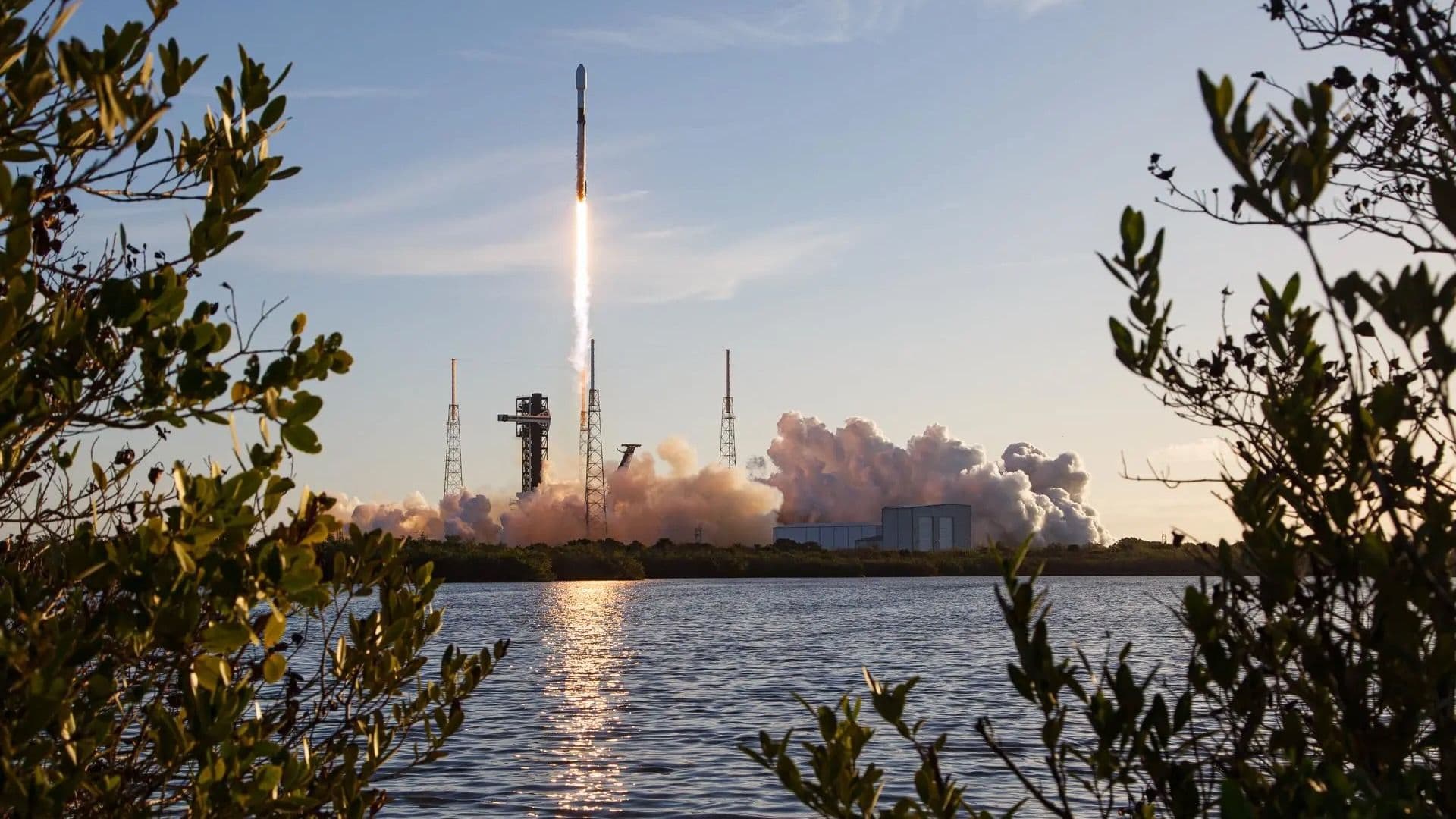
SpaceX's Falcon 9 rocket is scheduled to lift off today carrying Northrop Grumman's upgraded robotic Cygnus XL cargo spacecraft toward the International Space Station, according to reports from space.com. Designated CRS-NG-25, this heavy logistics flight supports ongoing operations in low Earth orbit. Public audiences can watch the launch stream live as launch controllers manage the critical countdown sequences.
This flight continues the established commercial resupply partnership between NASA and private aerospace contractors to maintain station operations. Northrop Grumman's Cygnus vehicle has long served as a reliable workhorse for hauling critical hardware, science experiments, and crew provisions. Today's launch utilizes SpaceX's Falcon 9 booster, a vehicle that dominates modern orbital launch manifests with high flight rates.
The Mechanics of Today's Orbital Delivery Sequence
Preparing a Falcon 9 for a resupply flight requires precise coordination between launch controllers and vehicle telemetry systems. The booster will lift off from its designated pad, clearing the tower before staging occurs minutes into flight. Ground stations and tracking ships will monitor every telemetry packet as the rocket accelerates toward orbital insertion.
Payload Specifications for the Cygnus XL
The upgraded Cygnus XL configuration provides enhanced volume capacity for cargo bound for the orbiting laboratory. Northrop Grumman engineered these modifications to maximize mass delivery per flight, accommodating bulky scientific hardware and life-support spares. Engineers packed the pressurized compartment with several tons of supplies before sealing the hatch ahead of today's countdown.
Maximizing internal payload room requires careful weight distribution to keep the vehicle balanced during atmospheric ascent. Every storage locker and equipment rack inside the cargo module undergoes rigorous structural testing months prior to integration. Technicians secure loose items against violent vibrational forces experienced during max-q pressure peaks.
Science payloads form a major component of the manifest, ranging from protein crystal growth setups to plant biology chambers. Researchers rely on these quick turnarounds to test hypotheses in microgravity before returning samples back to Earth. The enhanced volume of the XL variant ensures fewer wasted corners during packing.
Falcon 9 Ascent and Booster Recovery Plans
Following stage separation, the Falcon 9 first-stage booster will execute its standard return-to-launch-site or droneship landing protocol, depending on mission fuel margins. SpaceX engineers continue to refine booster turnaround times while maintaining high reliability standards for NASA payloads. The second stage will continue pushing the Cygnus XL toward the correct orbital plane for eventual station capture.
First-stage recovery has transformed launch economics over the past decade, allowing hardware reuse across multiple flight cycles. Telemetry teams watch grid fin deployment and Merlin engine relight sequences with intense scrutiny during descent. A successful touchdown preserves expensive multi-million-dollar hardware for future manifest assignments.
Meanwhile, the upper stage engine burn must be executed with extreme precision to match the station's orbital velocity and inclination. Any minute deviation in velocity vector requires costly propellant burns later during the rendezvous phase. Flight software handles these calculations autonomously while ground controllers verify trajectory data in real time.
Station Integration and Upcoming Capture Operations
Once the Cygnus XL reaches the correct orbit, the spacecraft will deploy its solar arrays and begin a series of meticulous rendezvous burns. Expedition crew members aboard the Sci-Tech frontier will monitor the vehicle's automated approach using station communication links. Flight controllers on the ground retain manual override capability throughout the final final approach corridor.
The crew will ultimately use the station's robotic arm to grapple the cargo vehicle and berth it to an available docking port. Unloading operations will commence shortly after leak checks and vestibule pressurization are successfully completed. These resupply items sustain ongoing microgravity research across biology, physics, and materials science disciplines.
Robotic Arm Grapple and Berth Procedures
Operating the space station's robotic arm demands absolute concentration from the assigned crew member inside the cupola. The operator must align the arm's end effector with the Cygnus grapple fixture while closing relative speed to zero. A missed capture attempt triggers immediate abort protocols and forces a re-evaluation of the approach vector.
Once secured by the arm, the cargo craft is maneuvered slowly toward the Earth-facing port of the Unity or Harmony module. Latches engage automatically upon contact to establish a rigid mechanical connection between the two spacecraft. Power and data cables are then routed across the interface to integrate the cargo vessel fully into station systems.
Astronauts typically open the hatch hours later after air sampling confirms the vestibule atmosphere is safe to breathe. Fresh clothing, food packets, and mail from home provide an immediate morale boost for the resident crew. Unpacking becomes a daily priority to clear vital walkway space inside the cramped laboratory modules.
Microgravity Research Hardware Deployment
Scientific payloads carried inside the Cygnus XL require rapid transfer to designated racks within the US and international laboratory segments. Freezers and incubator units must be powered on quickly to preserve sensitive biological samples brought up from Earth. Researchers depend on strict temperature logs to validate experimental integrity from launch day onward.
Maintenance gear shipped on this flight includes replacement pumps, filters, and electronics cards for aging life-support hardware. Station technicians schedule spacewalks and internal repairs around the arrival of these vital spare components. Without a steady stream of replacement parts, key environmental control systems would eventually degrade.
Commercial Logistics and the Future of Orbit Supply
Commercial resupply missions form the backbone of sustained human presence in low Earth orbit. As agencies look toward future lunar and Martian architectures, reliable cargo delivery models tested on the station remain invaluable. Every successful flight validates the supply chains required for permanent off-world infrastructure.
Today's mission also highlights the cooperative nature of modern commercial spaceflight, where competitors frequently share launch services and hardware. Northrop Grumman's reliance on SpaceX's Falcon 9 demonstrates a pragmatic approach to mission assurance and schedule execution. Observers will track the vehicle's journey through rendezvous and berthing over the coming days.
Supply Chain Interdependence in Modern Aerospace
Combining Northrop Grumman's spacecraft design expertise with SpaceX's launch vehicle fleet illustrates a broader trend of industrial consolidation. Aerospace firms routinely outsource specific mission elements to reduce costs and meet strict NASA delivery windows. This cooperative approach prevents schedule bottlenecks when an individual company faces vehicle grounding or technical delays.
Managing multiple contractors requires intense schedule synchronization and rigorous interface control documents between distinct corporate entities. Engineers must ensure mechanical and electrical systems designed by different teams fit together flawlessly in flight. These partnerships form the operational foundation for upcoming commercial space station projects slated for the next decade.
Future logistics flights will test even heavier cargo modules designed to support larger crew sizes in commercial orbital destinations. Lessons learned during today's Cygnus XL flight directly inform the design of deep-space transport logistics. Every metric gathered from telemetry and berthing operations feeds into engineering databases for next-generation spacecraft.
The Morning Brief
One email a day with the stories that matter. Free, forever.
No spam. Unsubscribe anytime.
Comments (0)
Be the first to share your thoughts.