
Van Gogh masterpiece sells for record $190.4 million after Nazi‑era ownership dispute
A Van Gogh masterpiece fetched $190.4 million at auction, breaking records after a settlement resolved claims it was sold under Nazi duress.
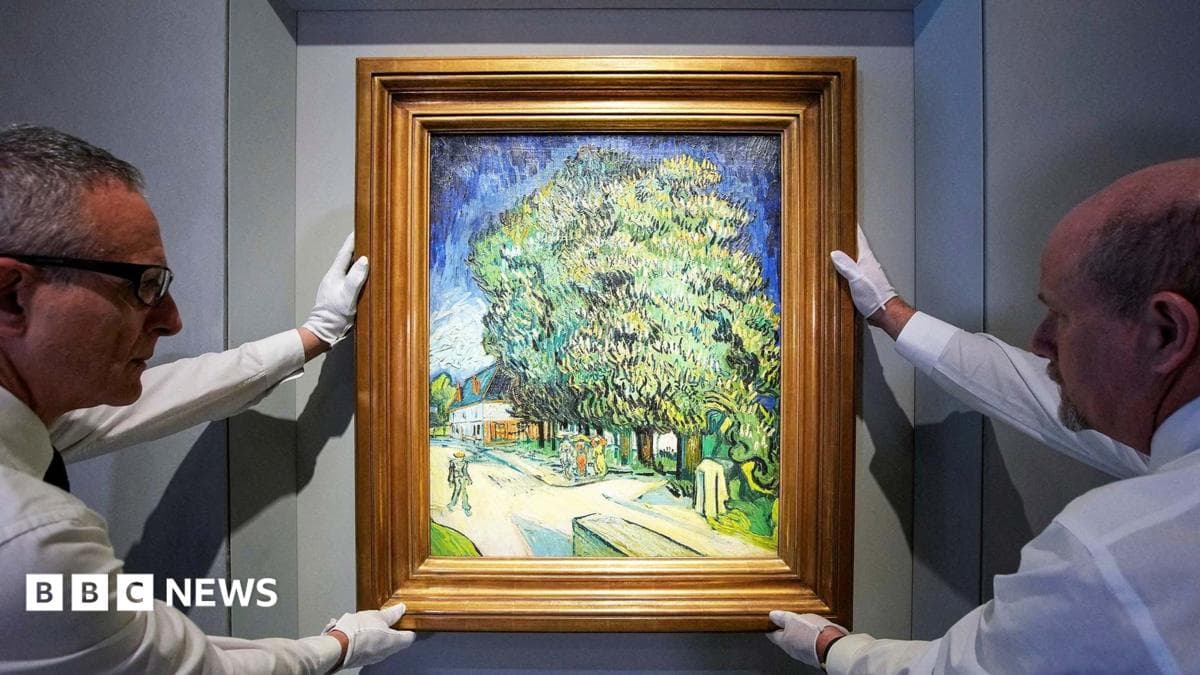
According to BBC, a Vincent van Gogh painting fetched a record $190.4 million (£144.8 million) at a New York auction on Wednesday, eclipsing the artist’s previous high of $117.2 million set in 2022.
The work, titled Châtaigniers en fleurs ("Chestnut Trees in Blossom"), was painted in the final two months of Van Gogh’s life and is considered one of the most important late‑period pieces still in private hands.
Why the sale matters beyond the price tag
The staggering sum underscores how provenance disputes can reshape the upper echelons of the art market. For decades, heirs of the Fischer family – the German publishers who owned the canvas before World War II – argued that the painting had been sold under duress as the Nazis tightened their grip on Jewish businesses. Their claim threatened to stall any sale, potentially keeping the masterpiece out of public view and depriving the market of a benchmark price.
When Sotheby’s announced an eleventh‑hour settlement between the Blaquier‑Arrieta family, current owners of the work, and the Fischer heirs, the auction house cleared the final hurdle. The resolution not only unlocked the painting for sale but also sent a clear signal that even the most contentious provenance issues can be resolved without derailing a deal.
The tangled ownership trail
According to Sotheby’s research, the oil canvas entered the collection of Samuel Fischer, a leading German publisher, in 1909. After Fischer’s death in 1934, the painting was deposited with dealer Paul Cassirer in Amsterdam in 1932‑33, a move that coincided with mounting financial pressure on Fischer’s publishing house under Nazi policies.
It later resurfaced in Paris in 1936, held by Henriette and Marcel Kapferer, before the Blaquier family acquired it in 1975. The Blaquiers kept the piece for more than half a century, eventually including it in the Blaquier‑Arrieta Collection that went to auction.
“In recognition of the painting’s complex Nazi‑era history and the suffering endured by the Fischer family during the Holocaust, the two families have reached a mutually satisfactory resolution and the work will be sold pursuant to their agreement,” Sotheby’s said in a statement.
Implications for future provenance claims
The settlement may set a precedent for other artworks with contested wartime histories. Museums and private collectors alike have faced increasing pressure to investigate the origins of pieces acquired during the early 20th century, especially those that passed through Nazi‑occupied territories.
Legal scholars note that the Fischer heirs’ claim hinged on evidence that the 1930s sale was forced by financial duress, not a voluntary transaction. By reaching a private agreement, both parties avoided a protracted court battle that could have drawn public scrutiny and possibly forced the painting back into restitution proceedings.
Art dealers are watching closely. A successful resolution could encourage owners of other disputed works to negotiate settlements, preserving market stability while acknowledging historical injustices.
What happens next?
The buyer’s identity remains undisclosed, a common practice in high‑value private sales. Sotheby’s has not commented on the purchaser, and the BBC’s inquiries went unanswered.
Beyond the immediate transaction, the sale raises questions about how auction houses will handle provenance research moving forward. Will they invest more resources in tracing ownership histories, or will they rely on private settlements to smooth over potential disputes?
As the art world digests the record‑breaking price, stakeholders from collectors to cultural institutions will be watching how the balance between financial gain and ethical responsibility evolves.
In a statement, Sotheby’s reiterated its commitment to thorough provenance research and to working with claimants to resolve “complex historical issues” before any future auction.
While the painting now resides in an undisclosed collection, its journey from a German publisher’s office to a New York auction block illustrates how the shadows of the past continue to shape the highest echelons of today’s art market.
The Morning Brief
One email a day with the stories that matter. Free, forever.
No spam. Unsubscribe anytime.
Comments (0)
Be the first to share your thoughts.