
M61 Shuts Both Ways Near Chorley as Serious Collision Traps Peak Evening Traffic
The M61 in Lancashire closed both ways between Junction 8 and Junction 9 following a serious crash near Chorley, triggering emergency diversions and extensive delays.
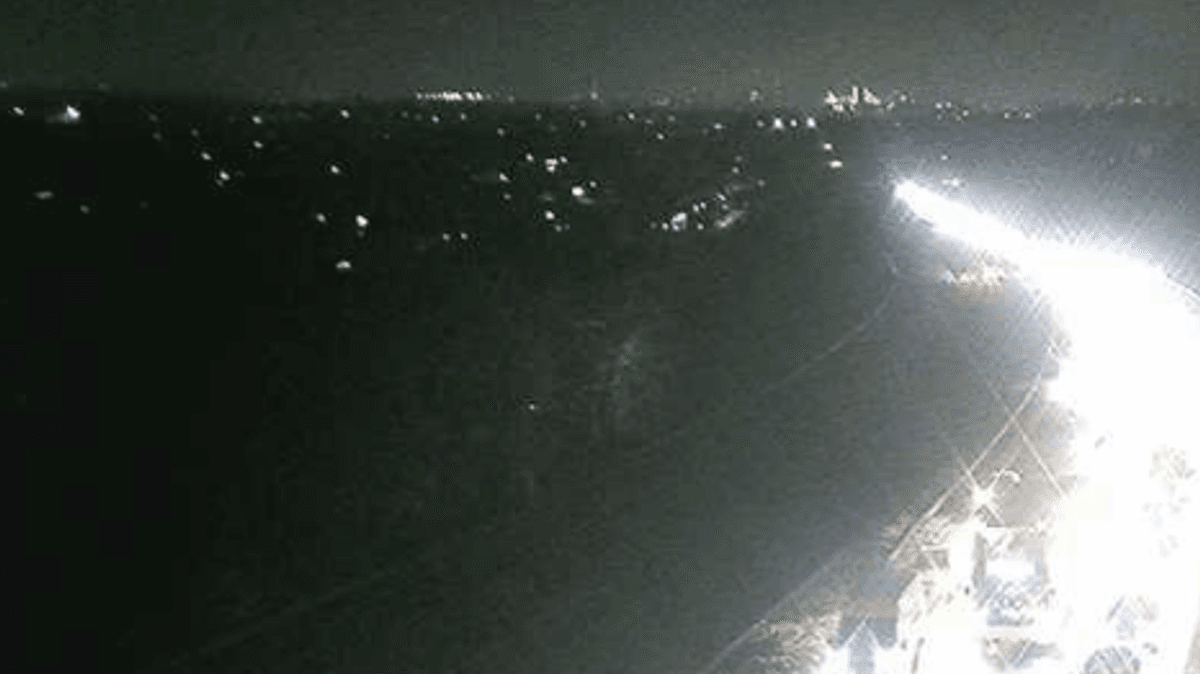
A 29-minute travel delay registered on roadside monitoring sensors within minutes of emergency crews halting traffic along the M61 in Lancashire on Sunday night. According to the Manchester Evening News, National Highways operators halted traffic in both directions between Junction 8 at Chorley and Junction 9 at the M65 interchange around 7:30 p.m. following a severe collision involving multiple vehicles, including an unconfirmed pick-up truck.
The sudden shutdown severed a critical regional transit artery linking Greater Manchester with Preston and central Lancashire. Emergency responders, including police collision investigators, paramedics, and National Highways traffic officers, mobilized immediately to seal the multi-lane carriageway.
The Geometry of the Junction 8 to 9 Closure
The localized closure directly severed the link between the A674 Millennium Way at Junction 8 and the M65 Junction 2 interchange at Clayton Brook. That specific stretch carries dense commercial and passenger transit, channeling commuters toward Preston or dispersing them eastward across the Blackburn corridor.
Real-time vehicle tracking feeds compiled by traffic analysis firm Inrix confirmed that movement stalled completely in both directions shortly after the 7:30 p.m. alert. When a dual-carriageway halts both directions at once, local road networks absorb an immediate, unmanaged surge. Traffic monitors recorded several roadblocks deployed sequentially along the corridor to prevent inbound drivers from joining the standing queue.
Traffic monitoring services tracked the resulting bottleneck as it accumulated vehicle volume across adjacent bypass roads. With traffic halted at the perimeter of Chorley, secondary routes began reporting rapid saturation. The initial 29-minute delay figure calculated by the AA route planner offered only a conservative baseline, reflecting purely highway sensors rather than the cascading congestion spreading through local urban arteries.
How Incident Response Protocols Divert Highway Volume
Clearing a major highway after an incident requires a rigid sequence of mechanical interventions. National Highways operates under defined statutory procedures when an incident receives a serious classification. The first priority is physical isolation: traffic officers establish stationary roadblocks behind the crash scene to protect first responders from high-speed approach traffic.
Once the crash scene secures physical protection, regional dispatchers trigger emergency diversion signage across overhead gantries. For this closure, National Highways routed northbound drivers using the designated solid square symbol on regional roadside signboards. Southbound travelers faced diversion markers displaying the hollow triangle symbol, funneling long-distance motorists off the motorway spine and onto designated A-roads.
These geometric diversion symbols serve a deliberate function. They guide non-local freight and private vehicles along secondary routes engineered to withstand heavy axle weights. Without strict adherence to these symbols, articulated lorries risk entering narrow residential bypasses or low-clearance bridges around Clayton Brook. National Highways traffic officers deployed tactical patrol units directly at the slip roads to physically shepherd queued vehicles past the blockages.
Forensic Collision Probes and the Mechanics of Trapped Traffic
Roughly 50 minutes after the initial shutdown, National Highways confirmed that response teams had begun releasing trapped traffic while Lancashire police collision units conducted an on-site probe. Releasing trapped vehicles is rarely instantaneous. It demands meticulous lane control, requiring officers to filter vehicles past physical debris, fluid spills, or emergency equipment one file at a time.
The distinction between active clearance and an official investigative probe explains why the closure stretched into the evening. When Lancashire police open an inquiry into a collision, the road ceases to be a transit channel. It becomes an active investigative scene.
Specialist collision reconstruction teams document tire marks, scrape trajectories, and vehicle resting positions before recovery operators touch a single bumper. An unconfirmed report gathered during live coverage indicated that a pick-up truck had sustained major damage during the impact. Documenting damage across complex commercial or utility vehicles extends clearance timelines significantly, as investigators must rule out mechanical failures or load instability before authorizing towing crews to clear the tarmac.
Where the Incident Data Reaches Its Analytical Limits
From an analytical standpoint, early figures released during an unfolding highway crisis provide only partial visibility into the real disruption. The reported 29-minute delay metric captures only the deceleration of vehicles trapped immediately behind the closure point. It fails to capture the cumulative hours lost by drivers diverted through local Lancashire towns, nor does it account for commercial logistics disruptions rippling through regional supply chains.
Furthermore, early incident dispatches routinely leave operational gaps. While live reports identified the vehicle type under investigation as potentially including a pick-up truck, official agencies withheld the total vehicle count, casualty figures, and exact points of initial impact during the early hours of the closure. Live delay measurements rely on connected smartphone telemetry and roadside loop detectors, both of which struggle to calculate true waiting times once traffic diverts entirely onto unmonitored rural networks.
Immediate Structural Friction for Regional Freight and Transit
The prolonged closure between Chorley and Clayton Brook reveals how sensitive northern motorway corridors remain to localized structural shocks. With Junction 8 and Junction 9 severed, long-haul freight moving toward the M6 north faced immediate re-routing, dumping heavy tonnage onto local bypasses.
For drivers caught in the immediate tailbacks, the tactical priority remained adherence to the tactical hollow triangle and solid square diversion symbols. Recovery teams faced an extended operational process: completing forensic mapping, removing damaged machinery, clearing environmental contaminants from the roadway, and assessing asphalt integrity before reopening lanes to full-speed traffic. Motorists approaching the Chorley perimeter through the late evening faced mandatory diversions as Lancashire emergency teams finished their work on the tarmac.
The Morning Brief
One email a day with the stories that matter. Free, forever.
No spam. Unsubscribe anytime.
Comments (0)
Be the first to share your thoughts.