
Nagoya University Engineers Egg-Yolk Antibody Phototherapy to Halt Periodontal Bone Loss
Nagoya University scientists have engineered a light-activated therapy using egg-yolk antibodies that kills gum disease pathogens while leaving beneficial oral bacteria intact.
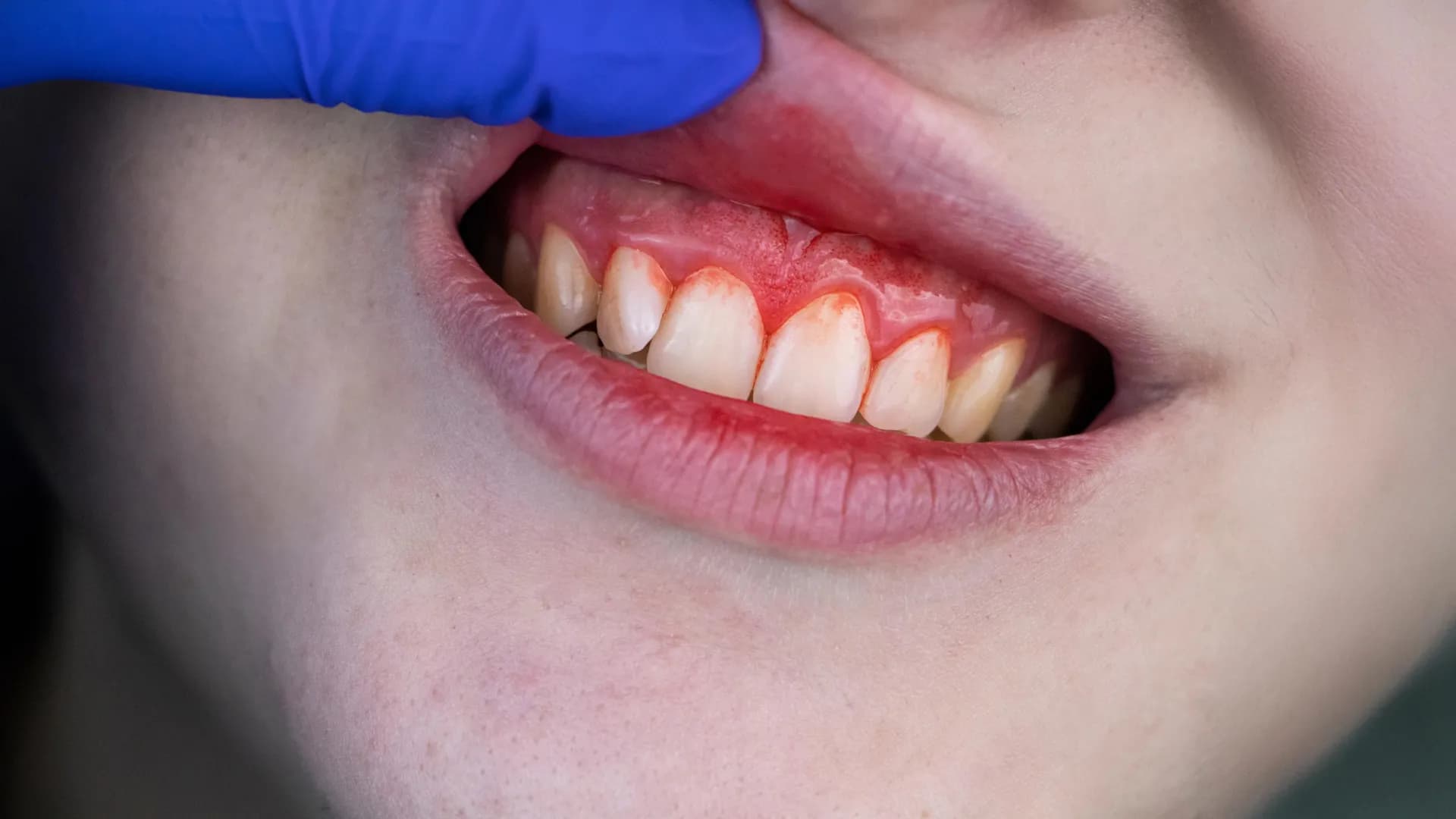
Roughly 700 bacterial species populate the human oral cavity, yet traditional dentistry regularly carpets the entire mouth with broad-spectrum agents just to suppress one destructive microbe. According to a report by ScienceDaily detailing preclinical trials conducted at Nagoya University, researchers have developed an antibody-guided phototherapy that neutralized Porphyromonas gingivalis without wiping out protective commensal strains like Streptococcus.
The study, published in the Journal of Translational Medicine, addresses an old mechanical flaw in periodontal care. Severe gum disease degrades the periodontal ligament and dissolves alveolar bone, the foundational jaw structure anchoring human teeth. When clinicians attack the infection with systemic antibiotics or conventional antimicrobial photodynamic therapy (aPDT), they kill off pathogens and beneficial flora indiscriminately. The collateral damage strips the mouth of natural defenses and triggers an inflammatory rebound.
By pairing antibodies drawn from immunized chicken eggs with near-infrared light, the Nagoya team suppressed P. gingivalis loads while maintaining the jawbone density of infected test mice. The therapy leaves normal human gingival tissue intact. It also avoids shattering the bacterial walls into toxic fragments.
Repurposing Oncology Tools Through Avian Immunoglobulin Y
The Nagoya team adapted its platform from near-infrared photoimmunotherapy, an oncology method that pairs monoclonal antibodies with light-activated dyes to burst tumor cells on command. For dental medicine, scaling standard laboratory-synthesized monoclonal antibodies presents a direct commercial wall: cost. Synthesizing mammalian antibodies inside bioreactors runs hundreds of dollars per milligram, pricing routine dental cleanings out of reach.
To cut production expenses, lead author Hiroshi Maruyama, Professor Hideharu Hibi, and corresponding authors Kazuhide Sato and Kiyoshi Sakai extracted immunoglobulin Y (IgY) from the yolk of hens immunized against P. gingivalis. Laying hens deposit heavy concentrations of protective antibodies into their eggs. Extracting IgY yields high-volume antibody supplies through standard agricultural pipelines at a tiny fraction of synthetic culture expenses.
Researchers conjugated this avian IgY to a specialized dye sensitive to near-infrared wavelengths. The resulting compound forms the basis of what the team calls near-infrared photo-antibacterial targeting therapy (NIR-PAT²). Once rinsed into the mouth, the IgY component glides past harmless commensal bacteria and latches exclusively onto target antigens on the P. gingivalis cell wall. Commensal Streptococcus bacteria remain untouched.
Unbound molecules rinse away under simple irrigation. Clinicians then expose the treated gumline to near-infrared light. The light passes harmlessly through human soft tissue until it strikes the dye molecules bound to the bacterial outer coat, triggering an instantaneous local photochemical reaction.
Membrane Perforation Versus Total Lysis: Neutralizing the Endotoxin Problem
The physical destruction pattern of NIR-PAT² separates it from older chemical and laser treatments. Conventional photodynamic therapies flood the oral cavity with generic photosensitizers. Under laser activation, these non-targeted dyes produce massive bursts of reactive oxygen species that rip bacterial cells apart through explosive lysis. That explosion triggers a severe secondary biological cost.
When Gram-negative pathogens like P. gingivalis burst completely, their outer envelopes fragment into free-floating lipopolysaccharide (LPS). This chemical is a potent endotoxin. As Sato noted, the sudden dumping of LPS directly onto exposed periodontal tissue inflames surrounding macrophages and accelerates the recruitment of osteoclasts—the specialized cells that dissolve jawbone.
Under transmission electron microscopy, the Nagoya team showed that NIR-PAT² operates through a far gentler mechanical death. The light-activated IgY complex punches micro-perforations through the bacterial outer membrane. Fluid rushes across the damaged wall, collapsing the pathogen's electrochemical balance and killing it within minutes.
The dead bacteria retain their general morphological structure. Because the physical shell does not disintegrate into debris, the dangerous LPS remains locked inside the ghost membrane instead of spilling into the periodontal pocket. The host immune system clears the intact dead cells without setting off a hyper-inflammatory alarm.
In laboratory assays examining human gingival fibroblasts, standard aPDT treatment visibly delayed tissue wound closure and caused widespread cellular toxicity. Samples treated with the NIR-PAT² protocol showed zero measurable damage to human fibroblasts, matching the baseline healing rates of untreated control cultures.
What Murine Jawbone Retention Confirms — And What Clinical Trials Must Address
The animal model data presents compelling quantitative differences between standard intervention and targeted phototherapy. In mice experimentally infected with P. gingivalis, progressive alveolar bone loss eroded the jaw architecture holding the molars. When treated with the targeted egg-yolk phototherapy, bone degradation dropped significantly, preventing the tooth loosening that characterizes advanced human periodontitis.
Salivary assays collected after therapy showed a sharp reduction in P. gingivalis colony counts. Meanwhile, protective Streptococcus counts held firm. By comparison, mice administered standard antibiotic washes or non-targeted aPDT experienced across-the-board microbial collapse, leaving the oral cavity stripped bare.
That quantitative success requires critical caveats. Mouse periodontal structures differ considerably from the complex anatomical crevices of human mouths. A mouse molar pocket is tiny, accessible to external light wands, and dominated by a laboratory-introduced bacterial strain. In adult humans, periodontal pockets regularly plunge five to eight millimeters beneath swollen tissue and fibrous calculus deposits, creating physical blind spots where near-infrared photons can struggle to penetrate.
Second, periodontitis is not a true monoinfection. While P. gingivalis acts as an established keystone pathogen—disproportionately tipping oral flora toward disease even at low baseline concentrations—it operates inside complex polymicrobial biofilms alongside species such as Tannerella forsythia and Treponema denticola. Killing P. gingivalis in isolation may not permanently quiet an advanced, established mixed-species infection if other virulent organisms step into the ecological vacuum.
Expanding Selective Pathogen Removal Across Long-Term Systemic Care
To address the challenge of polymicrobial disease, the Nagoya team plans to use AI & Innovation frameworks to scan publicly indexed genomic data on oral microbiomes. The objective is identifying secondary keystone antigens, allowing technicians to formulate multi-strain IgY cocktails that target three or four destructive bacteria simultaneously without disturbing beneficial species.
Preserving the oral microbiome carries medical implications far beyond tooth retention. Chronic periodontal inflammation feeds low-grade bacteremia, allowing oral pathogens and their inflammatory byproducts to enter the bloodstream. Epidemiological studies routinely tie long-term periodontitis to elevated risks of cardiovascular complications, rheumatoid arthritis flare-ups, and unstable glycemic control in type 2 diabetes.
Routine dental cleanings frequently destabilize this microbial balance. Patients with deep periodontal pockets often undergo repetitive cycles of scaling, root planing, and local antibiotic implants that temporarily suppress flora before resistant strains rebound. A targeted biological rinse that works in minutes under near-infrared illumination could offer an alternative outpatient procedure for long-term maintenance in Wellness & Health clinics.
Before commercial production begins, the Nagoya team must advance the IgY-dye formulation through rigorous human phase trials. The researchers must establish light dosage curves for deep periodontal pockets, prove that repeated IgY rinses do not trigger mucosal allergic reactions in humans with egg sensitivities, and confirm long-term bone stability across multi-year follow-ups. If those hurdles are cleared, targeted antimicrobial phototherapy could change the standard approach to chronic oral infection from scorched-earth eradication to precise microbial pruning.
The Morning Brief
One email a day with the stories that matter. Free, forever.
No spam. Unsubscribe anytime.
Comments (0)
Be the first to share your thoughts.