
Sixteen Liberian Peace Deals Gathered in New Compendium After 13 Years of Conflict
A classroom project has turned into a national archive, gathering Liberia’s sixteen peace agreements into one volume and shedding new light on the country’s path to stability.
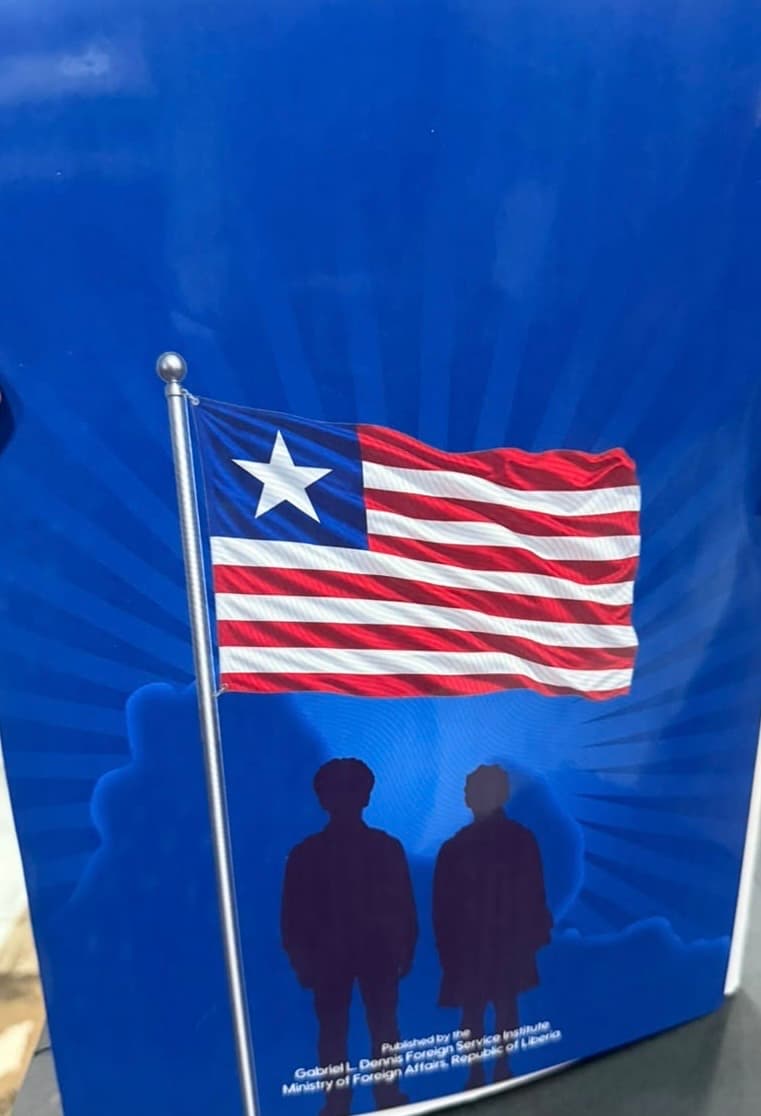
Sixteen Liberian Peace Deals Gathered in New Compendium After 13 Years of Conflict
According to Frontpage Africa Online, sixteen peace agreements negotiated between 1990 and 2003 have been consolidated into a single volume, offering scholars and diplomats a rare, uninterrupted view of Liberia’s turbulent quest for stability.
The book, titled Negotiating Peace in Liberia, was unveiled at a presidential dinner attended by President Joseph Nyuma Boakai, senior officials, and a host of foreign envoys.
It began not in a diplomatic archive but in a classroom. Dr. Aaron Weah, a lecturer at the Foreign Service Institute, was redesigning a course on negotiation when he asked his students to locate the original texts of every Liberian peace accord. Nine volunteers answered, scouring the Ministry of Foreign Affairs’ dusty shelves before turning to a United Nations-run digital repository that finally yielded the missing documents.
What emerged was more than a teaching aid; it became a historical safeguard. The compendium preserves each agreement in its original PDF form, complete with the typographical quirks and inconsistent acronyms that marked the chaotic wartime bureaucracy.
From Classroom Project to National Archive: The Birth of Liberia’s Peace Compendium
Weah’s initial challenge was logistical. The Ministry of Foreign Affairs held only a handful of copies, a testament to how civil war eroded record-keeping. After the students located the documents online, they faced a second hurdle: converting scanned PDFs into editable Word files without stripping away the original formatting.
During that process, the team stumbled on misspelled names—Félix Houphouët-Boigny, Amadou Toumani Touré, João Bernardo Vieira—alongside contradictory acronyms for rebel factions. Rather than “correct” these errors, the researchers chose to retain them, arguing that any alteration would rewrite history as it was recorded at the time.
That decision underscores a broader lesson for archivists: preserving primary sources sometimes means accepting their imperfections. In this case, the compendium acts as a time capsule, capturing the very messiness that plagued peace talks.
Mapping the Four Phases of Liberian Peace Efforts
The volume groups the sixteen accords into four chronological phases, each reflecting a shift in regional and international involvement.
Pre-Cotonou (1990-1993) captures ECOWAS-led attempts such as the Banjul Communiqué (August 7 1990) and the Yamoussoukro Accords (June-October 1991). These early deals emphasized ceasefires, disarmament, and the logistics of holding elections.
Cotonou (July 25 1993) introduced power-sharing as the central incentive, laying out 19 articles that covered everything from refugee repatriation to the formation of a transitional government. Civil society, notably the Interfaith Mediation Committee, voiced criticism, warning that elite bargaining alone could not sustain peace.
Post-Cotonou (1994-1996) responded to the collapse of the previous accord. Agreements like the Akosombo Accord (September 12 1994) and the Abuja Accord (August 19 1995) tweaked power-sharing formulas and began transferring security responsibilities from regional forces to Liberia’s nascent transitional authorities.
Accra (June-August 2003) represents the culmination of the previous attempts. The August 18 2003 Accra Comprehensive Peace Agreement installed a civilian transitional chairperson unaffiliated with any faction, while still preserving ministerial and legislative power-sharing. It also earmarked a phased security handover to an ECOWAS Vanguard Force, followed by United Nations peacekeepers.
Women’s groups, local NGOs, and regional actors all left their imprint on the Accra talks, a departure from earlier accords that had largely sidelined civil society.
What the Accra Agreement Got Right – and Where Gaps Remain
The Accra deal stood out for its inclusivity. It gave civil society a seat at the oversight table and opened a dialogue on accountability for war crimes—topics absent from prior pacts. Discussions floated the idea of a war-crimes court and a truth commission modeled on South Africa’s experience.
Yet the accord stopped short of defining the mandate of such a truth commission, leaving a legal gray area that would later fuel debate during Charles Taylor’s indictment by the Special Court for Sierra Leone.
International dynamics also shaped the negotiations. The post-9/11 security climate sharpened donor focus on stability in West Africa, while democratic transitions in Nigeria and Ghana provided regional role models for civilian governance.
In practice, the Accra agreement’s power-sharing framework endured long enough to usher in elections that installed Ellen Johnson Sirleaf as Africa’s first elected female head of state. However, lingering mistrust among former combatants meant that full disarmament stretched well beyond the formal ceasefire.
Why Preserving Original Texts Matters for Future Negotiations
For scholars, the compendium is a goldmine of primary data. For negotiators, it offers a cautionary catalog of what worked and what didn’t. By keeping the original wording—including its errors—researchers can trace how language shifted, how acronyms evolved, and how external actors influenced each draft.
Data-driven analysts should note, however, that the collection does not fill every archival gap. Some agreements remain partially redacted, and the UN repository, while comprehensive, may omit marginal notes exchanged behind closed doors. The compendium therefore represents the best-available snapshot, not an exhaustive record.
Looking ahead, the book could become a cornerstone for regional peace-building curricula, informing the design of future accords in the Sahel and the Great Lakes region. Its existence also pressures Liberian institutions to digitize and safeguard other vulnerable records before they succumb to decay.
As Liberia marks the 20th anniversary of the Accra peace, the compendium arrives at a moment when the nation is reassessing its security sector reforms and transitional justice mechanisms. The volume may well serve as a reference point for the next generation of diplomats tasked with turning fragile truces into lasting peace.
In the end, the project proves that a handful of students, armed with curiosity and a willingness to dig through dusty archives, can produce a resource that reshapes how a nation remembers its own path to peace.
The Morning Brief
One email a day with the stories that matter. Free, forever.
No spam. Unsubscribe anytime.
Comments (0)
Be the first to share your thoughts.