
Pete Edochie, Revered Nollywood Titan and Screen Pioneer, Dies at 79
Veteran Nigerian screen icon Pete Edochie has died at 79 following a battle with prostate cancer, leaving behind a five-decade Nollywood legacy.
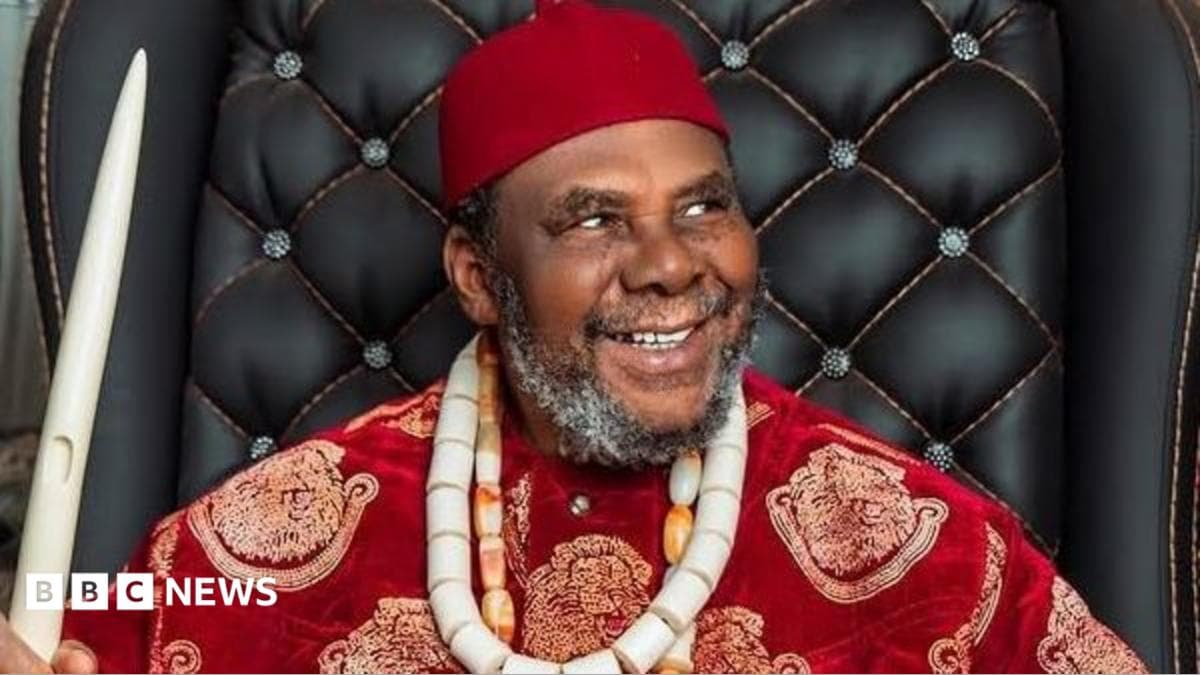
Veteran Nigerian actor Pete Edochie has died at 79 in the south-eastern city of Enugu following a prolonged battle with prostate cancer, according to the BBC and formal notices issued by his family on Wednesday. His passing silences one of the most recognizable voices in continental broadcasting and film, ending a career that stretched across six decades and helped build West Africa's modern screen economy from the ground up.
Edochie died during the early hours of Wednesday morning. His son Leo confirmed the loss in an announcement published online, asking for prayers for the family as they adjust to the sudden void. Edochie's deteriorating physical condition had become visible during a trip to Ghana in October, where he acknowledged publicly that he was experiencing severe swelling throughout parts of his body and struggling to walk unassisted.
Across Nigeria and the wider continent, fellow performers, guild leaders, and state officials began sharing tributes within hours of the announcement. Enugu State Governor Peter Mbah characterized the late performer as an institution who spent his life projecting Igbo cultural values to global viewers. Abubakar Yakubu, president of the Actors Guild of Nigeria, described Edochie as a central father figure whose artistic methods established expectations that younger generations of actors still strive to match.
From the Radio Booth to Chinua Achebe's Okonkwo
Before audiences ever saw his scowl or heard his deliberate cadence on television screens, Edochie worked strictly behind microphones. He entered the workforce as a radio broadcaster in 1967, learning vocal control, timing, and diction inside broadcast studios. That audio foundation became his core asset when he shifted focus to dramatic acting two decades later.
His breakthrough arrived in 1987 through the Nigerian Television Authority's adaptation of Chinua Achebe's classic novel Things Fall Apart. Edochie took on the lead role of Okonkwo, the fiercely proud warrior fighting the creeping advance of British colonial administration and Christian missionaries in his native community. The role carried enormous technical difficulty. Okonkwo is not a simple hero; he is a rigid, anxious man whose fear of failure drives him toward tragic excess. Edochie captured that volatile interior without relying on rapid dialogue.
His performance earned international critical attention and made him an immediate cultural fixture. By translating Achebe's literary text into physical movement, Edochie provided a working blueprint for how African stories could travel across borders without watering down regional customs, language rhythms, or historical conflicts. For millions of viewers across Africa, his face and Okonkwo's fate became permanently intertwined.
The VHS Era Engine and the Mechanics of the Patriarch Archetype
To understand Edochie's career, one must look at how Nigeria's film business actually functioned in the 1990s. The industry operated much like a localized printing press during a distribution boom. Small independent production outfits produced low-budget features directly onto VHS tapes, selling hundreds of thousands of copies through open-air markets in Lagos, Onitsha, and Aba. These projects moved at breakneck speed, requiring recognizable talent who could command audience attention immediately without elaborate sets or extensive rehearsal schedules.
Edochie functioned as the anchor for that rapid-fire production model. Producers cast him repeatedly as traditional monarchs, corporate chieftains, and influential family heads. Films like Rituals, Igodo, and Billionaire's Club relied heavily on his ability to establish authority the moment he walked into frame. He rarely rushed a line. He paused, leaned on heavy proverbs, and allowed long silences to build dramatic tension before delivering a verdict.
That deliberate technique shaped the conventions of early Nollywood. Where Western cinema often favored rapid cuts and breathless banter, Edochie built tension through measured stillness. Audiences trusted his characters to deliver moral clarity or terrifying retribution. The formula generated enormous commercial returns and cemented Nollywood as a primary engine of regional entertainment.
National Honors, Comedy, and the Social Media Generation
Recognition followed his commercial success. In 2003, the federal government conferred on him the title of Member of the Order of the Niger, one of the country's highest civilian distinctions. Years later, he collected the Industry Merit Award at the Africa Magic Viewers' Choice Awards, honoring his multi-decade service to African performance arts.
Edochie did not limit his later output to solemn village dramas. In 2018, he appeared in Genevieve Nnaji's widely distributed romantic comedy Lionheart, demonstrating his ability to adjust his traditional patriarchal persona for a softer, contemporary narrative. He played an aging transport mogul navigating family tensions and corporate survival, bringing familiar warmth to a modern setting.
At the same time, younger digital audiences rediscovered his early catalog through an entirely different medium: internet video clips and reaction images. His stern scowls, dramatic side-eyes, and sharp one-liners were cut from vintage VHS transfers and turned into viral social media memes. The trend introduced millions of teenagers and twenty-somethings across the globe to performances filmed decades before they were born, proving that his screen presence translated easily across technological eras.
Family Lineage and the Future of Nollywood
Edochie leaves behind a personal and artistic family network that remains central to the film industry. He is survived by his wife, Josephine, and their six children. Two of his sons, Yul Edochie and Linc Edochie, followed their father directly into screen acting, establishing their own followings within the modern streaming and cinema ecosystem.
His departure forces the industry to confront the gradual loss of its founding generation. Nollywood has evolved from grain-heavy videotapes hawked in bustling street stalls into an international commercial powerhouse funded by multi-million-dollar distribution platforms. Yet that massive infrastructure was built on the charisma and vocal discipline of early broadcast veterans like Edochie, who worked without modern soundstages or digital effects.
With his death in Enugu, the Nigerian screen community loses not just a prolific performer, but the foundational architect of its classic screen presence. Edochie proved that regional cadence, indigenous proverbs, and unhurried storytelling could hold the world's attention. Filling the space he leaves behind will require performers who understand that real screen gravity comes from patience, control, and respect for the word.
The Morning Brief
One email a day with the stories that matter. Free, forever.
No spam. Unsubscribe anytime.
Comments (0)
Be the first to share your thoughts.