
Netanyahu and Eisenkot Meet in Jerusalem to Weigh Unity Government After Inconclusive Election
Israeli Prime Minister Benjamin Netanyahu and opposition leader Gadi Eisenkot met to discuss forming a unity government following inconclusive elections.
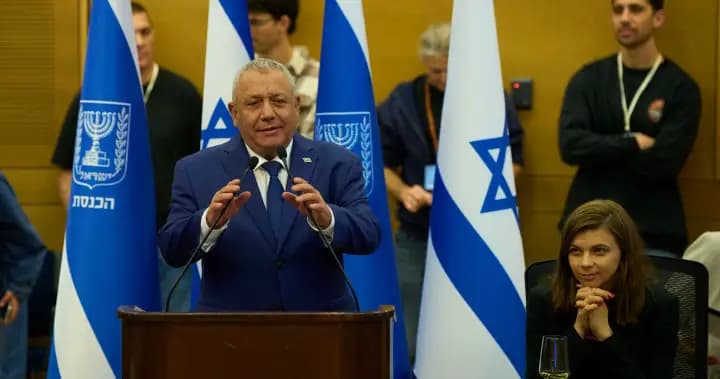
According to Global News, Israeli Prime Minister Benjamin Netanyahu and opposition leader Gadi Eisenkot met on a Sunday morning to discuss forming a unity government. The high-stakes talks follow a Saturday night announcement where Netanyahu stated his willingness to let Eisenkot take the prime minister seat first in a rotation arrangement.
Three weeks earlier, Israel's president had tasked Eisenkot with attempting to form a government after inconclusive national elections left the 120-member Knesset deeply divided.
For ordinary citizens watching from towns across the region, the sudden diplomatic pivot upends months of bitter political feuding. Both leaders face intense pressure from local communities exhausted by years of security crises and political gridlock. With neither political bloc securing the required 61-seat majority, everyday voters are left wondering how a coalition of bitter rivals could ever manage daily governance.
President Herzog’s Mandate and the Constitutional Clock
President Isaac Herzog appointed Eisenkot as the official formateur on the basis of a constitutional provision that obliges the president to task the party leader most likely to assemble a majority. The move gave Eisenkot a narrow window to negotiate before the Knesset’s first session on Dec. 6.
Herzog warned that any request for a two-week extension would require a majority vote in the Knesset, a hurdle that past attempts have rarely cleared. The president’s subtle reminder that the clock is ticking adds pressure on both camps to avoid a costly repeat election.
Assigning the Formateur
When the president handed Eisenkot the mandate, he also received a confidential dossier outlining the current security posture, economic forecasts, and pending legal inquiries. The dossier forces the new negotiator to balance political ambition with the nation’s urgent need for stability.
Limits on Extension Requests
Legal scholars note that the Basic Law permits only one formal extension, and that extension must be justified by “extraordinary circumstances.” Critics argue that invoking such language could be seen as political theater rather than a genuine emergency.
Image: globalnews.caSecurity Briefings and the Push for Coalition Talks
The Sunday morning meeting between Netanyahu and Eisenkot began with a classified security briefing before shifting to political negotiations. A joint statement issued by their respective parties later that afternoon confirmed that both sides were actively working to bridge substantial differences. For months, Eisenkot had publicly labeled Netanyahu unfit for office, making Sunday's sit-down a sharp departure from previous rhetoric.
Intelligence Assessments Shape the Talks
During the briefing, senior intelligence officers warned that a fragmented government could delay decisive action against Hamas cells still operating in Gaza. They also highlighted the risk of Iranian proxies exploiting any perceived weakness in Israel’s command structure.
Political Stakes After the Oct. 7 Inquiry
Lawmakers have demanded a state-led commission to examine the intelligence failures that preceded the Oct. 7 attacks. Netanyahu’s willingness to entertain an inquiry marks a rare concession, but he insists the commission’s scope remain limited to avoid politicizing the tragedy.
Bridging Deep Political Divides in the Knesset
Negotiators face daunting policy hurdles that go far beyond simple seat distribution in parliament. Talks have touched on sensitive domestic issues, including mandatory military service for ultra-Orthodox Jews and a formal state-led investigation into the security failures surrounding the Oct. 7, 2023, attacks. Citizens across the country remain deeply affected by the ongoing trauma and subsequent regional wars against Hamas, Hezbollah, and Iran.
Ultra-Orthodox Conscription Debate
Ultra-Orthodox parties demand exemptions based on religious study, while secular factions argue that equal service is essential for national solidarity. Eisenkot’s team proposes a phased draft that would allow students to complete a year of yeshiva before enlisting, a compromise that could sway enough votes to break the deadlock.
Security Inquiry Mechanism
The proposed commission would combine civilian oversight with military expertise, a structure modeled after the 2006 commission that examined the Lebanon war. Critics fear the new body could become a political weapon, but supporters argue transparency is the only path to restoring public trust.
The Arithmetic of a Fractured Parliament
While Netanyahu's Likud party garnered the most individual votes, his traditional right-wing and ultra-Orthodox allies failed to secure a parliamentary majority. Opposition parties similarly fell short of the magic 61-seat threshold, creating a legislative deadlock that forced both leaders to seek unconventional compromises. If no formal deal is reached by Dec. 6, Eisenkot faces the choice of asking the president for a two-week extension or risking fresh elections.
Seat Math and Coalition Scenarios
Analysts map three plausible configurations: a Likud-Yamina bloc plus two centrist parties, a left-wing alliance that pulls in Arab parties, or a grand coalition that merges Likud with the centrist Blue and White. Each scenario hinges on whether smaller parties can extract policy concessions that outweigh their electoral weight.
Potential Kingmaker Parties
The Religious Zionist Party holds 7 seats that could tip the balance, while the centrist New Hope faction controls 6. Their leaders have signaled willingness to join a coalition only if the ultra-Orthodox draft law is softened, a demand that tests Netanyahu’s resolve.
Image: globalnews.caSharp Divisions Among Opposition Allies and Minority Leaders
The prospect of a shared government has triggered fierce backlash from various political factions and community leaders who feel sidelined by the backroom deals. Opposing viewpoints within the opposition bloc highlight the fragility of any potential coalition, particularly regarding which minority parties might be included or excluded.
Rejection From Arab-Led Coalitions and Secular Critics
Critics argue that a unity deal between traditional rivals risks sidelining vital segments of the voting public. Yair Lapid dismissed the rotation offer as a political scam, while Arab-led factions warned that the arrangement ignores the collective will of minority voters. Tamar Hermann from the Israel Democracy Institute captured the deepening skepticism among change-seeking voters:
Unity government is another name for kicking the Arabs out.
— Tamar Hermann, Israel Democracy Institute
Meanwhile, Yousef Jabareen of the Joint List urged the public to reject Netanyahu's offer entirely. He called instead for an immediate push to oust the long-serving prime minister through existing parliamentary mechanisms rather than joining his administration.
Arab Parties' Conditional Participation
The Joint List and United Arab List have signaled they will only support a coalition that guarantees equal budget allocations for Arab municipalities. Their stance forces any prospective government to address longstanding disparities in infrastructure funding.
Divergent Views on Military Service and National Duty
Not all opposition figures oppose the talks, as former Prime Minister Naftali Bennett publicly welcomed Netanyahu's concession. Bennett argued that any stable unity government should focus heavily on incorporating citizens who perform active military or national service. These competing visions for who belongs in the civic tent leave ordinary taxpayers caught between conflicting appeals for solidarity and exclusion.
Bennett’s Emphasis on Service Inclusion
Bennett proposed a national service program that would allow non-combat roles for conscientious objectors, aiming to broaden the definition of civic contribution. His proposal seeks to appease both secular voters who demand fairness and religious groups wary of conscription mandates.
The Looming December Deadline and Regional Pressures
With the December deadline fast approaching, ordinary citizens and business owners face mounting uncertainty over the direction of economic and security policy. The country is still dealing with the multi-year fallout from conflicts in Gaza, Lebanon, and direct clashes with Iran. Whether these two political heavyweights can finalize a viable coalition before the president's clock runs out remains the central question for a weary public.
Economic Ripple Effects
Small-business owners in Tel Aviv and Haifa report that delayed budget approval has stalled loan approvals and tax rebates. Analysts warn that a prolonged stalemate could push the inflation rate above 5 percent, eroding purchasing power for families already strained by rising food prices.
Regional Diplomatic Pressures
Neighboring Jordan and Egypt have urged Israel to present a united front before the upcoming UN General Assembly session. Both countries warned that continued internal discord could embolden Hezbollah’s front-line activities along the northern border.
Public Sentiment as the Clock Ticks
Street polls in Jerusalem show that 58 percent of respondents prefer a quick coalition over a second election, even if it means compromising on core policy goals. Meanwhile, protestors in the southern town of Sderot continue to demand a clear timeline for the draft law, reflecting the deep anxiety that permeates daily life.
The Morning Brief
One email a day with the stories that matter. Free, forever.
No spam. Unsubscribe anytime.
Comments (0)
Be the first to share your thoughts.