
China’s Discarded Smartphones Fuel a $150 Million Secondary Market Across Africa and South Asia
China discards 400 million phones annually, sparking a booming secondary market that delivers profit to traders across Africa and South Asia.
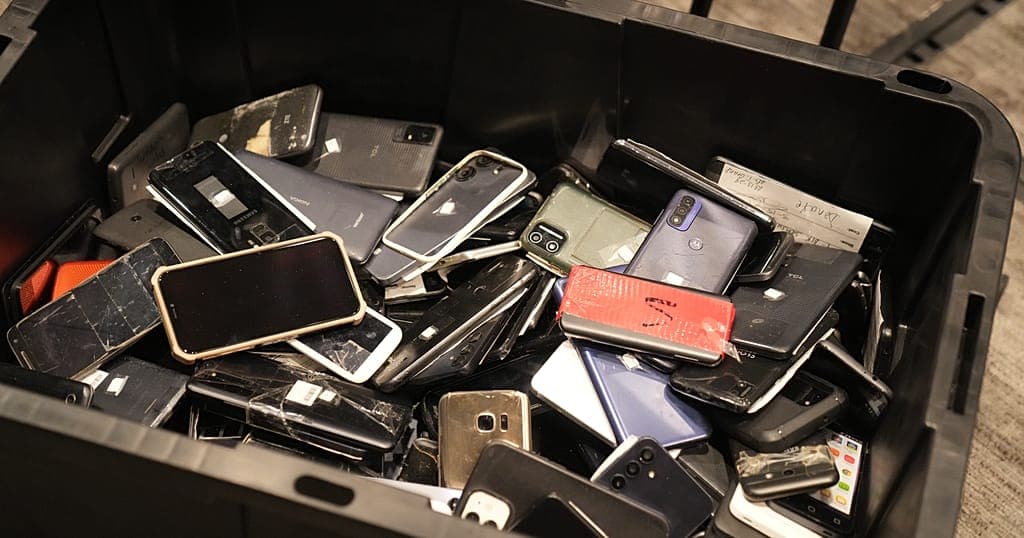
According to Africanews, more than 400 million smartphones are discarded in China each year, and in the neon‑lit aisles of Shenzhen’s second‑hand market, traders from Africa to Bangladesh line up to buy them.
Why it matters
These devices are not merely waste; they represent a rapidly expanding global secondary market that is reshaping mobile access in emerging economies. Counterpoint Research reports a 13 percent year‑on‑year growth in the first half of 2026, bringing the market to 150 million units. In regions where chip shortages and soaring new‑phone prices limit affordability, used phones become a critical gateway to internet connectivity, digital payments, and online services.
From dump to demand: the flow of devices
China, the world’s largest smartphone producer, generates a surplus of older or damaged phones that would otherwise end up in landfills. Traders like Pakistani businessman Akhtar Muhammad travel to Shenzhen to purchase LCD panels and broken units, then ship them back to South Asia and Africa for repair and resale. A young Nigerian buyer, known only as Mama, says he bought around 40 phones in a single day, underscoring the volume of trade that passes through informal channels.
The price differential is stark. In Africa, a refurbished device can fetch $110 to $132 more than the purchase price in China, according to Algerian shopkeeper Abdul Rahim, who flies to China up to three times a month. This margin fuels a supply chain that moves thousands of phones across continents each month.
Formalising the trade: the rise of self‑service malls
Near the bustling market, a more organised model is emerging. PaiJiTang Mall, operated by recycling firm ATRenew, offers a self‑service platform where over 20,000 used phones are displayed on shelves. Buyers scan QR codes to receive instant inspection reports and pricing, test devices on the spot, and place bulk orders. The mall welcomes up to 1,000 visitors daily, with roughly one‑third—about 333—being international traders.
ATRenew’s processing hub in Dongguan, north of Shenzhen, handles an estimated 30,000 second‑hand gadgets each day. More than 300 technicians inspect, refurbish, and pack the devices before they are shipped abroad. Quality‑control manager Li Cankang notes that outbound shipments match the daily intake, indicating a tightly balanced operation.
Apple products dominate the export mix, accounting for 70 to 80 percent of sales, while the remainder consists of Chinese brands. Counterpoint observes that older iPhone models such as the 11, 12, and 13 are losing market share to cheap Androids within China, yet they retain strong brand appeal overseas, where they often receive a second life.
Profit margins and logistics
The logistical chain is surprisingly streamlined. Abdul Rahim explains that obtaining a Chinese visa is a matter of days, allowing frequent trips. Once in Shenzhen, traders can acquire devices at a cost gap of $110‑$132 per unit, then resell them at local market rates that can be double that amount, depending on model and condition.
For buyers like Mama, the profit comes not only from resale but also from offering repair services locally. By replacing broken screens or batteries, they add value and extend device lifespans, creating micro‑entrepreneurial opportunities in their home countries.
Caveats and data limits
While the figures from Counterpoint Research and ATRenew provide a concrete snapshot, they capture only the formalised segment of the trade. A substantial portion of transactions still occurs in informal markets, where pricing, quality control, and shipment volumes are not systematically recorded. Consequently, the true scale of used‑phone flows could be higher, and the environmental impact—both positive in terms of reuse and negative in terms of e‑waste handling—remains difficult to quantify.
Moreover, the data reflects a moment in 2026; future shifts in chip supply, new‑phone pricing, or regulatory changes could alter the dynamics dramatically. Readers should view the numbers as indicative rather than exhaustive.
These observations were reported by Africanews.
The Morning Brief
One email a day with the stories that matter. Free, forever.
No spam. Unsubscribe anytime.
Comments (0)
Be the first to share your thoughts.