
Saudi-Led Coalition Claims Yemen Conflict Can Conclude Immediately If Houthis Accept Terms
The Saudi-led coalition in Yemen insists the war could conclude immediately if Houthi forces accept a UN-backed peace plan, even as strikes on economic infrastructure escalate.
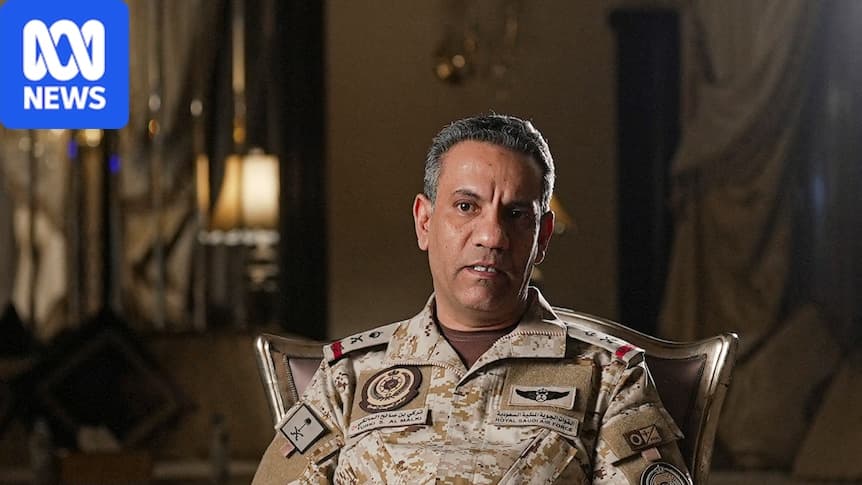
According to reporting from ABC News and international wire services, the Saudi-led coalition in Yemen insists the grinding regional war could halt almost immediately if Houthi forces accept a United Nations-backed roadmap. Major General Turki al-Maliki stated that Riyadh maintains a strict strategic boundary around Aden, Yemen's interim government capital, as insurgent units push closer to the strategic port city.
The ongoing escalation underscores a volatile friction point across the wider Middle East, directly testing regional security frameworks. Coalition headquarters in Riyadh coordinates daily surveillance operations, tracking persistent drone movements originating from Houthi-controlled northern valleys.
This diplomatic overture arrives alongside intense cross-border hostility, challenging the notion that a negotiated settlement remains close at hand. Economic infrastructure across both territories has absorbed sustained missile and drone strikes, threatening vital maritime transit lanes and capital investments. The collision between political posturing and battlefield realities exposes deep-seated distrust among all belligerents.
The Coalition Position and Military Strategy
Saudi military planners maintain that the pathway out of the protracted conflict relies entirely on political compliance from the Houthi movement. Coalition leadership continues to provide round-the-clock air support while insisting that local Yemeni ground forces retain the manpower and tribal backing required to hold territory.
Defending Aden and Securing Southern Boundaries
With Houthi fighters pressing forward to within about 60 kilometres of Aden, coalition commanders have established a definitive red line around the interim capital. Major General al-Maliki dismissed the necessity of deploying external ground battalions to repel the advance, emphasizing domestic troop capabilities.
Reinforced checkpoint positions along the northern approaches prevent unauthorized vehicle transit into the city center. Local commanders coordinate closely with southern security brigades to intercept insurgent sleeper cells before they can infiltrate urban neighborhoods or sabotage municipal utilities.
Air Defense Readiness and Ammunition Supplies
Addressing persistent questions regarding military exhaustion, coalition officials rejected claims of dwindling interceptor inventories. Riyadh continues to procure advanced munitions commercially, maintaining high interception success rates despite weekly barrage attempts targeting commercial hubs and sovereign infrastructure.
They don't have to bring another army from outside.
— Major General Turki al-Maliki, Coalition Spokesperson
Radar operators monitor incoming projectile trajectories around the clock, firing surface-to-air missiles to neutralize threats before they reach populated areas. Supply depots receive regular shipments by air and sea transport, ensuring missile batteries stay fully loaded throughout extended combat engagements.
The strategic calculus in Riyadh involves balancing defensive counterstrikes against the imperative to protect domestic economic transformation programs from persistent security disruptions. Insurgent rocket attacks complicate commercial aviation schedules, forcing regional regulators to reroute flights and increase security inspections at all major airports.
Image: abc.net.auThe Insurgent Counter-Offensive and Economic Targets
Conversely, Houthi leadership frames their military campaign as a necessary response to coalition air raids hitting vital fuel terminals and commercial ports. Recent retaliatory strikes targeting Red Sea shipping lanes and facilities inside Saudi territory demonstrate an explicit strategy to raise the economic cost of the intervention.
Insurgent commanders deploy mobile launch platforms hidden within civilian truck beds to evade aerial detection by coalition reconnaissance drones. This asymmetric warfare tactic allows insurgent units to launch sudden salvoes toward coastal oil installations before retreating into rugged mountain terrain.
Targeting Infrastructure in Western Yemen
Insurgent-run media outlets reported heavy bombardments hitting Ras Isa, the primary fuel import hub situated inside western Hodeidah province. Prior to the strikes, coalition broadcasts urged local civilians to evacuate the vicinity, signaling a deliberate shift toward crippling adversary supply lines.
Fuel storage tanks burned for several days following the precision air raids, cutting off a primary revenue stream for the Houthi administration. Maritime traffic near Hodeidah port remains severely restricted, as cargo ships wait days for clearance from naval patrols inspecting vessels for contraband weapons.
Pressure on Regional Investment and Aviation Hubs
Frequent drone and missile attacks reaching as far as Riyadh, including strikes near major international airports and corporate headquarters, complicate the kingdom's broader modernization ambitions. Disruptions to maritime transit and urban safety metrics directly threaten foreign direct investment inflows tied to long-term national development goals.
International corporate executives demand enhanced security guarantees before committing capital to multi-billion dollar construction projects planned along the Red Sea coast. Insurance underwriters routinely raise premium rates for commercial vessels navigating the Bab al-Mandeb strait, driving up shipping costs for imported food and manufactured goods across the region.
Image: abc.net.auWeighing Political Settlement Against Battlefield Realities
Evaluating the friction between these opposing camps reveals a fundamental impasse over preconditions for a lasting ceasefire. Riyadh demands unconditional acceptance of the recognized government's framework, whereas insurgent factions insist upon lifted blockades, suspended foreign military support, and financial reparations.
Mediators from Oman and the United Nations shuttle between capitals, attempting to bridge wide gaps over sovereign authority and revenue sharing from oil exports. Neither side shows an inclination to compromise on core demands, leaving diplomatic channels strained and prone to sudden collapse whenever frontlines erupt into heavy fighting.
Acknowledging Operational Gaps and Coordination Flaws
Coalition leadership openly acknowledged tactical coordination breakdowns occurring on multiple occasions over recent months, which contributed to unexpected government pullbacks near the Bab al-Mandeb strait. Remedying these command friction points remains vital as troops attempt to break stubborn insurgent sieges around cities like Taiz.
Joint operations centers now employ standardized communication protocols to share real-time intelligence between Saudi air coordinators and Yemeni ground units. Military instructors conduct regular training drills to improve battlefield responsiveness, aiming to reduce friendly fire incidents and prevent future territorial losses along contested frontlines.
The Diplomatic Dilemma Facing Regional Stakeholders
As casualties mount across frontlines monitored by international agencies, the viability of a purely political solution grows increasingly tenuous. Riyadh must decide whether sustained air campaigns can successfully deter Houthi advances without triggering a wider economic crisis that undermines its domestic transformation agenda.
International relief organizations struggle to deliver food and medical supplies to populations trapped in active combat zones, as fighting blocks primary highway routes. Regional diplomats warn that without immediate concessions from both factions, the conflict will enter another destructive year of attrition, leaving millions of civilians to bear the ongoing humanitarian toll.
The Morning Brief
One email a day with the stories that matter. Free, forever.
No spam. Unsubscribe anytime.
Comments (0)
Be the first to share your thoughts.