
Lagos Police Seize Counterfeit Naira, Euros, and Dollars in Ikorodu Raid
Lagos State Police arrest three suspects and seize counterfeit naira, euro, and US dollar notes during a raid in Ikorodu.
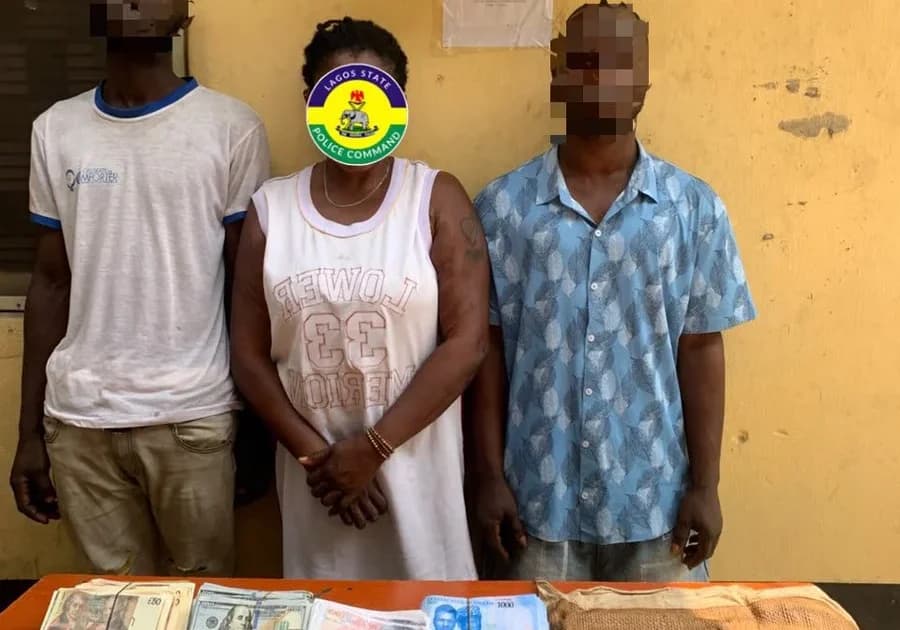
According to Punch Newspapers, operatives of the Lagos State Police Command have arrested three suspects and recovered a stash of counterfeit local and foreign banknotes during a weekend raid. The raid targeted a suspected criminal hideout in the Ota Agbowa area of Ikorodu, netting thousands of fake bills spanning three major currencies.
Authorities identified the detained individuals as 39-year-old Ojo Femi, 40-year-old Ojo Shola, and 32-year-old Olamilekan Ismail. State police officials confirmed that the operation followed actionable intelligence regarding illicit financial activities clustered within the neighborhood. For ordinary residents across Africa's bustling commercial hubs, such underground print shops represent an immediate threat to everyday trade and neighborhood trust.
The Multi-Currency Seizure and Local Economic Realities
People often assume that large-scale counterfeiting rings require sophisticated industrial printing presses tucked deep inside high-security facilities. Measured reality paints a different picture, where small residential hideouts house significant volumes of forged legal tender capable of destabilizing local market stalls.
Detectives moved in during the early morning hours, catching the occupants off guard before any evidence could be destroyed or flushed down plumbing lines. Intelligence reports had flagged unusual nocturnal activity and frequent visitors at the modest residential building for nearly 3 weeks.
During the Ikorodu operation, detectives executed a thorough search of the premises and cataloged distinct batches of forged paper money. Officers recovered 287 pieces of suspected counterfeit one thousand naira notes alongside 373 pieces of fifty euro notes and 302 pieces of one hundred dollar bills.
Inventory Breakdown From the Ota Agbowa Hideout
The sheer variety of currencies points to an operation designed to infiltrate diverse transaction channels, from neighborhood street markets to bureau de change operators handling foreign exchange. Small business owners accept cash under tight time constraints, leaving shopkeepers vulnerable to well-crafted forgeries.
Forensic experts examined the paper texture, security threads, and watermark simulations on the seized bills under ultraviolet light. Initial lab assessments revealed that the counterfeiters used commercial-grade inkjet printers paired with specialized chemical washes to mimic genuine cotton-blend currency paper.
Preliminary police interrogation indicates that the three suspects acknowledged ownership of the recovered currencies. Investigators are currently tracing how these counterfeit notes entered the local Economy & Markets ecosystem and whether wider syndicates supplied the raw materials.
Image: punchng.comCommunity Impact and the Burden on Everyday Traders
When fake currency circulates freely, the heaviest financial penalty inevitably falls on market women, commercial drivers, and small shop owners who lack currency-checking machines. A single rejected thousand-naira note can wipe out an entire day's profit for a petty trader working on narrow margins.
Local market associations in Ikorodu have repeatedly warned their members about the rising influx of counterfeit bills during peak trading hours. Vendors now hold unfamiliar bank notes up to sunlight or scratch the surface pigments with their fingernails to test ink durability.
Security analysts note that neighborhood vigilance remains the first line of defense against financial fraud. Police leadership continues to urge citizens to scrutinize cash transactions and report suspicious financial behavior immediately through official emergency channels.
Image: punchng.comThe Command remains resolute in its responsibility to safeguard lives and property and ensure that individuals and groups involved in criminal activities are brought to justice.
— SP Abimbola Adebisi, Police Public Relations Officer
Broader Security Trends Across Regional Commercial Centers
This Ikorodu bust does not stand alone in recent regional police records. Law enforcement agencies across several states have intercepted similar illicit printing operations over the past few months.
Underground currency production thrives in densely populated urban peripheries where landlords rarely vet tenants rigorously. Economic pressures and high inflation rates frequently drive desperate individuals toward financial crimes with high profit margins.
In September, authorities in Oyo State arrested six suspects and seized 89 counterfeit 100-euro notes. Earlier in November, police in Ondo State uncovered a suspected fake dollar factory, recovering three separate bags filled with forged US currency.
Ongoing Investigations and Next Steps for the Command
The three suspects remain locked in police custody while detectives piece together the network's distribution reach. Commissioner of Police Tijani Fatai commended the tactical squad for swift action and reiterated the command's zero-tolerance stance on financial Crime & Justice.
Interrogators are currently analyzing mobile phone records seized from Femi, Shola, and Ismail to identify local accomplices and retail conduits. Investigators plan to arraign the trio in a magistrate court as soon as the preliminary case file is completed.
As forensic teams analyze serial numbers and ink compositions, investigators must determine whether the Ota Agbowa cell operated independently or served as a satellite distributor for a larger transnational syndicate.
The Morning Brief
One email a day with the stories that matter. Free, forever.
No spam. Unsubscribe anytime.
Comments (0)
Be the first to share your thoughts.