
US Military Forces Repel Drone Swarm Over UK Airbase Amid Foreign Threat Fears
US military personnel deployed counter-drone technology to repel half a dozen drones swarming Britain's RAF Lakenheath base.
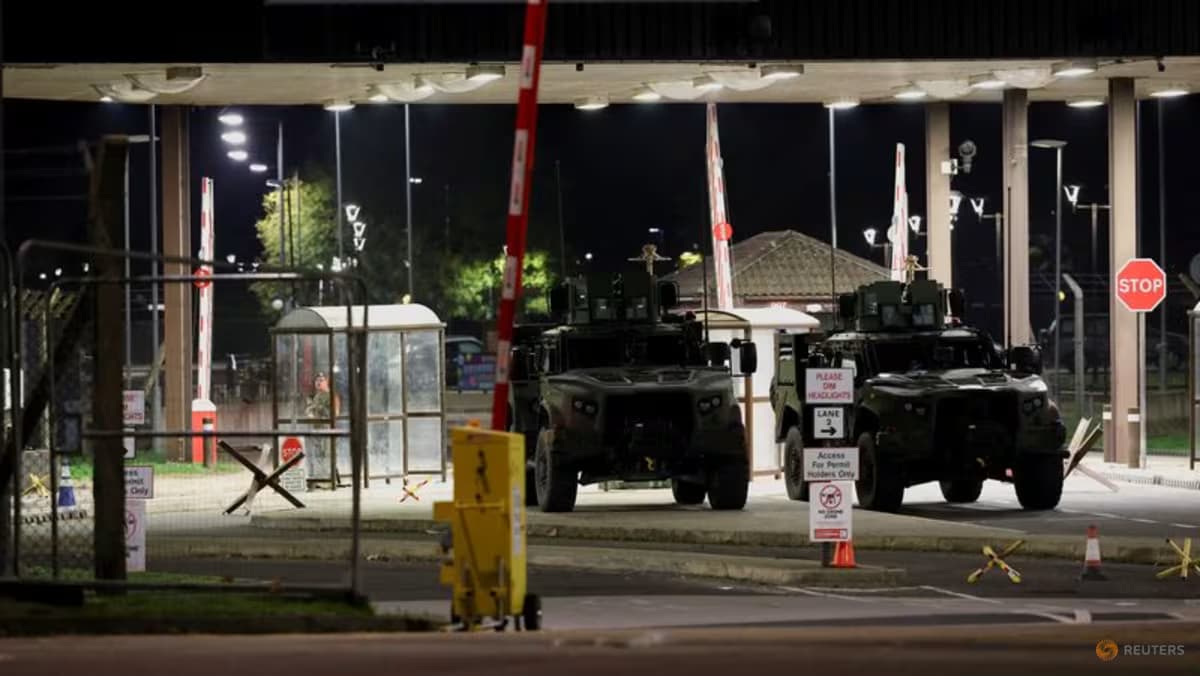
According to reporting from channelnewsasia.com and the Financial Times, United States military personnel deployed counter-drone technology to repel half a dozen unmanned aerial systems swarming Britain's RAF Lakenheath base on Nov 13. While official accounts frame the incident as a swiftly neutralized security breach, the event exposes deep vulnerabilities in allied airbase defense networks across World News and the broader Security beat.
Conventional wisdom holds that military installations housing strategic assets possess impregnable perimeters against low-cost aerial threats. Yet the speed and scale of this November incursion challenge that assumption directly, forcing a hard look at how modern installations handle unauthorized hardware.
The Allied Defense Case for Swift Containment
Defense traditionalists argue that the November 13 incident at RAF Lakenheath validates existing multi-agency coordination protocols. When suspicious airspace activity emerged over the Suffolk facility, American security forces, Ministry of Defence Police, and local Suffolk authorities locked down the perimeter immediately. Proponents of this operational model emphasize that zero aircraft, personnel, or base infrastructure sustained damage during the confrontation.
Supporters point to the rapid deployment of specialized counter-drone measures as proof that current force protection upgrades are working as intended. The base returned to standard operating posture within hours, avoiding the prolonged disruptions that typically follow facility-wide security alerts. From this perspective, the system absorbed an unexpected shock and neutralized the threat without friendly casualties or asset loss.
Coordinated Response Metrics at Suffolk
Joint patrols between British civilian constabularies and United States Air Force units established a secure zone within minutes of the initial alert. This interoperability between local law enforcement and foreign military personnel remains a cornerstone of host-nation defense agreements.
Officials confirmed that standard defensive hardware disabled the incoming swarm before any malicious payload could be delivered. No physical debris was recovered from the airfield, which investigators suggest points to advanced electronic countermeasures rather than kinetic interception.
Official Statements on the Lakenheath Lockdown
Ministry of Defence Police and Suffolk Police worked closely with USAF Security Forces to respond to reports of unauthorised drone activity at RAF Lakenheath on 13 Nov and the situation was quickly resolved, with RAF Lakenheath returning to normal security and force protection measures.
— Ministry of Defence Spokesperson, UK Ministry of Defence
That official reassurance, however, glosses over the uncomfortable reality that hostile operators mapped the facility's radar horizons without immediate detection. Defense analysts note that stopping a swarm mid-flight is only half the battle when the operators remain entirely anonymous.
Image: channelnewsasia.comThe Critical Case Against Perimeter Resilience
Skeptics and security analysts view the Lakenheath swarming not as a success story, but as a glaring tactical failure that highlights an unsustainable defense cost curve. Deploying expensive electronic countermeasures against commercial-grade or state-directed quadcopters creates an unsustainable economic asymmetry for defending forces. When adversaries can probe multi-billion-dollar installations with cheap hardware, the burden of proof rests heavily on the base's radar and jamming infrastructure.
Furthermore, this incident follows a troubling pattern across British military installations utilized by American forces. In September, a separate threat linked to Iran forced the relocation of strategic B-1 bombers from RAF Fairford. Tehran has repeatedly denied involvement in these incursions, yet the operational disruption remains identical regardless of diplomatic denials.
The Unrecovered Hardware Dilemma
The failure of British and American personnel to recover any of the six downed drones leaves a massive intelligence vacuum for counter-intelligence teams. Without physical wreckage, forensics experts cannot extract telemetry data, guidance chips, or supply-chain origins.
This missing evidence prevents commanders from determining whether the swarm originated from a nearby local launch site or operated via pre-programmed autonomous flight paths. Every unrecovered drone represents a lost opportunity to map the adversary's technical capabilities.
Escalating Threats Across British Installations
Security planners can no longer treat these events as isolated local pranks or rogue hobbyist errors. Successive penetrations at Fairford and Lakenheath suggest a coordinated effort to test Allied response times and sensor blind spots across the UK mainland.
Intelligence agencies have long tracked Iranian-backed networks targeting dissidents and Jewish sites within Britain. Expanding those operations to probe active USAF airbases marks a dangerous escalation in gray-zone friction.
Image: channelnewsasia.comWeighing the Balance of Forward-Base Vulnerability
Balancing force protection against open-air accessibility requires a radical redesign of how overseas military hubs manage their immediate airspace. Traditional airbases were engineered to deter long-range bombers and tactical missiles, not decentralized swarms of low-altitude drones launched from civilian acreage outside the wire. As military planners weigh the next phase of base defense, the unresolved question remains whether counter-drone technology can scale fast enough to protect every vulnerable perimeter.
The Morning Brief
One email a day with the stories that matter. Free, forever.
No spam. Unsubscribe anytime.
Comments (0)
Be the first to share your thoughts.