
U.S. Military Disables Merchant Ship Attempting to Breach Iran Naval Blockade
U.S. Central Command confirmed that military aircraft disabled the Palau-flagged M/V Pacific Archer in the Gulf of Oman for attempting to breach the blockade.
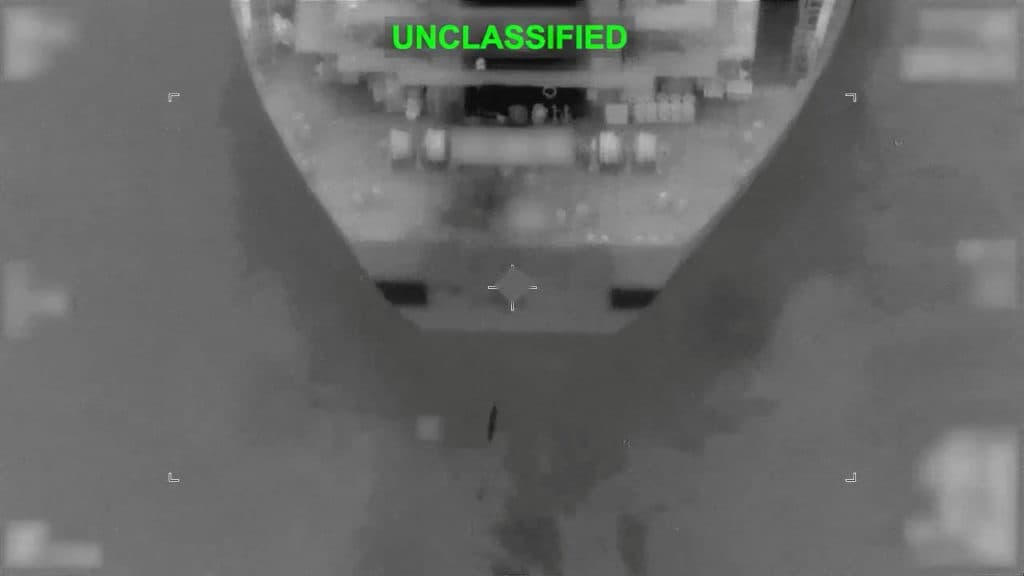
According to PBS, the United States military disabled another merchant vessel in the Gulf of Oman on Thursday after the ship attempted to run an ongoing American naval blockade surrounding Iranian ports. U.S. Central Command confirmed that a military aircraft targeted the Palau-flagged M/V Pacific Archer with precision strikes to neutralize its propulsion system.
The incident highlights the volatile reality of maritime commerce across the Middle East as Washington maintains strict enforcement measures. While naval forces have redirected more than 150 commercial ships since the restrictions began, kinetic strikes remain a high-stakes tool to deter unauthorized transit.
How the Pacific Archer Strike Unfolded in the Gulf of Oman
Naval planners designed the current exclusion perimeter to choke off unauthorized maritime commerce moving to and from Iranian ports. Operators in the region face an intense matrix of electronic surveillance, drone patrols, and surface combatants patrolling designated shipping lanes.
Tracking the M/V Pacific Archer From Bandar Abbas
The confrontation began when the M/V Pacific Archer departed the Iranian port of Bandar Abbas carrying a destination listed as Singapore. U.S. forces tracked the merchant vessel as it approached the exclusion zone enforced by the American naval presence in the region. Intelligence officers monitored its transponder signals and cargo manifests to verify that the ship intended to defy the ongoing naval quarantine.
Precision Munitions and Propulsion Neutralization
According to military statements, a U.S. aircraft fired precision munitions directly at the stern of the vessel on Thursday. The attack successfully disabled the ship's propulsion while leaving the civilian crew unharmed. Salvage tugs later approached the stranded freighter to secure the area and prevent any environmental hazard in the busy Gulf corridor.
Broader Enforcement Statistics Under the Blockade
The Pacific Archer marks at least the 15th vessel disabled by American forces since the blockade was first established in the spring. Naval commanders maintain that repeated warnings are issued before any kinetic action is taken against non-compliant merchant ships. Most targeted owners choose to heave to or alter course when intercepted by surface patrols, making outright propulsion strikes a costly exception.
Tehran Responds With Vowed Counter-Operations and Strait Friction
Tehran's military apparatus views the American blockade as a direct challenge to sovereign commercial rights in international waters. Senior officials have stepped up their public messaging to signal that naval forces will not permit the quarantine to hold indefinitely.
Iranian Naval Command Pushes Back Against American Patrols
The latest strike arrived amid escalating rhetoric from Iranian military leadership regarding control over critical regional waterways. State television broadcast statements from Iranian naval commander Shahram Irani outlining plans to counter the ongoing American maritime pressure.
that will not only break the naval blockade but also drive the enemy out of the region's waters.
— Shahram Irani, Commander of the Iranian Navy
These pledges translate into heightened operational tempo for regional units tasked with testing the edges of the American exclusion zone. Small-boat swarms and aerial drones frequently shadow U.S. guided-missile destroyers operating near the Makran coast.
Strait of Hormuz Mines and November Export Contractions
Concurrently, Iran's Revolutionary Guard reported that two separate tankers attempted unauthorized transits through the Strait of Hormuz. One vessel allegedly struck a naval mine during the maneuver, while regional oil flows experienced a measurable contraction during November. Insurance underwriters responded instantly by jailing war-risk premiums for any hull transiting within striking distance of Iranian shores.
Macroeconomic Ripples Across Global Energy Routes
Maritime bottlenecks in the Strait of Hormuz have begun to weigh heavily on international commodity markets and shipping logistics. According to data from Rystad Energy, oil flows dropped by approximately 20 percent during the first two weeks of November compared to prewar export baselines.
Logistics Rerouting and Rising Transport Costs
United Nations trade analysts note that cumulative disruptions across major global chokepoints are lengthening voyages and inflating fuel expenses. Although alternative transport arrangements have kept goods moving, businesses face severe cost penalties as port congestion mounts worldwide.
Diplomatic Pressures and Ongoing Policy Stalemate
Regional diplomats from Persian Gulf nations, Pakistan, and Turkey continue urgent talks with U.S. officials to prevent a wider escalation. Meanwhile, the administration balances domestic political debates over the conflict's trajectory alongside sustained naval patrols in World News theaters.
The Morning Brief
One email a day with the stories that matter. Free, forever.
No spam. Unsubscribe anytime.
Comments (0)
Be the first to share your thoughts.