
Seoul Tracks Unconfirmed Reports of Potential Kim Jong Un Visit to China
South Korean intelligence is monitoring developments regarding a potential visit to China by North Korean leader Kim Jong Un.
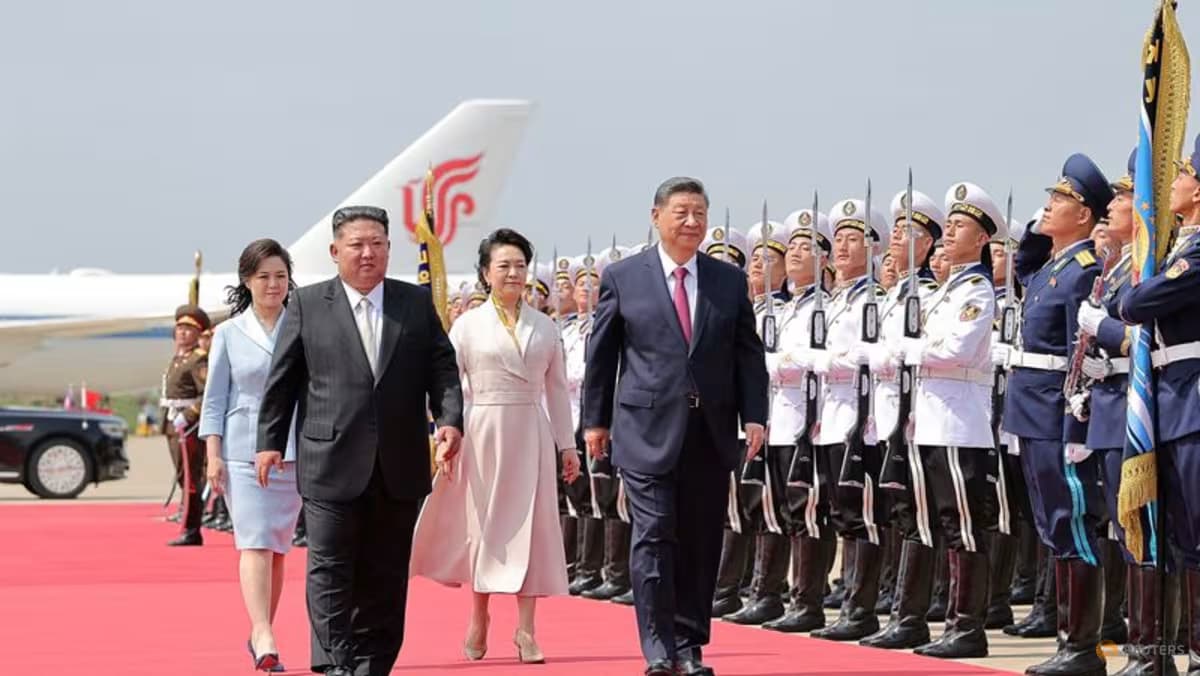
According to reporting from Channel NewsAsia, intelligence officials in Seoul are closely watching for signs that North Korean leader Kim Jong Un might travel to Beijing. South Korea's National Intelligence Service confirmed it is tracking several indicators after foreign media broadcasts detailed potential high-level diplomatic exchanges between Pyongyang and its traditional ally across the border.
Intelligence Indicators and Border Security Triggers
Speculation intensified after South Korean broadcaster KBS cited diplomatic sources claiming Chinese President Xi Jinping mentioned a possible upcoming visit by Kim during a recent bilateral summit. Observers on the ground noted that local authorities in the Chinese border city of Dandong issued operational alerts mirroring preparations seen during previous VIP crossings. Those alerts flagged heightened customs inspections and extra police patrols along the Yalu River bridge.
That critical infrastructure node connects the two nations via a primary span over the Yalu River, serving as the economic lifeline for bilateral commerce. Trucks laden with coal, textiles and foodstuffs cross the bridge each day, sustaining markets on both sides of the river. Any disruption would ripple through supply chains that feed factories in Liaoning and factories in Gyeonggi-do.
Seoul's security apparatus has maintained a posture of careful observation without confirming the timeline of any impending journey. The presidential office in Seoul clarified that while Xi did not explicitly detail the rumored trip during official proceedings, state monitors remain vigilant regarding shifting bilateral dynamics in the region. Cross-border freight traffic and customs coordination often fluctuate when high-level diplomatic delegations prepare for transit.
Weighing Strategic Leverage on the China Border
Dandong functions as the barometer for trade and political alignment between Beijing and Pyongyang. When security protocols tighten in the border hub, regional analysts track the movement as a primary signal of impending state visits or policy shifts. Past unannounced crossings by North Korean leadership underscored the reliance on Chinese economic lifelines amid persistent international trade restrictions.
China remains North Korea's single largest trading partner and primary diplomatic shield on the global stage. Yet relations have frequently experienced friction over security escalations and nuclear ambitions. Intelligence agencies weigh these historical tensions against current logistical preparations to determine the probability of a summit meeting in the coming weeks.
Image: channelnewsasia.comPyongyang's Nuclear Stance and Trilateral Alignments
North Korea has codified its nuclear weapons status into domestic law, rejecting international disarmament frameworks championed by Western powers. Pyongyang continues to ignore outreach from Washington, insisting that any future diplomatic engagement must account for its entrenched atomic capabilities. Analysts suggest that a trip to Beijing would provide Kim an opportunity to coordinate strategy with Xi following recent high-level talks involving Washington and Moscow.
Such coordination directly impacts wider security frameworks across East Asia and alters diplomatic calculations for neighboring capitals. Washington faces complex choices as Pyongyang demands recognition as a permanent nuclear state before returning to formal negotiations. Security experts note that regional stability hangs on how closely Beijing and Pyongyang align their diplomatic messaging in response to external pressure.
Evaluating the Stakes for Regional Stakeholders
South Korean policymakers must navigate these developments while maintaining close coordination with traditional Western allies. Any formal summit between Kim and Xi would signal a renewed alignment that could complicate ongoing deterrence efforts. Intelligence services across the region continue to assess incoming telemetry and border reports to gauge the immediate trajectory of cross-border diplomacy.
Seoul's spy agency told AFP Saturday it was keeping a close eye on various developments, when asked about the report.
— National Intelligence Service, Seoul
The unfolding diplomatic scenario places renewed emphasis on intelligence gathering along the frontier. As regional actors monitor every shift in border logistics, the coming weeks will determine whether the rumored summit materializes into a formal state visit.
Image: channelnewsasia.comChinese Border City Dandong Mobilizes Resources
Local officials in Dandong announced a series of logistical upgrades aimed at accommodating a possible high-profile delegation. The city council approved extra funding for road resurfacing on the bridge approaches and for expanding parking bays near the Sino-Korean Friendship Hotel.
Customs Checks and Railway Scheduling
Customs officers have begun random inspections of cargo trains bound for the Yalu crossing, a step rarely seen outside of seasonal peak periods. Inspectors now scan containers for electronic surveillance equipment that could be used to monitor diplomatic convoys.
Railway operators have also adjusted timetables, inserting a buffer slot that would allow a presidential train to slip through without clashing with freight traffic. The buffer slot adds a 15-minute hold on the main line, a maneuver that costs shippers an estimated $2,000 per delayed cargo.
Security Drills and Air Patrols
Air defense units conducted a low-altitude drill over the bridge early Tuesday, simulating escort procedures for a VIP aircraft. Fighter jets roared past the riverbank, their presence a clear signal to both domestic audiences and foreign observers.
Ground forces stationed near the border have increased patrol frequency, checking for unauthorized vehicles that might breach a temporary security perimeter. The patrols follow a pattern established during the 2018 summit between Kim and Xi, when similar measures helped ensure a smooth crossing.
Allied Responses in Seoul and Washington
Both Seoul and Washington have issued quiet statements emphasizing the need for stability while hinting at readiness to respond to any shift in Pyongyang's posture. Diplomatic cables circulating in the Pentagon describe the situation as "highly fluid, with rapid escalation potential."
South Korean Defense Briefings
During a closed-door meeting on Thursday, the South Korean Joint Chiefs presented satellite imagery showing increased troop movements near the Demilitarized Zone. Analysts interpreted the images as a precautionary measure, not an offensive buildup.
Defense Minister Lee Jong-sup warned that any surprise maneuver by the North would trigger a coordinated response with U.S. forces stationed in the region. The warning carries weight, as joint drills between Seoul and Washington have been scheduled for early December.
U.S. Diplomatic Channels
U.S. officials in Seoul have reached out to their Chinese counterparts, seeking clarification on whether Beijing intends to host Kim in a formal setting. A senior State Department official told reporters that Washington prefers a multilateral framework that includes Tokyo and Moscow.
Meanwhile, the National Security Council has drafted contingency plans that outline diplomatic overtures, economic sanctions and, if necessary, a calibrated military alert. The plans hinge on whether Kim's visit would be framed as a "strategic partnership" or a "mere courtesy call."
Potential Scenarios for a Beijing Visit
Analysts outline two divergent pathways: one in which Kim arrives in early December, and another where preparations stall amid renewed sanctions pressure. Each pathway carries distinct implications for regional security calculations and for the domestic politics of all three capitals.
If the Trip Materializes in Early December
A December arrival would likely coincide with the anniversary of the 2018 summit, a symbolic date that could be used to showcase renewed Sino-North Korean cooperation. Both leaders might issue a joint communiqué pledging "mutual respect" and "non-interference," language that would complicate U.S. and Japanese diplomatic messaging.
Such a communiqué could also pave the way for a new trade corridor that bypasses United Nations sanctions, allowing additional coal shipments to flow through the Dandong port. The increased revenue would bolster Pyongyang's cash reserves, giving it more leeway to fund its missile program.
If Preparations Stall
Should Beijing hesitate, Dandong's heightened security posture would likely be scaled back within weeks, and customs alerts would revert to baseline levels. The de-escalation would signal to Washington that Beijing is not ready to endorse a high-profile visit under current pressure.
In that case, Seoul might push for a renewed round of joint military exercises with the United States, aiming to demonstrate deterrence credibility. The exercises could involve live-fire drills near the West Sea, a move that would test North Korea's air-defence readiness.
Decision-makers in all three capitals now weigh the cost of a high-profile summit against the risk of emboldening a nuclear-armed neighbor. The next intelligence briefing, scheduled for next Monday, will likely set the tone for diplomatic moves in the weeks that follow.
The Morning Brief
One email a day with the stories that matter. Free, forever.
No spam. Unsubscribe anytime.
Comments (0)
Be the first to share your thoughts.