
Bwala Alleges Kwankwaso Eyes 2031 Bid Through Obi Alliance
Presidential adviser Daniel Bwala claims Rabiu Kwankwaso is backing Peter Obi's 2027 ambitions to build support for a 2031 run.
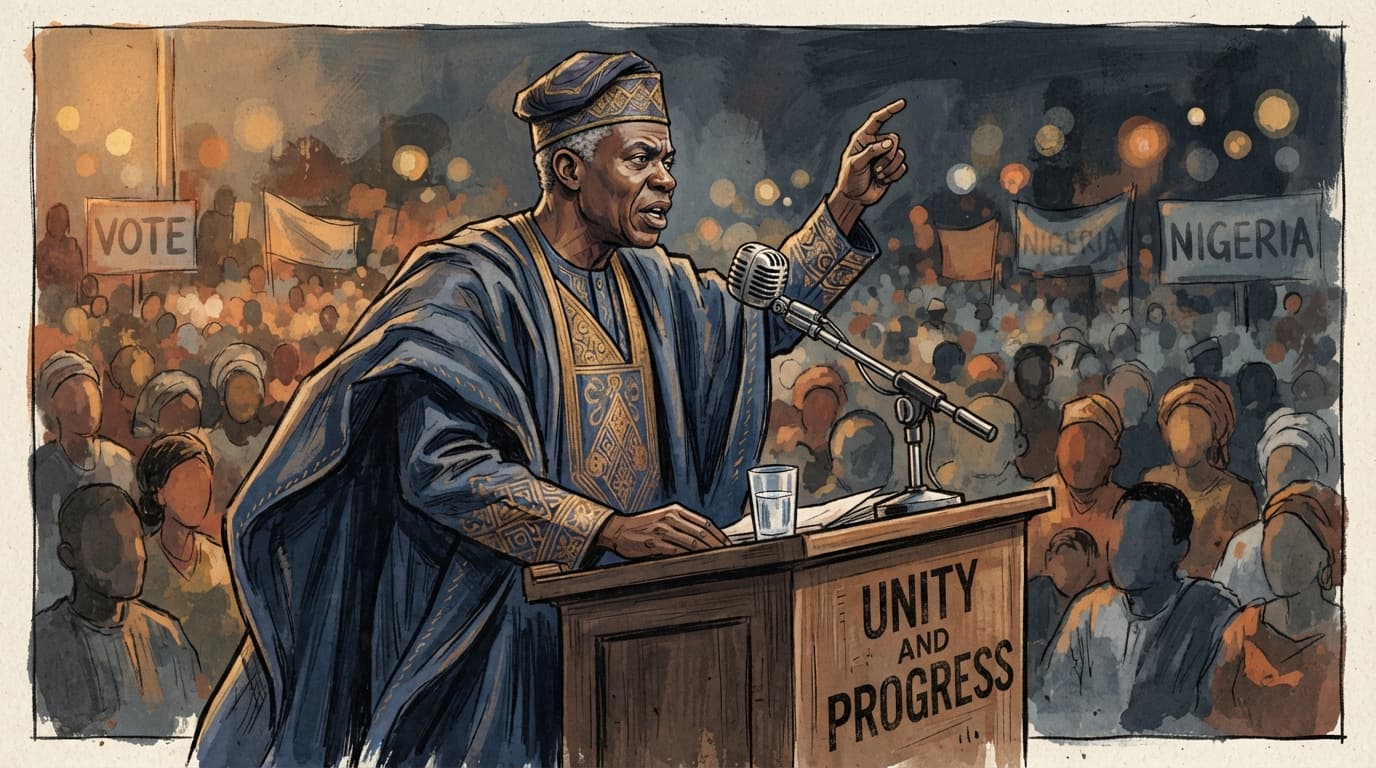
Presidential Adviser Claims 2027 Strategy Targets Long-Term Gains
According to reporting from vanguardngr.com and The Cable, Daniel Bwala has publicly framed ongoing coalition discussions as a calculated long-range play. The Special Adviser to President Bola Tinubu on Policy Communication asserted that Rabiu Musa Kwankwaso is positioning himself for a 2031 presidential run by aligning with Peter Obi for the upcoming 2027 electoral cycle. Bwala laid out the strategic claim during an appearance on Channels Television's Politics Today program.
This political friction unfolds across Nigeria's dynamic Africa bureau, where shifting alliances frequently redraw regional maps long before ballots are cast. Observers tracking federal Politics note that high-stakes maneuvering often begins years ahead of formal party primaries. Bwala argued that Kwankwaso's backing of Obi serves as a stepping stone rather than an end in itself.
Daniel Bwala, a former journalist turned political strategist, has earned a reputation for translating Tinubu’s policy messages into media sound bites. His latest remarks echo a broader Tinubu-led effort to portray opposition talks as opportunistic rather than ideological. By casting the 2027 partnership as a “ladder” to 2031, the adviser seeks to sow doubt among undecided voters.
Kwankwaso, a former governor of Kano State, commands a network of traditional leaders and business figures across the north. His public endorsement of Obi, a former governor of Anambra State, marks a rare cross-regional bridge that could reshape the electoral map. The move also forces the ruling All Progressives Congress to reassess its own coalition calculus.
Weighing the Mechanics of Factional Realignment
The core assertion hinges on how opposition heavyweights calculate future viability against incumbent strength. By supporting Obi in 2027, Kwankwaso allegedly seeks to consolidate northern and independent blocks that can be leveraged four years later. Political analysts point out that such coalition-building carries distinct mathematical risks in multi-party contests.
In Nigeria, presidential candidates must secure a spread of votes across at least 24 of the 36 states and the Federal Capital Territory. That rule forces any challenger to court both the densely populated south-east and the vote-rich north-west. The Kwankwaso-Obi alignment, if it survives internal frictions, could meet that geographic hurdle.
Calculating Electoral Calculus Across Regional Voting Blocs
Electoral math in Nigeria demands broad coalitions that bridge deep geographic and cultural divides. Kwankwaso commands a loyal base rooted in Kano State and surrounding northern territories, while Obi retains significant appeal among urban youth and southern constituencies. Combining these forces presents a formidable challenge to the ruling administration.
Kano alone accounts for over 2 million registered voters, a figure that can swing national totals when paired with southern urban centers such as Lagos and Abuja. Obi’s popularity among first-time voters, especially those aged 18-35, adds a demographic punch that Kwankwaso’s older support base lacks. Together, the two leaders could theoretically command a vote share exceeding 45 percent in a tightly contested race.
Yet the arithmetic hides hidden variables. Voter turnout in northern states historically fluctuates with security concerns, while southern turnout spikes during periods of economic discontent. Aligning two distinct voter motivations therefore requires more than a joint rally; it demands coordinated policy platforms that address agriculture, oil revenue sharing, and youth unemployment simultaneously.
Assessing the Limits of Early-Stage Coalition Claims
To evaluate Bwala's assertions fairly, one must examine the tangible structural hurdles facing any pre-2027 merger. Opposition parties have historically struggled to maintain structural cohesion past the primary selection phase. Past election cycles demonstrate that personality clashes often fracture fragile alliances before voters reach the polls.
In the 2019 cycle, a similar north-south partnership dissolved after internal disputes over candidate zoning. The fallout underscored how quickly personal ambition can override collective strategy. Kwankwaso’s own history of switching party affiliation adds another layer of uncertainty to the current talks.
Moreover, party secretariats in Nigeria operate under limited funding, which hampers joint campaign logistics. Shared advertising budgets, joint manifestos, and synchronized grassroots mobilization require a level of bureaucratic integration rarely seen outside incumbent coalitions. Without a clear roadmap, the alliance risks stalling at the pre-primary stage.
Historical Precedents for Multi-Year Coalition Play
Nigeria’s political landscape offers a handful of examples where leaders plotted a multi-year trajectory toward power. In the early 2000s, a coalition of southern reformists and northern traditionalists agreed to back a single candidate for the 2003 election, only to see the partnership collapse after a disputed primary. The episode taught parties that early promises must be backed by binding agreements.
Another case involved a 2015 alliance that pledged to alternate the presidency between north and south over two terms. While the arrangement survived the first election, it unraveled when the incumbent sought a third term, igniting accusations of betrayal. Those lessons linger in the minds of strategists weighing a 2027-to-2031 plan.
These precedents suggest that long-term coalition ambitions can succeed, but only when the partners share a disciplined internal governance structure. Absent such mechanisms, the alliance may become a talking point rather than a vote-winning engine.
The Data and the Caveat Behind the Strategic Leak
Political analysts must separate confirmed party registrations from speculative alignment strategies broadcast on nightly news programs. Bwala's commentary reflects the ruling party's desire to frame opposition talks as self-serving rather than ideological. No public polling data currently validates whether voters will reward a staged 2027-to-2031 political ladder.
Every political calculation carries an inherent margin of error when underlying party structures remain fluid. As regional power brokers continue private negotiations, the actual impact on voter turnout remains entirely unproven. Observers watching the lead-up to 2027 must weigh these rhetorical salvos against the hard reality of shifting ground-level loyalties.
Recent surveys by independent think-tanks indicate that Nigerian voters prioritize economic stability over coalition narratives. When asked about preferred presidential qualities, respondents repeatedly cited job creation and anti-corruption measures. Without a clear policy synthesis linking Kwankwaso’s northern agenda to Obi’s southern reform agenda, the alliance may fail to resonate.
Media outlets, including Channels Television, have amplified Bwala’s statements, turning a policy briefing into a headline. This amplification can create a feedback loop: opposition leaders feel pressure to respond publicly, which in turn fuels further speculation. The resulting media environment makes it harder for analysts to isolate fact from political theater.
In the absence of transparent coalition agreements, the electoral commission’s role becomes pivotal. The commission must verify party registrations, monitor campaign financing, and enforce the “geographic spread” rule. Any deviation from these regulations could trigger legal challenges that stall the alliance before it reaches the ballot box.
As the 2027 election draws nearer, the strategic leak forces both the ruling party and the opposition to clarify their positions. Tinubu’s administration may double down on its narrative of a “self-serving opposition,” while Kwankwaso and Obi could release joint policy documents to counter claims of opportunism. The next few months will likely reveal whether the 2027-to-2031 strategy is a genuine roadmap or a tactical bluff.
The Morning Brief
One email a day with the stories that matter. Free, forever.
No spam. Unsubscribe anytime.
Comments (0)
Be the first to share your thoughts.