
Spanish Journalist Laura de Chiclana Attacked by Settlers in West Bank
Spanish television reporter Laura de Chiclana was attacked by settlers in the West Bank while documenting harassment against Palestinians, according to network footage.
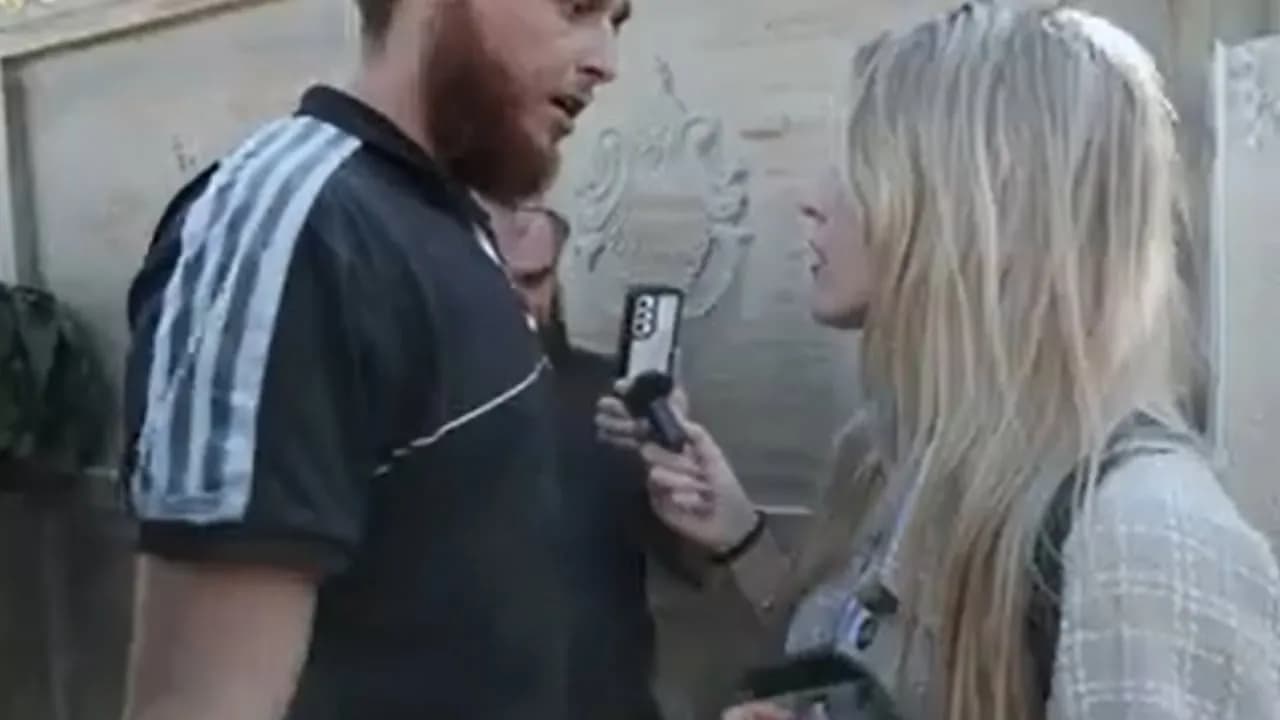
According to reports from World News outlets including the Jerusalem Post and Middle East Eye, Spanish television reporter Laura de Chiclana was physically accosted by a group of settlers in the occupied West Bank while documenting the harassment faced by local Palestinian residents. Telecinco, the Spanish broadcasting network where de Chiclana works as a Middle East correspondent, published verified video footage of the confrontation on Saturday, laying bare the immediate physical risks journalists face on the ground.
The incident illustrates how frontline reporting in contested territories routinely crosses from observation into direct hazard. The broadcasted footage captures the reporter surrounded by hostile individuals before being shoved against a stone wall, highlighting the deteriorating security environment for international press corps operating in the region.
De Chiclana’s camera continued rolling even as the crowd surged, preserving a rare visual record of aggression that would otherwise have gone unreported. The clip sparked immediate debate among media watchdogs, who warned that such exposure could embolden further attacks on press workers.
The Ground-Level Encounter Outside Palestinian Communities
The confrontation unfolded rapidly as de Chiclana attempted to record civilian testimonies regarding ongoing localized violence. Operating without institutional buffers, reporters embedded in rural West Bank areas must navigate volatile crowds where foreign credentials offer little tangible protection.
Physical Assault Captured on Broadcast Footage
The published video evidence documents a clear escalation from verbal intimidation to physical battery. One man in the gathered group lunges forward and forcefully shoves the reporter, sending her stumbling backward against a boundary wall.
A group of Jewish settlers attacks the reporter.
— Telecinco News Division, Telecinco
Telecinco's newsroom confirmed that the segment was captured while their correspondent was actively documenting civilian hardship. The network's subsequent public statements underscored the precarious nature of reporting on systemic displacement and localized aggression.
Witnesses Describe the Moment
Two local Palestinians who had been speaking with de Chiclana recalled the sudden shift. One said the settlers shouted slogans before closing in, while the other tried to intervene but was pushed aside. Their accounts add a human layer to the visual evidence, showing how quickly a routine interview can turn violent.
Eyewitnesses reported that the crowd’s size swelled to about a dozen men within minutes, a pattern that mirrors previous flashpoints near settlement outposts. The rapid mobilization suggests a coordinated presence rather than an isolated outburst.
Regional Press Freedoms and Security Pressures
The assault immediately reverberates across broader debates concerning media access in Security zones across the Levant. Foreign correspondents frequently find themselves caught between military checkpoints, localized friction, and civil unrest, with accountability remaining scarce for perpetrators of violence against press workers.
Institutional Responses and Media Safety Protocols
While editorial desks in Madrid review field protocols, local authorities face renewed scrutiny regarding the enforcement of safety guarantees for accredited journalists. Desk editors must constantly weigh the imperative of eyewitness documentation against the escalating physical toll borne by field staff.
As international news organizations assess the fallout from the West Bank confrontation, the episode highlights the narrowing margins for objective reporting in active friction points. The physical reality recorded by Telecinco's cameras leaves little ambiguity about the dangers confronting reporters who seek to document daily civilian realities under occupation.
Reactions from Israeli Authorities
Following the broadcast, the Israeli police unit responsible for the area issued a brief statement that the incident would be investigated. No arrests have been reported, and critics argue that the response lacks urgency.
Human rights groups contend that the investigation’s pace often hinges on diplomatic pressure rather than on-the-ground evidence. The delay fuels a perception among journalists that legal recourse is more symbolic than substantive.
Spanish Network’s Editorial Decision-Making
Telecinco’s leadership convened an emergency editorial meeting within hours of the video's release. Executives debated whether to pull the segment, re-edit it, or air it in full, weighing audience impact against the safety of their correspondent.
Risk Assessment After the Incident
Risk officers recommended a temporary suspension of field assignments in the most volatile settlement zones. The guidance also called for increased reliance on local stringers who can move with greater anonymity.
Senior producer María González noted that the network will now require a second-hand safety escort for any future shoots near contested outposts. The policy shift marks a tangible change from previous practices that favored solo reporting for immediacy.
Public Outcry and Social Media Amplification
Within hours, the clip amassed over 150,000 views on Telecinco’s YouTube channel, prompting a wave of comments demanding accountability. Spanish journalists’ unions posted statements condemning the assault and urging the European Union to pressure Israeli authorities.
Hashtags such as #PressUnderFire and #ProtectDeChiclana trended on Twitter, drawing attention from European Parliament members who called for a review of press-freedom clauses in existing cooperation agreements.
Long-Term Implications for Conflict Reporting
The West Bank episode adds to a growing ledger of attacks on foreign media that date back to the early 2000s. Each recorded incident erodes the pool of journalists willing to work in high-risk zones, potentially narrowing the flow of independent information.
Historical Pattern of Journalist Targeting
Since the second intifada, dozens of reporters have faced intimidation, from stone-throwing to full-scale beatings. While many incidents remain under-reported, the cumulative effect creates a chilling atmosphere that discourages in-depth coverage.
Academic analyses suggest that when local populations perceive journalists as outsiders, they become more vulnerable to manipulation by armed groups. The pattern underscores the need for stronger community engagement strategies.
Potential Shifts in International Coverage
Newsrooms may increasingly rely on satellite imagery, open-source data, and remote interviews to bypass dangerous on-the-ground work. While these tools expand reporting options, they cannot fully replace the nuance captured by a reporter standing amid daily life.
Consequently, audiences risk receiving a more filtered narrative that leans on official statements rather than lived experience. The trade-off between safety and depth will shape how the conflict is portrayed in years to come.
For now, Laura de Chiclana remains on assignment, though under tighter security measures. Her experience serves as a stark reminder that the quest for truth in contested spaces often demands personal risk, and that each new video can tip the balance between visibility and silence.
The Morning Brief
One email a day with the stories that matter. Free, forever.
No spam. Unsubscribe anytime.
Comments (0)
Be the first to share your thoughts.