
Bank of Ghana Prepares December 1 Rollout for New Heritage Series Banknotes
The Bank of Ghana has reminded the public that new Heritage Series banknotes will enter circulation on December 1, co-circulating alongside existing legal tender.
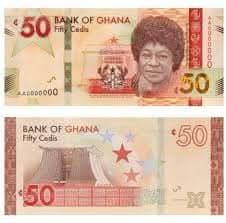
According to reports from myjoyonline.com, adomonline.com, and graphiconline, the Bank of Ghana has issued a formal public reminder regarding the imminent circulation rollout of the new Ghana cedi Heritage Series banknotes. Scheduled to enter active circulation on Tuesday, December 1, 2026, the redesigned currency notes follow an official launch designed to modernize the country's physical monetary instruments.
Citizens across the Africa region and within domestic markets will soon encounter the upgraded notes at commercial banks and retail counters.
Dual-Circulation Mechanics and Public Exchange Mandates
Central bank authorities face an immediate operational tension during any major currency refresh: balancing the desire for rapid modernization against the risk of public panic and long queues at teller windows. To prevent the kind of chaos that often accompanies currency swaps in developing economies, the Bank of Ghana has established a strict co-circulation framework.
Concurrent Legal Tender Status for Existing Notes
The regulatory blueprint relies on simultaneous validity, ensuring that legacy notes do not lose value overnight. Both the existing currency series and the new Heritage Series will remain fully recognized legal tender across all commercial transactions.
The existing banknotes and the Heritage Series banknotes will circulate concurrently. There is no requirement for the public to exchange existing banknotes for the Heritage Series.
— Aimee Vyda Quashie, Secretary of the Bank, Bank of Ghana
This dual-circulation approach protects liquidity for informal traders and rural merchants who might otherwise struggle with sudden banking restrictions. Retailers must accept both formats without imposing administrative surcharges or refusal penalties.
Bank Branch Procedures for Dual Acceptance
Every branch has been instructed to update cash-handling registers by the end of November. Staff receive a checklist that flags the new note dimensions, tactile markers, and serial-number verification steps. The checklist also reminds tellers to refuse any demand for extra fees when a customer presents a Heritage note.
Rural Outreach and Mobile Banking Support
Mobile money agents receive portable verification kits that include a UV light and a magnifying glass. Agents are required to log each Heritage note they accept in a digital ledger shared with the central bank. This real-time data helps the authority monitor geographic uptake and spot potential bottlenecks before they widen.
Preserving Monetary Nomenclature and Code Standards
Beyond physical circulation rules, the monetary authority has taken steps to eliminate confusion regarding currency symbols and accounting standards. Both the standard GH¢ symbol and the traditional ₵ character will remain entirely valid throughout the co-circulation period.
Official documents and retail ledgers may also continue using the expressions Ghana Cedi and Cedi interchangeably without regulatory penalty. Furthermore, the international foreign exchange code, GHS, remains entirely unchanged for cross-border trade settlements and Economy & Markets reporting.
Impact on Accounting Software and Point-of-Sale Systems
Vendors using electronic point-of-sale terminals receive a firmware patch that recognises both symbols. The patch also maps the new note values to the existing chart of accounts, so no manual re-coding is needed. Accounting firms have been briefed on how to reconcile month-end balances when both series appear on the same statement.
Image: myjoyonline.comEnhanced Security Upgrades Versus Legacy Habit Friction
Every redesign introduces a trade-off between advanced counterfeit deterrence and the inevitable friction of public adaptation. Central bank engineers designed the Heritage Series to incorporate advanced security threads and durable substrates aimed at extending the lifespan of notes in daily circulation.
Targeting Counterfeit Resistance and Physical Durability
Physical currency degradation costs central banks millions annually in premature replacement expenses. The new Heritage Series features upgraded polymer or reinforced cotton compositions designed to withstand tropical humidity and frequent folding in high-volume market settings.
At the same time, embedded optical security features make illicit replication significantly harder for underground printing rings. Commercial banks have received technical briefings to help their automated teller machines calibrate sensors for the new dimensions and tactile markers.
Testing Protocols at Cash-Handling Facilities
Before December 1, each major cash-processing centre runs a two-week stress test using a mixed batch of old and new notes. The test measures feed-rate errors, jam frequencies, and sensor detection thresholds. Results feed into a central dashboard that flags any machine that needs hardware adjustment.
Managing Consumer Adaptation Without Financial Penalties
Despite these technical improvements, ordinary citizens often hesitate when handling unfamiliar notes for the first time. The central bank has launched public education campaigns to help shoppers inspect watermark features and color-shifting inks.
Skeptical consumers are reminded that hoarding old notes or paying unauthorized premiums to exchange them Business & Finance channels is entirely unnecessary. As commercial banks begin dispensing the Heritage Series on December 1, the natural churn of retail transactions will gradually integrate the new currency into everyday commerce.
Community Workshops and Media Partnerships
Local radio stations air short segments that demonstrate how to feel the raised security thread with a fingertip. Community centres host hands-on workshops where participants compare a legacy note to a Heritage note side by side. The Bank of Ghana funds printed leaflets that list the five most common visual cues to verify authenticity.
Implementation Timeline and Stakeholder Responsibilities
The rollout follows a tightly sequenced calendar that began with design finalisation in early 2024. By mid-2025, prototype notes entered a pilot phase in Accra’s central market. The final production run started in March 2026, delivering an estimated 2 billion notes to the national vault.
Bank Rollout Schedule
All licensed commercial banks must begin dispensing the Heritage Series on the morning of December 1. Branches that fail to meet the deadline risk a temporary suspension of cash-withdrawal privileges imposed by the regulator. The deadline also applies to currency exchange bureaus and micro-finance institutions.
Roles of Commercial Banks, Informal Sector, and Regulators
Commercial banks handle the bulk of distribution, updating ATMs, vaults, and teller trays. Informal money-changers receive a special licence that obliges them to accept both series without charging a spread. Regulators monitor compliance through random inspections and a public hotline that logs complaints about refusal or surcharge incidents.
Market Reaction and Early Indicators
Within hours of the first Heritage notes leaving bank vaults, street vendors in Kumasi reported a smooth transition. Customers presented mixed bundles of old and new notes, and vendors accepted them without hesitation. Early data from the central bank’s liquidity tracker shows a 3 % rise in cash-in-flow at regional branches during the first two days.
Currency Exchange Rates and Cross-Border Trade
The unchanged GHS code means foreign-exchange markets have not adjusted pricing algorithms. Traders in neighboring Togo and Côte d’Ivoire continue quoting rates in GHS as before, avoiding any arbitrage spikes. Analysts note that the stable code helps preserve confidence among importers who rely on forward contracts.
Public Sentiment and Media Coverage
Social-media chatter reflects a mix of curiosity and relief. Users share photos of the new notes, highlighting the vibrant heritage motifs that replace the older designs. Meanwhile, consumer-rights groups praise the Bank of Ghana for avoiding a forced exchange deadline, calling the approach “respectful of everyday cash users.”
The Morning Brief
One email a day with the stories that matter. Free, forever.
No spam. Unsubscribe anytime.
Comments (0)
Be the first to share your thoughts.