
Netanyahu Makes Late-Stage Unity Bid as Eisenkot Pushes for Coalition Majority
Israeli Prime Minister Benjamin Netanyahu offered to step aside in a rotation deal for Gadi Eisenkot as the former military chief builds a coalition majority.
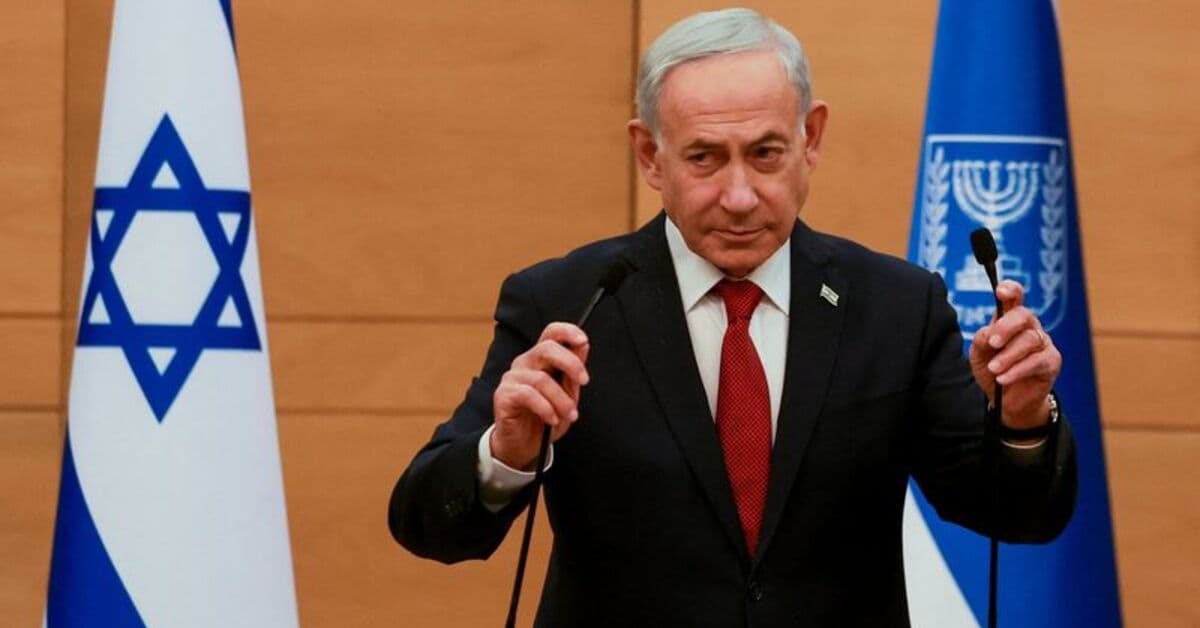
Prime Minister Benjamin Netanyahu Offers Rotation Deal to Former Military Chief Gadi Eisenkot
According to Reuters reporting, Israeli Prime Minister Benjamin Netanyahu stated on Saturday that he would step aside in a rotation agreement to let former military chief Gadi Eisenkot lead a unity government. This late-stage concession arrives as Eisenkot works to secure the numbers needed for an opposition-backed coalition.
Netanyahu faces mounting pressure following an inconclusive October 27 election that left both leaders searching for a governing majority. The current political maneuvering highlights deep fractures within Israel's leadership as regional security challenges mount.
Negotiators from multiple factions spent the weekend reviewing the unexpected terms while party whips scrambled to lock down commitments from undecided lawmakers. Coalition mathematics remain volatile, shifting hourly as minor parties extract policy concessions in exchange for their crucial parliamentary votes.
Inside the Competing Forces Shaping Israel's New Government Talks
The race to form a government has turned into a high-stakes tug-of-war between two opposing camps. On one side, Netanyahu's camp insists that continuity and experienced leadership are necessary to navigate ongoing security threats. On the other side, Eisenkot's growing bloc argues that fresh leadership is the only way to break the parliamentary deadlock and restore public trust.
Public polling shows voters deeply divided over who can best manage the country's defense priorities while stabilizing the national economy. Street protests have erupted outside government offices in Jerusalem, with demonstrators demanding immediate compromises from both stubborn party leaders.
Eisenkot Secures Key Partnerships Across the Political Spectrum
Eisenkot has steadily built momentum by reaching across traditional political divides. This week, he secured vital coalition deals with both left- and right-wing partners, bringing his proposed alliance closer to a working majority in the Knesset. These swift agreements caught Netanyahu's inner circle off guard and forced a rapid shift in strategy.
Party insiders report that Eisenkot leveraged his decades of military credibility to convince skeptical politicians that he can manage a fractious cabinet. By promising key defense and finance portfolios to his diverse allies, he minimized ideological friction that typically sinks broad-based coalitions.
Critics within the opposition warn that such an unwieldy alliance might collapse under its own ideological weight once controversial domestic bills reach the Knesset floor. Yet Eisenkot's chief organizers insist that existential security demands outweigh partisan disagreements, providing a unifying glue for the diverse bloc.
Netanyahu's Defensive Maneuver and the Rotation Proposal
Sensing his long tenure at risk, Netanyahu offered a compromise that would place Eisenkot first in a rotation agreement between their respective parties. While Netanyahu maintained that he is best suited to govern, his public statement framed the concession as a patriotic necessity in a time of crisis.
Political strategists view the rotation offer as a calculated gamble designed to fracture Eisenkot's fragile alliance before coalition agreements are signed in ink. By dangling the prime minister's office itself, Netanyahu aims to tempt moderate partners away from the opposition and back into a right-leaning fold.
given the magnitude of the existential threat and the possibility that a government could be formed that isn’t able to deal with this danger,
— Benjamin Netanyahu, Prime Minister of Israel
The prime minister's supporters argue that splitting a term with a former military chief provides the exact blend of international diplomatic clout and domestic stability required right now. Detractors counter that the proposal is merely a transparent preservation tactic intended to stall impending legal challenges and political marginalization.
Image: al-monitor.comThe Balance Tips Toward Parliamentary Uncertainty
The political balance now depends entirely on whether Eisenkot can finalize his coalition agreements without alienating his diverse new partners. Observers note that holding together an alliance of left-wing and right-wing factions requires delicate diplomacy and constant negotiation. Meanwhile, a spokesperson for Eisenkot's Yashar party has not yet issued a formal response to the prime minister's surprise offer.
Ordinary citizens across the region watch these developments with cautious attention, knowing that political instability directly impacts economic stability and daily security. As negotiations continue behind closed doors in Jerusalem, the final outcome remains unconfirmed ahead of the upcoming parliamentary deadlines.
Legislative clerks stand ready to process official coalition documents should either camp successfully deposit 61 signed agreements with the president before the clock runs out. Failure by both leaders will trigger an unprecedented third electoral cycle, plunging the country deeper into institutional gridlock.
The Morning Brief
One email a day with the stories that matter. Free, forever.
No spam. Unsubscribe anytime.
Comments (0)
Be the first to share your thoughts.