
Netanyahu Offers Gadi Eisenkot First Turn as Prime Minister in Shocking Unity Pitch
Israeli Prime Minister Benjamin Netanyahu has offered rival Gadi Eisenkot the first turn as prime minister in a potential unity government.
Political Survival Tactics in Israel's High-Stakes Coalition Arithmetic
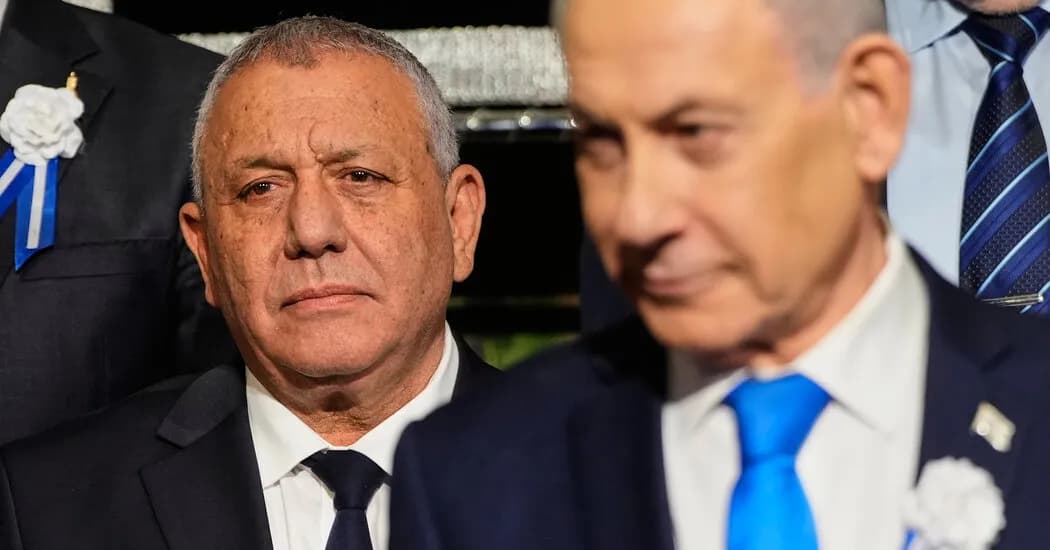
According to the New York Times, Israeli Prime Minister Benjamin Netanyahu offered Gadi Eisenkot the chance to serve as prime minister first in a potential joint coalition government. This striking overture targets the exact opposition figure currently working to unseat the longtime leader from power. Political shifts of this magnitude send immediate shockwaves across the region, altering legislative math and cabinet calculations alike.
Observers in Politics and international affairs are watching how opposition leaders respond to this unexpected maneuver.
The proposal introduces a profound structural realignment within the Israeli parliament. By conceding the top governmental post to a rival, Netanyahu is attempting to neutralize a formidable challenger while preserving his own core political survival. Coalition agreements in parliamentary systems often hinge on such complex power-sharing concessions. When facing intense domestic pressure, leaders frequently trade executive seniority to lock in a legislative majority.
Evaluating the Mechanics of Power-Sharing Deals
Power-sharing arrangements require intricate scheduling, trust-building mechanisms, and formal rotation agreements that specify exact tenure lengths for each leader. In typical unity governments, the incoming parties draft strict coalition guidelines to prevent premature government collapses. These pacts dictate ministerial portfolios, budget allocations, and legislative priorities before a single vote is cast in the Knesset.
Gadi Eisenkot brings significant military and institutional credibility to any potential partnership. As a former military chief of staff, his appeal stretches across traditional political divides, making him a potent alternative for voters fatigued by ongoing political deadlock. Netanyahu's offer acknowledges this broad appeal by attempting to draw Eisenkot inside the ruling tent rather than facing him across an unbridgeable electoral chasm.
Inside the Operational Friction of Forming a Joint Cabinet
Moving from a public overture to a functioning administration demands overcoming deep ideological friction. Past unity governments in Israel have frequently faltered over divergent views on foreign policy, security doctrine, and judicial reform. Bringing bitter rivals into the same cabinet creates daily operational friction inside government ministries.
Negotiating teams must reconcile competing economic agendas and security approaches without alienating their respective base voters. For Eisenkot, accepting the top job alongside Netanyahu risks alienating supporters who view his entire political mission as an effort to displace the incumbent prime minister. For Netanyahu, ceding the primary leadership role is an unprecedented concession that underscores the severity of his current political vulnerability.
Potential Bottlenecks Facing the Proposed Partnership
Coalition talks typically break down over portfolio distribution, particularly when dealing with sensitive security and finance ministries. Both sides must agree on a unified legislative calendar while managing restless backbenchers who fear losing influence in a merged administration. Public trust remains fragile as citizens watch whether these high-level negotiations translate into stable governance.
Regional watchers across World News are monitoring the timeline for these talks, noting that external pressures often accelerate domestic political compromises. Yet, bridging the gap between sworn political enemies requires more than procedural ingenuity. It demands a shared willingness to compromise on foundational state policies that have divided the nation for years.
Practical Implications for Ordinary Citizens and Future Governance
For ordinary Israelis, political maneuvers at the top directly dictate daily stability, tax policies, and national security postures. Prolonged government instability creates delays in vital public infrastructure projects and state budgeting processes. When leaders spend their energy managing internal coalition rivalries, essential public services often face administrative neglect.
As negotiations unfold, the ultimate test of this proposal will be whether it produces a durable government or merely serves as a temporary tactical maneuver. Citizens and lawmakers alike must weigh the promise of short-term stability against the inherent volatility of forced political marriages. The coming days will reveal whether this unprecedented offer reshapes the nation's political landscape or dissolves under the weight of competing ambitions.
The Morning Brief
One email a day with the stories that matter. Free, forever.
No spam. Unsubscribe anytime.
Comments (0)
Be the first to share your thoughts.