
Netanyahu and Eisenkot to Meet in Tel Aviv Following Indecisive October Polls
Israeli caretaker PM Benjamin Netanyahu and rival Gadi Eisenkot are meeting in Tel Aviv following inconclusive October elections that left neither bloc with a majority.
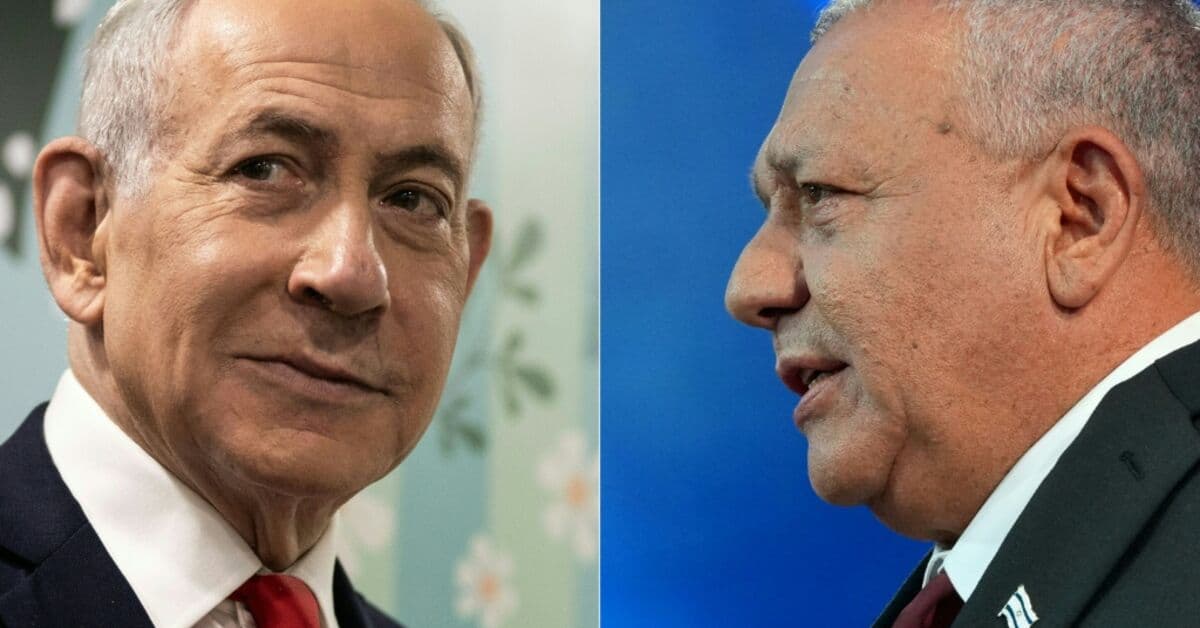
According to reports from Al-Monitor and Agence France-Presse, Israeli caretaker prime minister Benjamin Netanyahu and challenger Gadi Eisenkot are set to meet at 10:00 am local time on Sunday at the defense ministry in Tel Aviv. The high-stakes talks arrive in the wake of late-October legislative polls that left both major political blocs short of a parliamentary majority.
The October ballots split the 120-seat Knesset into three roughly equal camps: Netanyahu’s Likud-aligned bloc, Eisenkot’s centrist Yashar coalition, and a loose alliance of Arab-Israeli and left-wing parties. No faction cleared the 61-seat threshold, forcing a scramble for partners that could tip the balance toward a functional government.
President Isaac Herzog previously tasked Yashar Party Chairman Gadi Eisenkot with forming a governing coalition. Eisenkot faces a hard deadline of December 6 to successfully seat an administration or trigger fresh national elections.
Ground-Level Coalition Arithmetic and the December 6 Deadline
Eisenkot has spent weeks trying to bridge deep ideological divides across the Israeli political spectrum. His centrist Yashar party remains constrained by resistance to relying on Arab-Israeli factions and the concessions demanded by ultra-Orthodox parties.
Poll Fallout and Coalition Options
The October results left Likud with 30 seats, Yashar with 27, and the Joint List with 14. Smaller parties such as New Hope (6 seats) and Yisrael Beiteinu (5 seats) sit on the fringe, each holding potential king-maker leverage if Eisenkot can extract policy guarantees.
Analysts note that a “minimalist” coalition—Yashar plus two right-leaning splinter groups—could scrape together 61 seats but would have to tolerate Likud’s demand for a robust security budget. By contrast, an “expanded” coalition that folds the Joint List would surpass the threshold comfortably yet require a formal commitment to minority rights that hard-line factions reject.
The Rotating Premiership Proposal
Netanyahu intervened in the deadlock late Saturday by proposing an emergency unity arrangement. The incumbent leader offered to let Eisenkot take the top job first.
my responsibility as a leader requires me to set everything aside... and agree that Gadi Eisenkot will serve first as prime minister, while I will serve as alternate prime minister
— Benjamin Netanyahu, Caretaker Prime Minister of Israel
The surprise social media announcement forced Eisenkot to adjust his strategy ahead of the Sunday morning defense ministry briefing. Eisenkot responded by telling Likud he wanted to test their seriousness over a 24-hour window.
Supporters of the rotating plan argue it could defuse partisan tension by sharing executive authority, while critics warn that alternating leadership might stall decisive action on security matters. The proposal also raises questions about who would control key ministries such as finance and defense during the transition.
Regional Ripples and Opposition Backlash
Opposition leaders immediately condemned Netanyahu's overture as a tactical stall rather than a genuine compromise. Former prime minister and Beyachad co-chair Yair Lapid dismissed the offer in public statements as a transparent maneuver by a serial fraudster.
Meanwhile, the broader politics landscape across the region watches closely as coalition math shifts. Youssef Jabareen, leader of the Arab-majority Joint List, insisted that the outgoing administration must go entirely, though his faction is expected to support an Eisenkot-led cabinet from the outside without taking ministerial portfolios.
Jabareen warned that any coalition that sidelines Arab-Israeli input could inflame tensions in mixed cities such as Haifa and Acre, where community relations already strain under economic pressure. His call for an “outside support” arrangement reflects a broader strategy to influence budget allocations without bearing direct responsibility for contentious policies.
Structural Shifts in Israel's Parliamentary Calculus
Sunday's meeting opens with a security briefing before transitioning into closed-door negotiations over portfolio distribution and policy guidelines. Eisenkot previously accused Likud of intentionally dragging out talks to force a repeat election cycle.
Security Briefing Stakes
The defense ministry briefing will likely focus on the Gaza front, the northern border with Hezbollah, and the looming threat of Iranian proxy activity. Both leaders know that any perceived weakness could embolden adversaries, a risk that domestic critics will seize upon.
Military officials are expected to present updated casualty figures and intelligence assessments, data that could shape the coalition’s budget priorities. A compromise that allocates additional funds to the Israel Defense Forces might win Likud’s approval but could alienate Yashar’s centrist base, which favors increased social spending.
Policy Trade-offs on the Table
Negotiators must reconcile divergent views on settlement expansion, judicial reform, and conscription exemptions for ultra-Orthodox yeshiva students. Likud pushes for a faster settlement rollout, while Yashar urges a pause pending diplomatic outreach to the United States.
The ultra-Orthodox parties demand a continued exemption from military service, a condition that Yashar’s voter base finds increasingly untenable. Eisenkot has hinted at a compromise that would introduce a phased service program, a move that could placate both sides if framed as a national-security necessity.
Economic ministries also sit at the heart of the talks. Inflation has crept above 6 % this year, prompting calls for price-cap measures on basic goods. A coalition that agrees to a modest price-cap could gain public goodwill, but would need to balance that against fiscal constraints imposed by a larger defense budget.
Whether these Sunday morning discussions yield a stable governing coalition or collapse into mutual recriminations remains the central question facing Israeli lawmakers. With the December 6 cutoff fast approaching, both leaders face mounting pressure from domestic constituents and international observers as they navigate the fallout from the October elections.
Image: al-monitor.comGlobal Eyes on Israeli Coalition Talks
The United States has signaled readiness to work with whichever government emerges, emphasizing continuity in security cooperation. A senior State Department official told reporters that Washington will maintain aid packages as long as Israel upholds its commitments to regional stability.
European capitals, meanwhile, have expressed concern over potential judicial reforms that could weaken checks and balances. The German foreign ministry issued a statement urging Israeli leaders to preserve an independent judiciary, a point that may become a bargaining chip in coalition negotiations.
US and EU Positions on the Rotating Premiership
US officials view the rotating premiership as a pragmatic stopgap that could prevent a snap election, but they remain wary of policy drift during the interim period. An aide to the National Security Council warned that any delay in decisive action against Hamas could erode US confidence.
The European Union, for its part, stresses that any coalition must respect minority rights and uphold democratic norms. A senior EU diplomat noted that the Joint List’s outside-support stance could satisfy EU demands for Arab-Israeli representation without granting full cabinet power.
Regional Governments’ Concerns
Neighboring Jordan and Egypt monitor the talks closely, fearing that a fragmented Israeli government might embolden militant groups along their borders. Both monarchies have urged Israeli leaders to keep open channels for peace talks, a request that could shape coalition pledges on diplomatic outreach.
Saudi Arabia, while not a direct party to the negotiations, watches for signs that Israel will continue its covert security coordination. A senior Saudi official hinted that any perceived weakening of Israel’s deterrence could affect broader normalization efforts under the Abraham Accords.
In the end, the outcome of Sunday’s meeting will ripple far beyond Tel Aviv’s corridors. A coalition that locks in a clear security agenda and a credible economic plan could steady markets, reassure allies, and give Israelis a sense of direction before the December deadline. A failure, however, risks another election, prolonged uncertainty, and heightened regional volatility.
The Morning Brief
One email a day with the stories that matter. Free, forever.
No spam. Unsubscribe anytime.
Comments (0)
Be the first to share your thoughts.