
OPEC+ Faces Internal Fracture and U.S. Gains as Output Policy Stalls
The ongoing Iran war and deep production capacity disputes threaten another difficult year for OPEC+, as U.S. rivals steadily capture global market share.
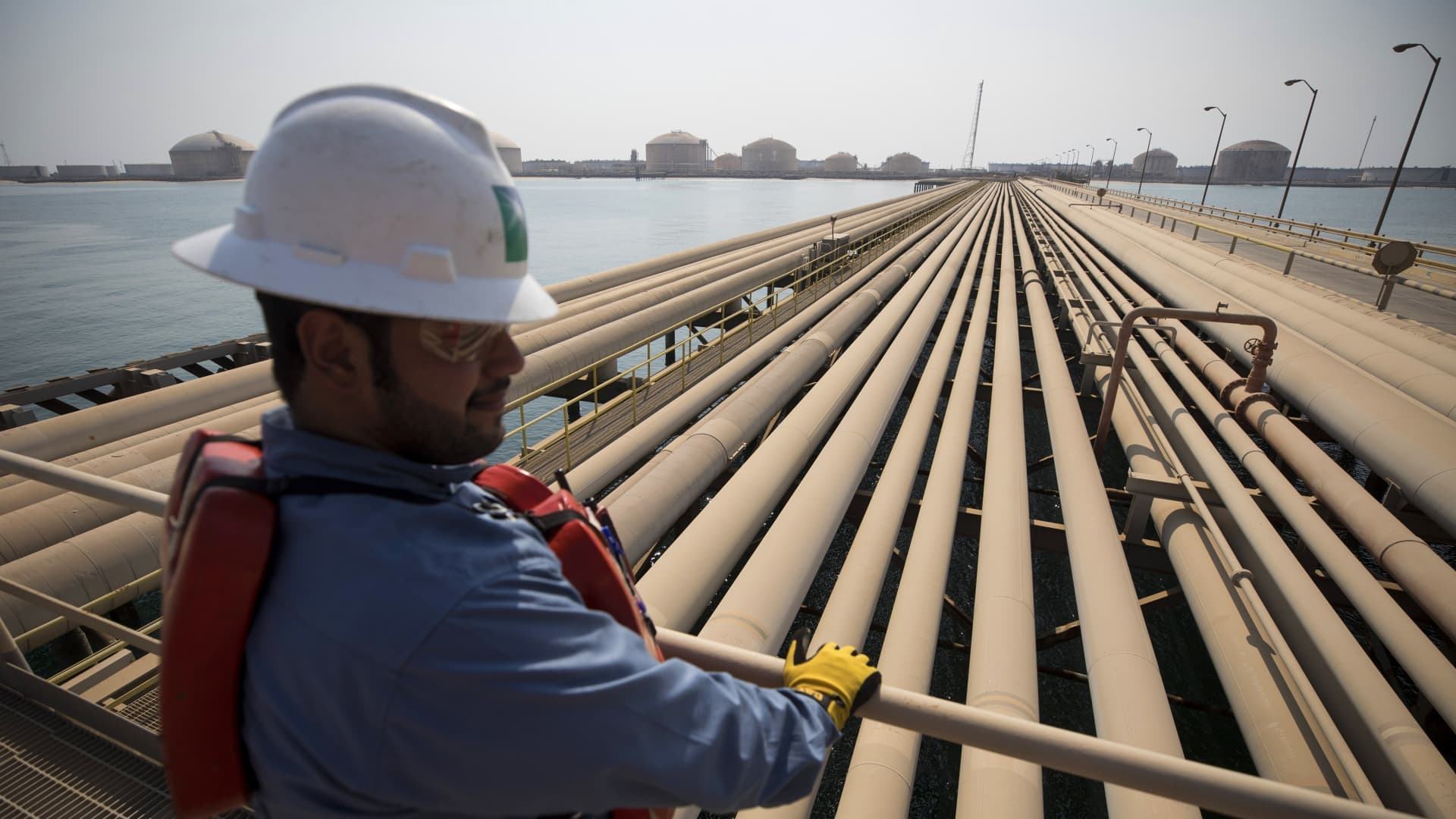
How the Iran Conflict and Spare Capacity Debates Paralyze Producer Strategy
According to CNBC, the ongoing war in Iran and deep-seated disagreements over production capacity threaten another difficult year for OPEC+, even as rival American producers steadily capture global market share. Most analysts treat this friction as a temporary operational hurdle. That consensus misses the structural fracture tearing through the cartel's foundational quotas.
Geopolitical shocks usually force cartels into tight discipline. Instead, the current hostilities have exposed a widening chasm between member states desperately needing immediate export revenue and those prioritizing long-term price floors. Riyadh and its core allies find themselves cornered by market realities that no longer bend to traditional supply management.
Energy ministries across the alliance now face an uncomfortable arithmetic where every barrel held back directly subsidizes a competitor's balance sheet. Disagreements that once stayed behind closed doors spill directly into trade journals and futures desks. This loss of message discipline telegraphs deep operational vulnerability to international buyers.
Disagreements Over Baseline Capacities
For months, lower-tier producers have demanded higher official baselines to match their actual capital investments. Saudi Arabia and the United Arab Emirates resist these adjustments, fearing an unmanaged flood of crude into a fragile global economy and markets network. This internal tug-of-war prevents any coherent response to shrinking margins.
Member states whose fields suffer from natural decline argue that quotas punish them for domestic underinvestment. Meanwhile, wealthy Gulf exporters insist that idle capacity must stay locked down to prevent a devastating glut. No formula satisfies both sides while keeping benchmark prices above fiscal break-even levels.
The Expanding U.S. Production Footprint
American shale operators continue to expand output, filling the supply gaps left by OPEC+ restraint. U.S. firms operate with leaner capital structures and zero cartel oversight, allowing them to react instantly to price spikes. Every barrel withheld by Middle Eastern producers simply hands another slice of market share to North American competitors.
Permian Basin drillers don't hold emergency ministerial summits when crude dips below 70 dollars a barrel. They simply trim their rig count locally and wait for market signals to turn positive. That operational speed leaves slow-moving state monopolies scrambling to catch up after every price cycle.
Capital Allocation Friction in Permian Operations
Private equity backers demand strict capital discipline from Texas operators, favoring stock buybacks over reckless wildcatting. This constraint paradoxically makes U.S. production more resilient against sudden price drops engineered by foreign cartels. Drillers keep costs lean and cash flows predictable quarter after quarter.
When OPEC+ announces voluntary cuts, Wall Street financiers quietly reward American independents for holding steady lines. The structural incentives of private markets completely neutralize the psychological leverage of cartel announcements. Each quota extension simply validates the risk-reward model of non-OPEC operators.
The Cartel Dilemma: Defending Price Floors Versus Ceding Volume
Defenders of the OPEC+ framework argue that intentional production restraint remains the only defense against a devastating price collapse. Without coordinated quotas, flooded terminals would drive crude down to uneconomic levels for high-cost producers. This defensive posture assumes global demand will rebound fast enough to justify sustained supply cuts.
Skeptics point out a fatal flaw in that defensive logic. By artificially holding back millions of barrels daily, the cartel creates an inviting umbrella for non-OPEC suppliers to ramp up drilling. Each quarter of withheld output accelerates U.S. infrastructure expansion and erodes the cartel's ultimate pricing power.
State planners now confront a painful trade-off between holding high prices today and retaining commercial relevance tomorrow. Traders watch physical inventories swell in floating storage whenever demand softens unexpectedly in Asian import terminals. The psychological weight of these floating barrels undermines the credibility of official export quotas.
The Cost of Prolonged Middle East Hostilities
Active conflict in Iran injects severe risk premiums into daily spot prices without translating into stable revenue for cartel members facing export bottlenecks. Insurance rates, tanker availability, and transit security through key regional chokepoints have deteriorated sharply. These friction costs fall disproportionately on producers already struggling with domestic fiscal deficits.
Refiners in Europe and Asia now calculate higher landed costs for Gulf grades due to surging maritime insurance premiums. These risk surcharges erode the netback margins of producers attempting to market crude through hazardous waterways. Geopolitical tension thus paradoxically shrinks actual take-home profits even when headline futures trade high.
Fiscal Pressures on Member States
National budgets across the business and finance landscape require much higher crude prices to fund extensive public programs. When production caps fail to lift prices high enough, finance ministries face agonizing choices between borrowing heavily or slashing domestic subsidies. This internal financial strain makes long-term quota compliance nearly impossible to enforce.
Finance ministers regularly break unwritten consensus rules by pushing quiet volumes into regional spot markets to balance quarterly ledgers. This chronic under-the-table cheating creates deep mistrust among core delegations during Vienna negotiations. Mutual suspicion paralyzes proactive policymaking just when market conditions demand absolute unity.
Sovereign Debt and Subsidy Cuts
Subsidized fuel and food programs consume vast shares of state revenue in several prominent producing nations. Trimming these popular programs risks severe social unrest, leaving governments with few fiscal levers outside of crude exports. Leaders therefore prioritize immediate volume dispatch over adherence to collective quota targets.
When state banks rely on petroleum royalties to service foreign debt obligations, production quotas become secondary to immediate cash generation. Central bankers quietly urge energy ministries to maximize liftings regardless of what OPEC+ headquarters decrees. Survival at home always supersedes discipline within an international pact.
Where the Balance Tips: Market Realities Against Institutional Inertia
The upcoming policy meeting forces a stark reckoning between institutional habit and raw supply-demand math. Cartel leadership wants to project an image of unshakeable unity to keep futures traders on defense. Actual delegates on the ground acknowledge that member compliance is at its lowest point in years.
When quotas exist only on paper, the official output ceiling ceases to be a market driver. Traders now price in cheating, unilateral corridor exemptions, and quiet cargo discounting. The nominal agreement masks a chaotic scramble for individual market survival.
Energy analysts note that physical cargo flows tell a completely different story than official ministerial communiques. Spot market discounts widen while futures contracts attempt to price in artificial scarcity. That widening gap exposes the profound hollowness of current cartel pronouncements.
The Structural Advantage of Non-OPEC Supply
Private capital markets reward American operators for free cash flow and disciplined output rather than grand geopolitical coordination. This structural agility allows U.S. firms to absorb demand shocks far more smoothly than state-backed oil ministries. As long as this dynamic holds, every OPEC+ cut acts as a tax on its own future relevance.
North American producers lock in favorable hedges months ahead, neutralizing short-term price volatility generated by Middle Eastern conflicts. This financial insulation leaves them free to drill or pause according to pure return-on-equity metrics. State ministries burdened by social spending simply cannot match that operational flexibility.
Export Infrastructure and Terminal Bottlenecks
Gulf Coast export terminals in Texas and Louisiana handle record cargo volumes with minimal bureaucratic friction. Pipeline expansions connect prolific inland basins directly to deepwater ports capable of loading Very Large Crude Carriers efficiently. This seamless logistics chain reduces per-barrel transport costs below those of many traditional producers.
Meanwhile, regional conflict around the Arabian Peninsula threatens essential loading jetties and navigational channels on a weekly basis. Shippers demand steep hazard allowances that price Middle Eastern grades out of competitive refinery pools. Logistics thus reinforce the structural shift toward North American supply security.
The cartel now faces a closing window to decide whether it wants higher prices with a shrinking market share or competitive volume with volatile revenues. Choosing neither ensures a slow drift into irrelevance as alternative energy sources and rival drillers claim the margin. Refineries and traders await the official communique, but the real policy is already being written by rogue barrels on the water.
The Morning Brief
One email a day with the stories that matter. Free, forever.
No spam. Unsubscribe anytime.
Comments (0)
Be the first to share your thoughts.