
When Australia First Broke Orbit With a Redstone Rocket at Woomera
On Nov. 29, 1969, Australia launched its first satellite, WRESAT, atop an American Redstone rocket at the Woomera proving ground.
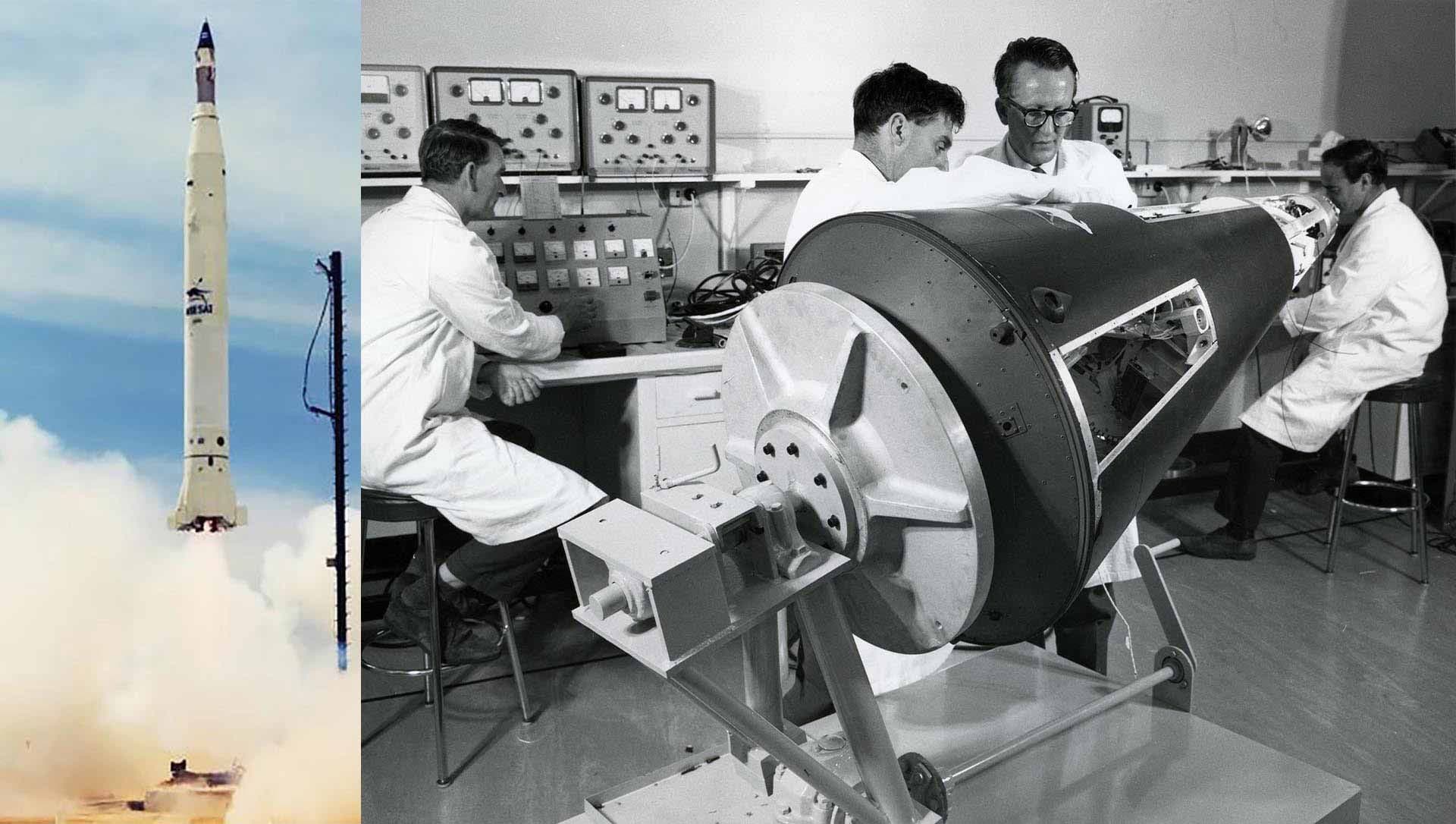
According to Space.com, Nov. 29, 1969, marked a quiet turning point when Australia launched its very first satellite, the Weapons Research Establishment Satellite, into orbit atop an American Redstone rocket. Conventional wisdom paints this milestone as a triumphant leap into sovereign spaceflight for a Commonwealth nation eager to shed technological dependence.
That consensus misses the gritty operational friction on the ground, where foreign hardware, desert launch pads, and cold geopolitical calculations dictated every telemetry pulse. We often celebrate the flag planted in the thermosphere while ignoring the foreign launch architecture that made the ascent possible in the first place.
Inside the Woomera Proving Ground and the WRESAT Payload
Down at the remote Woomera rocket range in South Australia, technicians spent months prepping the slender aluminum cylinder known as WRESAT before its predawn ignition. The hardware itself wasn't designed to decode the cosmos or beam commercial television across Bass Strait. It carried instruments to measure solar UV radiation and atmospheric density over the Southern Hemisphere, gathering baseline data that military planners desperately needed.
Every bolted plate and soldered circuit bore the marks of a joint Anglo-Australian defense arrangement that prioritized cold war surveillance over pure academic curiosity.
The Redstone Booster and American Propulsion Roots
Australia didn't build the fire that carried its maiden spacecraft past the stratosphere. The launch relied on a surplus American Redstone rocket, a tried-and-true ballistic missile core handed over through international cooperation. Local engineers provided the scientific payload and tracking telemetry, but the brute thrust came from foreign combustion chambers built thousands of miles away.
This reliance exposed an uncomfortable reality about mid-century Sci-Tech ambitions: sovereign capability often started as a rented ticket on someone else's war machine.
Tracking Stations Across the Outback Void
Capturing signals from a tumbling low-earth orbiter required a sprawling network of tracking dishes strung across the red dust of the continent. Operators at Orroral Valley and Carnarvon strained to catch faint radio whispers as WRESAT hurtled overhead at nearly 17,000 miles per hour. These tracking posts weren't civilian outposts; they were vital nodes in a global web dominated by superpower tracking requirements.
Local operators kept the dials tuned, but the data flows fed directly back into an international matrix of aerospace research.
The Regional Ripples Across Southern Hemisphere Aerospace
The successful injection of a 100-pound cylinder into orbit sent immediate shockwaves through regional defense ministries and scientific academies. Canberra proved it could process orbital data and integrate complex payloads without completely relying on London or Washington for day-to-day operations. Yet this localized competence masked a deeper dependency that would shape Australian science policy for decades.
Funding for indigenous rocket development peaked and crested, leaving local researchers tethered to foreign launch providers whenever they wanted to look back down at the Climate & Environment.
Shifting Priorities in Commonwealth Defense Science
The Weapons Research Establishment was fundamentally a military installation disguised in the lab coats of civilian research. By the late 1960s, British budget cuts and shifting imperial priorities meant London was pulling back from direct funding of Australian missile testing. WRESAT served as a brilliant, swan-song demonstration that local technicians could squeeze maximum scientific value out of abandoned military hardware.
When the project wound down after just a few weeks in orbit, the Woomera range pivoted away from indigenous satellites back toward routine weapons testing.
The Long Silence After the Redstone Burn
Once the satellite's chemical batteries exhausted themselves in mid-December 1969, Australia went dark as a domestic spacefaring power for decades. It took until 2002 for another wholly Australian-built satellite to reach orbit, leaving a vast generation of engineers to watch other nations build the modern orbital economy. The legacy of that November morning in South Australia is therefore split.
It proved what local ingenuity could achieve in an emergency, but it also highlighted how easily national space ambitions stall when foreign boosters stop arriving on the cargo ships.
The Structural Shift in Modern Orbital Economics
Looking back from an era of commercial micro-launchers and private constellations, the WRESAT launch reveals the steep price of admission to the thermosphere. Back then, putting a tin can into space required state-level diplomacy, ballistic missile treaties, and massive infrastructure subsidies that only governments could underwrite. Today, startups can book a rideshare slot on a Falcon 9 with a credit card and an API key.
That democratization of access makes it easy to forget the rigid interstate bargainers who once controlled every single tick of the telemetry clock.
From Desert Proving Grounds to Commercial Constellations
The transition from government-run proving grounds to commercial spaceports has rewritten the geography of rocket science. Woomera’s vast isolation was once its greatest asset, keeping experimental missile debris far away from populated towns and shipping lanes. Modern launch operators prefer coastal equatorial sites that maximize Earth's rotational speed, rendering old interior test ranges obsolete for heavy orbital traffic.
Nations entering the space race today face a different kind of bottleneck, where regulatory compliance and spectrum allocation replace physical distance as the primary barriers to entry.
Decades after that Redstone motor roared to life over the South Australian scrub, the calculus of orbit has shifted from national prestige to economic utility. Yet every modern venture still confronts the same fundamental dilemma that faced the WRESAT team in 1969: whether to build sovereign capabilities from the ground up or remain a tenant on someone else's rocket.
The Morning Brief
One email a day with the stories that matter. Free, forever.
No spam. Unsubscribe anytime.
Comments (0)
Be the first to share your thoughts.