
Netanyahu Proposes Rotating Premiership With Eisenkot Ahead of Coalition Deadline
Caretaker Prime Minister Benjamin Netanyahu proposes a rotating premiership to rival Gadi Eisenkot as the deadline to form Israel's next government approaches.
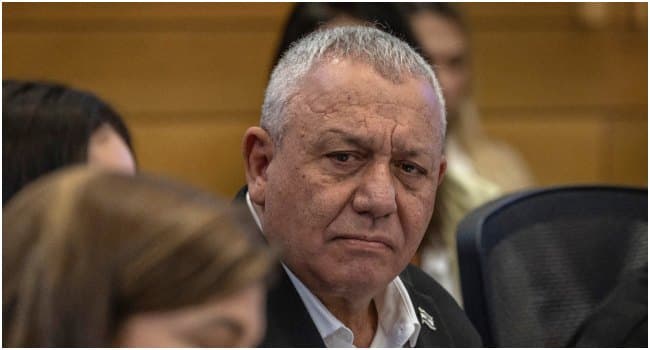
The Turning Point in Israel's Coalition Arithmetic
According to channelstv.com, Israeli caretaker Prime Minister Benjamin Netanyahu proposed a rotating premiership on Saturday that would place rival Gadi Eisenkot in the top office first. The surprise social media offer arrived just one day after Eisenkot vowed to finalize Israel's next government by the official December 6 deadline. That hard stop leaves little room for maneuver as opposing factions scramble to assemble a functional Knesset majority before time expires.
The political maneuvering highlights a frantic scramble for power inside the Politics arena, where parliamentary math dictates every strategic gamble. Eisenkot's centrist Yashar party has spent weeks locked in high-stakes negotiations across a deeply fractured political landscape. While talks with Netanyahu's right-wing Likud party sputtered out, parallel coalition building continued with smaller parliamentary blocs.
Netanyahu's Rotation Gambit Explained
Netanyahu framed the rotation as a “bridge” that would preserve his party's influence while placating centrist demands. By agreeing to hand over the premiership after a set period, he hopes to keep Likud seats intact and avoid a costly snap election that could erode his base. Critics see the move as a tactical delay, not a genuine power-share.
The proposal also forces rival factions to weigh short-term gains against long-term credibility. If Eisenkot assumes the premiership first, his party must prove it can govern without Likud’s hard-line support. Failure to deliver could embolden opposition forces to demand a full reset of the coalition talks.
Stalled Talks and Accusations of Bad Faith
Before the late-breaking premiership offer materialized, tensions between Likud and Yashar had reached a boiling point over alleged obstruction. Eisenkot publicly criticized his rival's camp for failing to advance meaningful compromises during two weeks of bargaining. He claimed the delays were designed to trigger fresh elections rather than establish a stable governing coalition.
“Likud… has been unwilling to compromise and, over two weeks, refused to put a single concrete proposal on the table,” Eisenkot said in a statement.
Shifting Leverage Among Factions and Rivals
Netanyahu's eleventh-hour concession instantly alters the balance of power across the legislature, forcing rival blocs to recalculate their next moves. Opposition figures met the rotation pitch with immediate skepticism, dismissing it as an act of political self-preservation rather than a genuine gesture of unity. Former premier Yair Lapid did not mince words when reacting to the proposal online.
Netanyahu’s proposal is yet another transparent con by a serial fraudster who has deceived every partner and violated every agreement.
— Yair Lapid, Co-Chair of the Centrist Beyachad Party
At the same time, external allies are weighing how a potential Eisenkot administration would handle delicate legislative partnerships. Youssef Jabareen, leader of the Arab-majority Joint List, signaled that his faction is prepared to support an Eisenkot-led government from the outside to oust the incumbent administration. Regional observers note that such alliances remain deeply polarizing among more conservative elements within Eisenkot's broad coalition camp.
Opposition Calculus After the Offer
Lapid's sharp rebuke reflects a broader fear that the rotation could split the anti-Netanyahu bloc. Some centrist lawmakers view Eisenkot as a more pliable partner who might eventually bow to Likud pressure, while others see a chance to extract policy concessions on judiciary reform. The split threatens to dilute the opposition’s negotiating clout.
Meanwhile, right-wing factions such as Israel Beiteinu weigh whether to stay loyal to Likud or jump ship for a better seat in a new government. Their decision hinges on the likelihood of securing ministerial portfolios that align with their security agenda. A misstep could leave them stranded in a minority opposition.
The Arithmetic of the 61-Seat Knesset Threshold
Building a viable government requires navigating a notoriously unforgiving parliamentary threshold of 61 seats out of 120 total lawmakers. Eisenkot's Yashar party has secured formal coalition agreements with the left-leaning Democrats and the right-wing Israel Beiteinu party. Those early pacts currently deliver a combined total of 36 lawmakers, leaving the prospective prime minister well short of the required majority.
Negotiators are watching developments involving Mansour Abbas, leader of the Raam party, who faces intense pressure to shift alignment. Reports indicate Abbas is prepared to recognize Hamas as a terrorist organization, a controversial procedural step that could clear Raam to join Eisenkot's government. Bridging these ideological divides remains the central obstacle for any leader hoping to survive the upcoming confidence votes.
Arab Party Leverage in the Coalition Race
The Joint List’s willingness to back an Eisenkot cabinet from the outside creates a bargaining chip that could tip the scales. By offering external support, Arab parties avoid direct ministerial responsibility while still influencing key votes on budget and security legislation. This strategy lets them extract concessions on civil-rights bills without alienating their base.
However, Raam’s potential entry hinges on Abbas' controversial stance on Hamas. If he proceeds, hard-line religious parties may refuse to sit with a coalition that includes an Arab faction perceived as soft on terrorism. The resulting deadlock could force a reshuffle of smaller blocs, pushing the final seat count into a razor-thin range.
Image: channelstv.comConstraints and Deadlines on the Path to December 6
Time is running out for the designated government builder to lock down commitments from reluctant partners across the political spectrum. Eisenkot has explicitly rejected using the statutory 14-day extension, locking his team into the December 6 announcement date. That self-imposed constraint forces every potential coalition partner to make definitive choices within days rather than weeks.
Whether Netanyahu's rotation offer splits the anti-Netanyahu bloc or merely hardens opposition resolve will determine the outcome of this political crisis. With ultra-Orthodox factions, secular centrists, and Arab-majority parties pulling in opposite directions, the next seventy-two hours will decide whether Israel enters a new government or heads back to an expensive electoral cycle.
Strategic Timelines and the Threat of a Fourth Election
Should the coalition talks collapse after the December 6 deadline, Israel faces a fourth election within two years—a scenario that would drain public coffers and deepen voter fatigue. Past elections have cost the state roughly $200 million in direct expenses, not counting the indirect impact on foreign investment confidence.
Political analysts warn that repeated elections could erode Israel’s diplomatic standing, especially as regional partners monitor the country’s stability. A swift, functional government would allow the Defense Ministry to finalize procurement plans and give the Ministry of Finance a clear budget horizon. The stakes, therefore, extend far beyond parliamentary arithmetic.
As the clock ticks, each party’s internal deliberations become a high-stakes game of risk versus reward. Eisenkot must decide whether to compromise on contentious policy items or risk a dead-end that hands the reins back to Netanyahu in a new election. The decision will shape Israel’s domestic agenda and its ability to respond to regional security challenges in the months ahead.
The Morning Brief
One email a day with the stories that matter. Free, forever.
No spam. Unsubscribe anytime.
Comments (0)
Be the first to share your thoughts.