
At Least 10 Killed Across Ukraine as Over 1,200 Drones Target Both Nations
At least 10 people died in Ukraine as Russia reported downing 1,246 drones overnight, marking a massive escalation in cross-border aerial attacks.
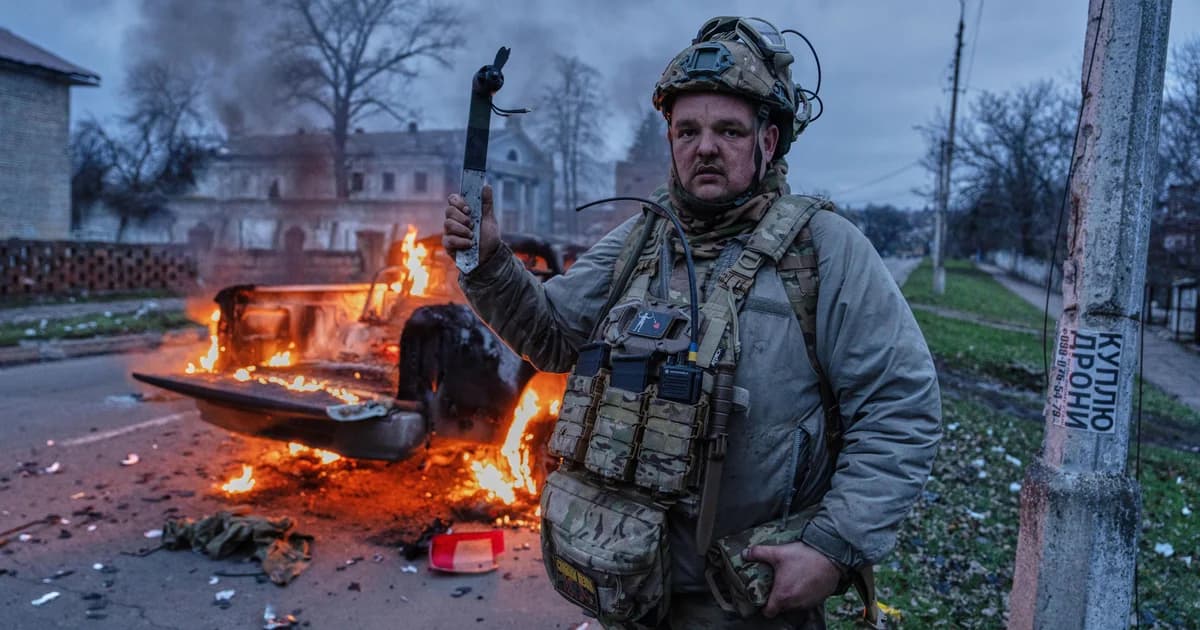
Quantifying the Sky: The Record Volume of Aerial Munitions
According to CBS News, Russian drone attacks killed at least 10 civilians across Ukraine on Saturday while Russian defense officials claimed to have intercepted a staggering 1,246 Ukrainian drones overnight. This massive volume represents one of the highest air defense tallies reported since the conflict began. Observers who predicted a slowdown in aerial operations as winter deepens clearly misread the tactical shift toward mass saturation.
Yet raw intercept numbers tell only part of the story. Russia's Defense Ministry offered no accounting of how many unguided or decoy drones were launched in total, nor how many actually bypassed air defenses to strike ground targets. Such figures obscure the attrition rates on both sides of the front line, leaving military analysts guessing at true munitions expenditure.
Both militaries now churn out low-cost loitering munitions in industrial quantities. Factories operating around the clock turn raw fiberglass and commercial hobby engines into frontline weapons. This manufacturing boom directly feeds the nightly swarms filling radar screens from the Donbas to the Baltic approaches.
The Chernihiv Strike and Kyiv Casualties
On the ground in Ukraine, the human cost mounted swiftly across multiple regions. Seven people died and seven others sustained injuries when a Russian strike targeted an enterprise in Nizhyn, located within the northern Chernihiv region, according to the State Emergency Service. Meanwhile, authorities in Kyiv confirmed that one woman was killed and at least four others wounded during overnight bombardments.
Further south in the Russian-occupied Zaporizhzhia region, a hospital vehicle came under fire. Kremlin-installed authorities reported that a Ukrainian drone strike killed a nurse and a driver while wounding two others, including the front-line hospital's chief physician. Zaporizhzhia remains one of four Ukrainian regions formally annexed by Moscow, turning civilian medical transport into an active zone of engagement.
Rescue crews in Nizhyn sifted through smoking industrial rubble for hours following the predawn impact. Heavy equipment cleared twisted steel girders to reach trapped workers while air raid sirens wailed overhead. Every rescue mission runs the risk of a secondary double-tap strike, a frequent tactic that forces first responders to abandon sites mid-search.
In Kyiv, apartment blocks shook as air defense missiles intercepted incoming hardware overhead. Shrapnel rained down on residential courtyards, shattering windows and peppering parked vehicles with jagged metal. Residents spent the dark hours huddled in damp underground metro stations waiting for the all-clear signal.
Infrastructure Under Fire: Grid Assets and Refineries in the Crosshairs
The tactical focus on energy and industrial nodes widened significantly overnight. Moscow's forces struck a combined heat and power plant in Bila Tserkva, alongside an electrical substation in the capital. Kyiv Mayor Vitali Klitschko warned residents of impending power and water disruptions following hits on critical infrastructure.
Ukraine has spent months accusing Moscow of a systematic campaign to strip civilians of heat, light, and running water as freezing temperatures set in. This energy warfare, however, is no longer a one-way street. Ukrainian long-range strikes are increasingly matching Russian saturation tactics with deep attacks inside sovereign Russian territory.
Repair crews face freezing conditions when trying to patch damaged high-voltage transformers. Welding equipment and replacement parts must be hauled into position under constant threat of follow-up bombardments. Utilities now rely on mobile generator stations and makeshift bypass loops to keep municipal water pumps running for millions of urban residents.
Over 120 Drones Approaching Moscow and Regional Oil Hubs
Over an eight-hour window, Mayor Sergei Sobyanin reported that air defenses intercepted 123 Ukrainian drones approaching Moscow. A cumulative total of 462 drones had approached the wider Moscow region since Friday evening. Farther south in the Rostov region, Gov. Yury Slyusar noted that over 50 drones were shot down, including targets over Novoshakhtinsk, home to a major oil refinery.
Independent Telegram channels claimed that several drones successfully struck the Novoshakhtinsk facility, roughly 12 miles from the Ukrainian border, sparking a large fire. Similar industrial targets absorbed hits in the Samara region. Gov. Vladislav Fedorishchev reported that an overnight strike targeted industrial facilities there, while local channels pointed to a renewed attack on the Samara production and dispatch station operated by Transneft.
Air defense batteries deployed around the Russian capital fired surface-to-air missiles into the night sky as alarms echoed across suburban districts. Shrapnel from intercepted airframes fell onto empty streets and industrial parks, briefly halting commuter rail lines. Authorities temporarily closed Vnukovo and Domodedovo airports to secure airspace during the peak of the inbound swarms.
Down in Rostov, refinery workers scrambled to isolate ruptured fuel lines before the flames engulfed neighboring storage tanks. Foam trucks pumped thousands of gallons of retardant onto the burning processing units as thick black smoke drifted across regional highways. These refining nodes form the economic backbone of Russia's domestic fuel supply, making them high-priority targets for long-range drone operators.
The Escalation Trap and Winter Logistics
This escalating exchange of massed drone flights alters the logistical calculus for both militaries. Ukraine's air force claimed its defenses destroyed or suppressed 141 out of 162 incoming Russian drones. Yet even a modest percentage of unintercepted munitions is enough to cripple regional power grids and fuel depots as winter takes hold.
At the same time, nine people were wounded in the western Bryansk region when a drone struck a company bus, illustrating the peril facing civilian transit near the border. As both capitals lean heavily on automated air defenses and long-range attrition strikes, the margin for civilian survival shrinks. The defining dilemma ahead is whether either grid can endure months of continuous saturation without complete functional collapse.
Supply chains struggle to keep pace with the sheer burn rate of expensive interceptor missiles. Munition stockpiles deplete faster than factories can replenish them, forcing air defense commanders to pick and choose which incoming swarms to engage. This arithmetic favors the attacker, who can build cheap fiberglass drones for a fraction of the cost of a sophisticated guidance missile.
Temperatures across the front line hover well below freezing, turning every structural breach in a home or power station into a humanitarian crisis. Displaced families cram into overcrowded municipal shelters while municipal engineers race against the clock to restore heat. Both nations face a brutal attrition race where logistics, manufacturing output, and thermal endurance dictate who holds the ground when spring arrives.
The Morning Brief
One email a day with the stories that matter. Free, forever.
No spam. Unsubscribe anytime.
Comments (0)
Be the first to share your thoughts.