
Elon Musk Promises Two SpaceX Shares to Every Child in America
Elon Musk announced plans to give every child in America two SpaceX shares, creating an $18.6 billion equity distribution with immense logistical hurdles.
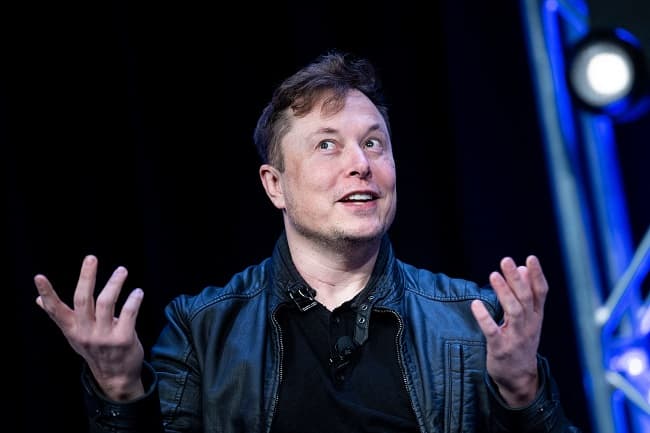
According to Channels Television, billionaire entrepreneur Elon Musk announced on Wednesday that every child in the United States will receive two shares in his private aerospace venture, SpaceX. The plan doubles down on an initial pledge made in October and carries an estimated combined market value of $18.6 billion based on recent trading figures.
Wall Street analysts often dismiss such sweeping corporate giveaways as whimsical publicity stunts designed to distract from regulatory scrutiny. Yet this valuation arithmetic hides a much heavier structural transfer of private equity into minor trust accounts across the country. Let's look closer at how this mechanism actually functions beneath the viral posts.
The Mechanics of Nationwide Equity Distribution
Moving tens of billions of dollars in private stock into the hands of roughly 73 million minors requires clearing immense legal, technological, and custodial hurdles. Musk stated that the first share, originating directly from the corporate treasury of SpaceX, will transfer next month. The second share, coming from his personal holdings, is scheduled to follow in June of next year.
Executing millions of individual equity transfers to individuals under 18 breaks every conventional onboarding process known to modern Business & Finance desks. Minors cannot legally hold direct title to securities without a designated custodian, custodial account, or state-managed trust framework. Without pre-existing brokerage infrastructure for every American household, the sheer administrative friction risks stalling the rollout before the first share hits a ledger.
Legal Framework for Minor Ownership
Each state enforces its own version of the Uniform Transfers to Minors Act, which dictates who may act as custodian and what reporting obligations apply. In California, for example, a parent-managed custodial account must file annual statements that disclose any gains above $1,500, while Texas requires a separate trustee registration for each minor beneficiary. These disparate rules force SpaceX’s legal team to draft over a hundred localized compliance templates.
Technology Platforms and Data Security
To automate the mass transfer, SpaceX contracted a fintech firm that specializes in bulk account creation for government programs. The platform encrypts Social Security numbers and birth dates, then matches each child to a newly minted custodial ID. A single breach could expose personal data for millions, so the system includes multi-factor authentication and real-time fraud monitoring, a safeguard that adds both cost and latency.
Custodial Bottlenecks Across State Lines
State-level laws governing Uniform Transfers to Minors Act accounts vary wildly in their reporting thresholds and administrative fees. Banks and traditional transfer agents charge fixed processing overhead per account registration, turning a decentralized giveaway into a multi-million-dollar paper chase. If parents must manually verify identity and open specialized trust vehicles, millions of shares risk sitting in dormant suspense queues indefinitely.
Valuation Volatility and Private Market Liquidity
SpaceX closed trading at $127.44 per share on Wednesday following its high-profile public debut in June that raised roughly $85.7 billion. Private equities experience sharp valuation swings driven by Starship launch schedules, regulatory licensing from the Federal Aviation Administration, and deep-space capital expenditures. Distributing volatile instruments to retail holders without immediate cash liquidity creates unique tax reporting liabilities for families who may not understand capital gains rules.
Tax Implications for Families
When a minor’s custodial account records a gain, the IRS treats the income as the child’s, not the parent’s, unless it exceeds $2,200 for the year. That rule can push families into the “kiddie tax” bracket, forcing them to file separate returns and potentially owe taxes on paper profits they can’t cash. Advisors warn that many households lack the expertise to navigate these forms, raising the risk of penalties.
Scaling the Interplanetary Balance Sheet
Musk defended the long-term viability of the enterprise by projecting that SpaceX could eventually scale to a valuation worth one million times the current global economy. That projection hinges entirely on humanity successfully establishing a multiplanetary presence and harnessing a fraction of solar energy output. These astronomical targets frame a corporate ambition that dwarfs traditional Sci-Tech capital models.
Such cosmic projections gloss over the gritty reality of aerospace engineering and cash burn rates required to sustain regular orbital flights. Starship achieved its historic first orbital insertion in September, marking a major milestone for Martian colonization logistics. Yet maintaining high-frequency booster reuse requires billions in ongoing research, leaving little room for error if launch cadences slip.
Capital Requirements for Starship Operations
Each full-scale Starship launch costs an estimated $2-3 billion, a figure that includes propellant, ground support, and refurbishment of heat-shield tiles. To keep a cadence of ten launches per year, SpaceX must secure roughly $25 billion in annual cash flow, a sum that dwarfs the $18.6 billion earmarked for the youth share program.
The company plans to fund the gap through satellite-service contracts and NASA milestones, but any delay could tighten its balance sheet.
Revenue Prospects from Satellite Constellations
SpaceX’s Starlink network now serves over 500,000 paying customers, generating roughly $2 billion in quarterly revenue. Analysts estimate that a full-global rollout could push annual earnings past $15 billion, providing a cash cushion for the Starship program. However, regulatory caps on spectrum use in Europe and emerging competition from rival constellations could shave a few percent off that forecast.
The Risk of Unhedged Retail Exposure
Encouraging millions of young citizens to hold speculative aerospace shares introduces novel household financial vulnerabilities on a national scale. While Musk publicly advised recipients to hold their stock for the long haul, retail investors often panic during cyclical aerospace market corrections. If launch failures or regulatory delays depress share prices, millions of novice shareholders absorb the immediate downside shock.
Behavioral Risks in Young Investors
Psychology research shows that teenagers are more likely to sell losing positions quickly, especially when peers highlight market dips on social media. A sudden dip in SpaceX’s private valuation could trigger a wave of sell-orders that overwhelm custodial platforms, forcing forced liquidations at unfavorable prices. Families that lack diversified portfolios may see a sizable portion of their net worth evaporate.
The Structural Realities of Digital Asset Pledges
Announcing multi-billion-dollar equity transfers via social media bypasses traditional securities disclosure channels while capturing immediate public attention. Regulators scrutinize sudden market announcements from controlling shareholders, particularly when vital structural details regarding execution remain entirely unaddressed. The absence of a formal prospectus leaves market participants guessing about dilution risks for existing institutional investors.
As next month's distribution deadline approaches, the burden shifts from digital announcements to back-office execution across brokerages and custodial banks. Whether SpaceX can successfully navigate millions of minor account registrations without crashing transfer systems remains the defining operational test for this unprecedented corporate maneuver.
Regulatory Gaps in Private Equity Gifts
The Securities and Exchange Commission has limited authority over private-company giveaways that lack a public offering, but it can still pursue enforcement if the distribution is deemed a “disguised securities offering.” In 2022, the SEC fined a tech startup for gifting stock to employees without filing a Form D, a precedent that could apply to Musk’s plan if regulators deem the shares “effectively sold.”
Impact on Institutional Shareholders
Current institutional investors in SpaceX hold roughly 30 percent of the company’s equity, according to filings from the last private round. Diluting that stake by issuing billions of new shares to minors could erode voting power and alter board dynamics. Some hedge funds have already signaled they will reassess their positions, fearing that the giveaway could trigger a cascade of redemption requests.
Public Reaction and Media Framing
Within hours of Musk’s tweet, the hashtag #SpaceXForKids trended on multiple platforms, drawing both enthusiastic support and skeptical commentary. Parents posted screenshots of the announcement on community forums, while teachers received inquiries about how to set up custodial accounts for their students. The buzz generated a surge in web traffic to SpaceX’s investor relations page, where the company posted a brief FAQ.
Social Media Amplification
Influencers with millions of followers amplified the story, often adding hyperbolic captions that framed the giveaway as a “gift of the century.” That amplification pushed the narrative beyond financial circles into mainstream news cycles, prompting talk-show hosts to ask whether the move was a genuine philanthropic gesture or a strategic brand-building exercise.
Political Responses
Several members of Congress issued statements calling for a review of the giveaway’s compliance with child-benefit regulations. A senator from Ohio introduced a resolution urging the Treasury to issue guidance on the tax treatment of minor-held private stock. Meanwhile, consumer-advocacy groups warned that families could be lured into costly brokerage accounts without fully understanding the risks.
Potential Legal Challenges
Law firms across the country have already drafted cease-and-desist letters aimed at the entities handling the custodial registrations. The letters argue that the
The Morning Brief
One email a day with the stories that matter. Free, forever.
No spam. Unsubscribe anytime.
Comments (0)
Be the first to share your thoughts.