
Senegal Football Federation Denies Arbitrator Contact Amid AFCON Trophy Row
Senegalese football officials have strongly denied allegations of improper contact with arbitration judges following a ruling in the ongoing AFCON trophy dispute.
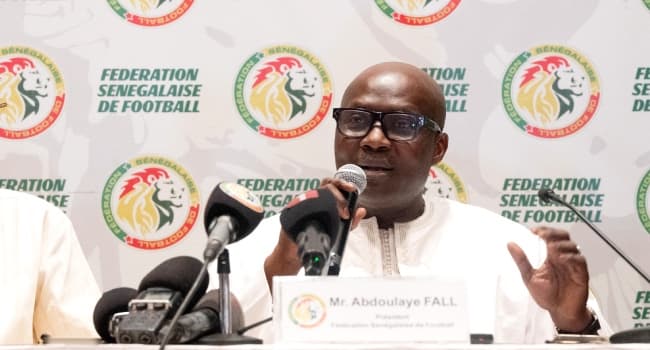
Channels Television reported Wednesday that the fallout from a contentious continental tournament ruling intensified after Senegalese Football Federation officials pushed back against allegations of procedural impropriety. The core dispute centers on claims made by Moroccan soccer administrators following a high-stakes legal decision that restored a championship title to Dakar. The decision arrived just days after a heated press conference in Dakar, where the Senegalese side celebrated the reversal as a vindication of their on-field protest.
The controversy traces back to a chaotic January final that ended with a 1-0 extra-time victory for Senegal. Two months later, the Confederation of African Football (CAF) overturned that result and awarded Morocco a 3-0 victory and the trophy. That initial reversal stemmed from a controversial moment when several Senegalese players walked off the pitch to protest a penalty awarded to the host nation while the match remained scoreless. The walk-off triggered a stadium lockdown, a flood of angry chants, and a scramble by officials to restore order.
CAF Appeals Committee members relied heavily on Articles 82 and 84 of the official tournament regulations to justify stripping Senegal of the win. Those rules dictate that any squad abandoning the field without referee authorization faces immediate elimination and forfeiture. Yet the match did not end in the tunnel; players returned to the pitch under the referee's direction, and regulation play eventually concluded. The committee’s memo cited the rule verbatim, ignoring the referee’s subsequent decision to restart the game.
That sequence of events formed the foundation of the recent Court of Arbitration for Sport (CAS) appeal. A three-person CAS panel reviewed the record and determined that the referee's decision to restart the fixture validated the continuation of play. Because the match resumed under official sanction, the panel ruled that forfeiture provisions under Articles 82 and 84 did not apply, ultimately restoring the trophy to Senegal in a unanimous verdict. The panel’s 22-word analysis noted that “the authority to resume play nullifies any alleged abandonment,” then added a brief punchline: “Procedural nuance wins.”
Inside the Allegations Raised by the Royal Moroccan Federation
The legal victory for Dakar triggered an immediate counter-offensive from the Royal Moroccan Football Federation (FRMF). Following Tuesday's ruling, Moroccan officials asserted that unauthorized communication had taken place before the panel delivered its final verdict. Specifically, the FRMF claimed that Abdoulaye Fall, president of the Senegalese Football Federation, had established contact with German arbitrator Ulrich Haas, one of the three CAS panel members assigned to the dispute.
The Moroccan statement alleged that this dialogue occurred roughly 48 hours before the panel finalized its unanimous award. In elite sports arbitration, any hint of ex parte communication threatens the perceived legitimacy of a ruling. For an international body governing continental sports, such accusations carry immediate administrative weight. The FRMF’s press release warned that “any breach of confidentiality erodes trust in the entire arbitration system.”
Transparency forms the bedrock of sports jurisprudence. When a losing national body questions the integrity of a tribunal member, the friction moves past standard tactical appeals into governance crises. That background explains why the denial from Dakar arrived swiftly on private broadcast networks. The Moroccan claim also referenced a prior CAF disciplinary hearing in which the FRMF felt sidelined, adding a layer of institutional grievance.
Abdoulaye Fall's Response on Private Television Channel TFM
Addressing the allegations directly, Fall appeared on the private television channel TFM to dismiss the claims as entirely fabricated. His denial was unequivocal. Fall stated on TFM that the assertions were completely false and that he had never engaged in any exchange with any member of the arbitration court.
Fall expressed open astonishment that such grave accusations would surface publicly without foundational evidence. He maintained that he had remained entirely insulated from the arbitration procedure, communicating only through formal legal channels established by the court's registry. “My only contact was the written notice sent by the CAS secretariat,” he told the camera, a line that underscored his reliance on official paperwork.
The hard denial shifts the burden back to Rabat to substantiate claims of back-channel lobbying. The FRMF’s spokesperson replied that the matter would be investigated by the Moroccan Ministry of Youth and Sports, a move that signals a willingness to pursue a formal inquiry. The back-and-forth illustrates the extreme tension accompanying continental championships. When millions of fans and substantial broadcast revenues hang in the balance, legal losses rarely settle quietly. Every procedural step faces intense public scrutiny across world-news outlets.
Next Steps and the Limit of Swiss Federal Oversight
Despite the CAS ruling, the legal pathway remains open for further escalation, though the grounds narrow significantly from this point forward. The Moroccan federation retains the option to lodge an appeal with the Swiss Federal Supreme Court. However, that venue does not re-litigate the facts of a soccer match or review the merits of the tribunal's sporting logic.
Swiss federal judges intervene strictly on procedural matters, such as jurisdictional overreach, denial of a fair hearing, or corruption within the arbitration panel. Proving procedural corruption requires verifiable evidence rather than informal assertions. Until any Swiss filing materializes, the CAS ruling stands, leaving the disputed AFCON trophy in Senegalese hands while administrative fallout continues to reverberate.
Legal experts note that the Swiss court typically dismisses appeals that lack a clear breach of due process. They point to recent precedents where the court affirmed CAS decisions unless a party demonstrates a tangible conflict of interest. The FRMF would need to produce email logs, recorded calls, or witness testimony that directly links Fall to Haas.
In the meantime, CAF officials have scheduled a meeting in Cairo to discuss potential reforms to the tournament’s disciplinary code. The agenda includes clarifying the language of Articles 82 and 84, a step that could prevent future walk-off controversies. Senegalese supporters have already begun planning a victory parade in Dakar, while Moroccan fans voice disappointment on social media platforms.
Should the Swiss Supreme Court accept an appeal, the case could linger for months, extending the period of uncertainty for both federations. A delay would also affect the upcoming qualifiers for the next continental tournament, where both nations hope to secure seeding advantages. The practical impact reaches beyond trophies; it touches sponsorship contracts, player morale, and national pride.
For now, the trophy sits in a display case at the Senegalese Football Federation headquarters, guarded by security staff who received orders to keep the symbol away from any political protest. The FRMF continues to rally its legal team, citing the need to protect the integrity of Moroccan football. Both sides remain locked in a battle that blends sport, law, and national identity, a mix that rarely resolves without a final courtroom decision.
The Morning Brief
One email a day with the stories that matter. Free, forever.
No spam. Unsubscribe anytime.
Comments (0)
Be the first to share your thoughts.