
Nvidia Market Slide Tests Investor Patience as Jensen Huang Return Fails to Hold Rally
Global markets face renewed tech sector pressure as Asian semiconductor stocks drop and investor relief over Jensen Huang's return fades.
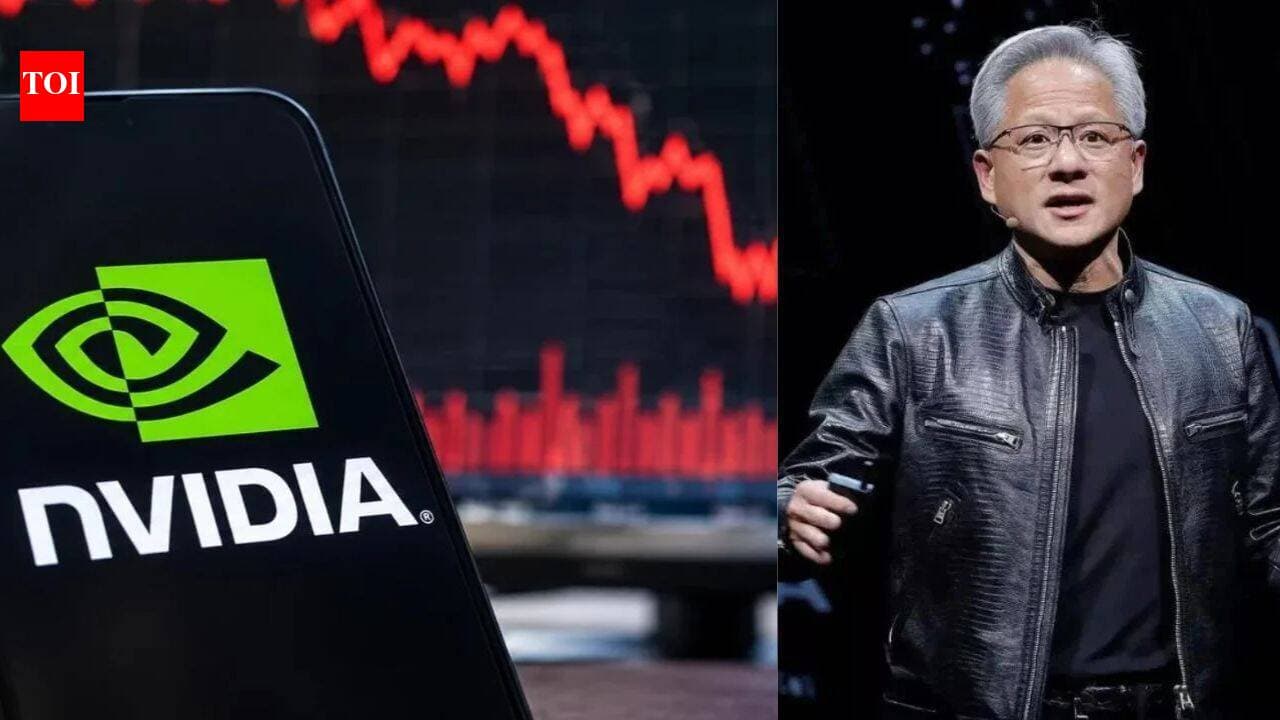
According to reporting from the Times of India, European trading sessions opened to a fractured picture on Wednesday, marked by a gentle dip on Germany's DAX alongside a modest gain for France's CAC 40. Beneath those continental variations, a colder reality took hold across global trading desks. Asian markets absorbed sharp retreats led by heavy casualties in the technology and semiconductor sectors, abruptly ending any brief euphoria sparked by Nvidia leadership.
For months, the prevailing assumption among retail investors and institutional funds alike has been that high-flying tech monoliths operate on an upward trajectory immune to standard gravity. Every dip was treated as a temporary clearance sale. That confidence breaks fast when supply chain corrections and shifting capital allocations expose the vulnerability of chipmakers. What looked like an unshakeable growth engine now faces a harder reckoning on global exchanges.
How Semiconductor Drops Ripple Across Global Exchanges
When heavyweights in the hardware supply chain stumble, the shockwaves do not remain contained within Silicon Valley boardrooms or Asian manufacturing hubs. Ordinary people watching their retirement funds or pension allocations often wonder why a dip in advanced silicon demand matters to Main Street. The answer lies in how deeply modern Economy & Markets indices rely on hardware dominance to prop up broad-market valuations. When chip valuations contract, mutual funds tracking the broader tech basket feel the pinch instantly.
Wednesday's trading data revealed a stark divergence between Western European bourses and Asian tech bellwethers. While Frankfurt and Paris held defensive positions, Asian exchanges absorbed direct hits as sentiment soured around semiconductor production volumes. The relief rally that initially greeted Jensen Huang's return to day-to-day operational focus evaporated under the weight of wider macroeconomic caution. Investors who anticipated a sustained rebound found themselves navigating a persistent slide instead.
The Gap Between Executive Reassurance and Trading Floor Reality
Corporate storytelling often leans heavily on the comforting presence of charismatic founders to steady nervous markets. When Jensen Huang steps back into the spotlight, the immediate assumption is that engineering prowess and visionary guidance will instantly translate into sustained share price stability. Yet the verified numbers on trading screens tell a more complex story. Leadership stability alone cannot override cooling demand cycles and tightening institutional liquidity.
Market participants are weighing the actual cost of sustaining hyper-growth against the revenue realization of downstream artificial intelligence deployments. Small businesses and enterprise buyers are beginning to scrutinize capital expenditure returns with severe discipline. Nobody budgeted for endless hardware replacement cycles without immediate productivity gains. That friction point is precisely where high-growth valuations run into hard resistance.
What the Hardware Correction Means for Downstream Innovation
For observers tracking technological shifts, this market cooling phase carries lessons that extend far beyond ticker symbols. When capital stops flowing unconditionally into raw compute infrastructure, software developers and system integrators must justify their operational expenses. Innovation shifts away from pure brute-force scaling toward lean, cost-efficient deployment models that actually make financial sense for everyday businesses.
For regions like Africa and emerging digital economies, cheaper access to foundational compute depends entirely on this recalibration. If hardware manufacturing overcapacity forces a pricing correction, secondary markets eventually benefit from lower component costs. The immediate pain felt by semiconductor investors might ultimately clear the path for more sustainable, affordable technology adoption down the road.
The Morning Brief
One email a day with the stories that matter. Free, forever.
No spam. Unsubscribe anytime.
Comments (0)
Be the first to share your thoughts.