
China Launches Shenzhou 24 Spacecraft Carrying First Foreign Astronaut to Tiangong
China launched the Shenzhou 24 spacecraft on Wednesday with a three-person crew, sending the first foreign astronaut to the Tiangong space station.
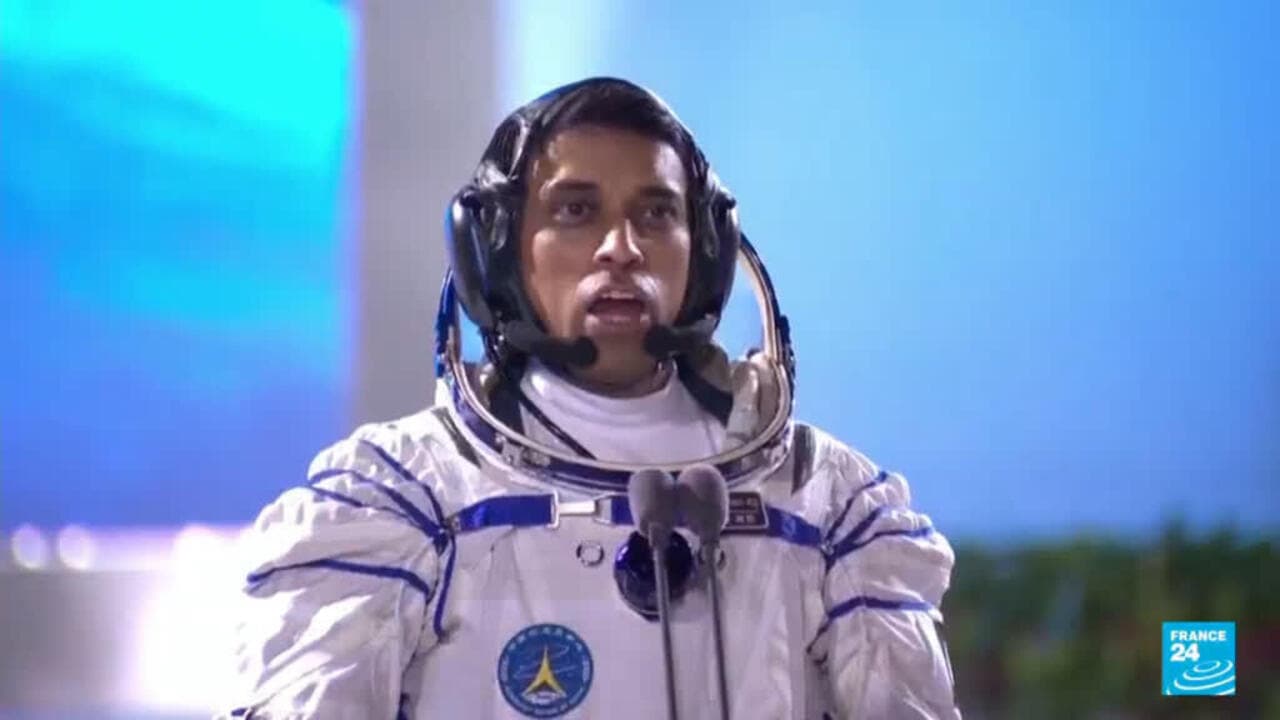
According to France 24, a Long March rocket cleared the pad on Wednesday, carrying the Shenzhou 24 spacecraft and a three-person crew that quietly rewrote the operational history of Beijing's orbital ambitions. For years, observers assumed China's Tiangong space station would remain an entirely domestic laboratory, locked behind national engineering protocols and closed training schedules. That assumption dissolved on Wednesday morning when the capsule successfully separated from its launch vehicle and drifted into its predetermined orbit with a Pakistani astronaut onboard.
It marks the first time a foreign crew member has ever flown aboard a Chinese crewed spacecraft or stepped foot inside the Tiangong station. Two Chinese astronauts accompany their international colleague on the mission, signaling a notable pivot from insular technological development toward bilateral crew integration. The launch shows how Beijing intends to manage international cooperation in low Earth orbit, favoring targeted partnerships over broad multilateral consortia like the International Space Station.
Engineering the Shenzhou 24 Flight Path and Hardware
Behind the historic milestone lies a tightly controlled technical operation. The Shenzhou 24 mission relied on established launch mechanics developed over decades of uncrewed and crewed flights, yet the inclusion of an international crew member required precise procedural synchronization. Ground controllers monitored telemetry as the spacecraft cleared the atmosphere, separated cleanly from the booster stage, and settled smoothly into its orbital slot.
Training for mixed-nationality crews demands rigorous cross-cultural and technical alignment, particularly regarding life support systems, emergency protocols, and docking procedures. While international agencies like NASA and ESA spent decades refining multilateral frameworks for the ISS, China has constructed its partnership model on a bilateral track. This launch demonstrates that Beijing's hardware can accommodate non-Chinese personnel, opening the door for future bilateral flights with allied space agencies.
Payload integration required adapting cabin displays and communications gear to support multi-language operations during critical orbital maneuvers. Engineers worked through tight tolerances to ensure that environmental control systems maintained stable pressure and oxygen levels for all three crew members during the multi-day rendezvous phase. Every switch position, emergency mask, and telemetry readout had to be verified by both flight controllers on the ground and the astronauts inside the descent module.
The Long March rocket itself performed with the reliability that has become the hallmark of China's heavy-lift program, executing stage separations without notable deviation from its programmed trajectory. Telemetry feeds streamed back to mission control in Beijing as the booster shed its spent propellant tanks and tumbled back toward predetermined drop zones. That mechanical precision sets the stage for a busy manifest of subsequent cargo and crewed flights scheduled for the coming months.
Bilateral Alliances Reshape Foreign Space Diplomacy
For decades, Western-led alliances dominated crewed spaceflight, leaving nations outside the ISS partnership with limited pathways to orbit. The arrival of a Pakistani astronaut on Tiangong alters that diplomatic landscape. It provides emerging space programs with an alternative partner for astronaut training and scientific research, bypassing the legislative hurdles and export controls that often complicate Western space cooperation.
As traditional orbital platforms approach retirement age, bilateral arrangements like the Shenzhou 24 flight offer a glimpse into the future of space diplomacy. Nations seeking to build domestic human spaceflight capabilities now have a tested, operational alternative in Asia. The success of this mission alters calculations in foreign capitals, where policymakers must weigh the growing appeal of China's orbital infrastructure against traditional alliances in the World News arena.
Funding structures for these new partnerships operate entirely outside the complex treaty negotiations that bogged down the construction of the ISS. Instead of managing contributions from 15 different nations with competing legislative calendars, Beijing deals directly with individual partner governments through bilateral memorandums of understanding. That streamlined approach cuts years off the timeline required to select, train, and launch a foreign national into orbit.
Washington and its partners now face a quiet diplomatic challenge as developing economies observe how quickly a bilateral space agreement can move from initial talks to actual flight execution. Without matching programs or accessible crew slots on commercial Western vehicles, traditional space powers risk losing influence over the next generation of spacefaring nations. That friction point will shape aerospace policy negotiations for the remainder of the decade.
Inside Tiangong's First Multinational Laboratory Shift
The immediate consequence of Wednesday's launch is operational validation. Tiangong is no longer just a national outpost; it is a functioning multinational habitat, even if on a bilateral scale. Future mission manifests will likely face increased scrutiny from space agencies worldwide as observers watch to see which nations secure the next seats on upcoming Shenzhou flights.
Technical integration has proven successful, and the precedent has been set. The real test begins once the crew docks, opens the hatch, and begins joint scientific experiments inside the module. That operational reality marks a permanent shift in who flies, who trains, and who shares workspace above the atmosphere.
Inside the core module, the crew faces the immediate task of configuring shared living quarters and establishing daily maintenance routines that accommodate different dietary requirements and cultural preferences. Space station life leaves zero room for miscommunication when scrubbing carbon dioxide, recycling water, or managing power distribution panels across complex orbital day-night cycles. Every hour is accounted for down to the minute, leaving the astronauts little time to adjust before diving into their primary research objectives.
Scientific payloads loaded onto Shenzhou 24 include materials science experiments and biological observation chambers designed to test how microgravity affects specific alloys and cellular structures over extended durations. The Pakistani astronaut will oversee a designated suite of experiments, feeding data back to ground stations that coordinate between Beijing and national scientific institutes abroad. How smoothly these joint investigations run will determine the frequency and scope of future foreign crew assignments on subsequent Tiangong expeditions.
The Morning Brief
One email a day with the stories that matter. Free, forever.
No spam. Unsubscribe anytime.
Comments (0)
Be the first to share your thoughts.