
Osun State Governor Ademola Adeleke Unveils N927 Billion 2027 Fiscal Proposal
Osun State Governor Ademola Adeleke has presented a proposed budget of N927.37 billion for the 2027 fiscal year, marking a 28.2 percent increase over the previous year.
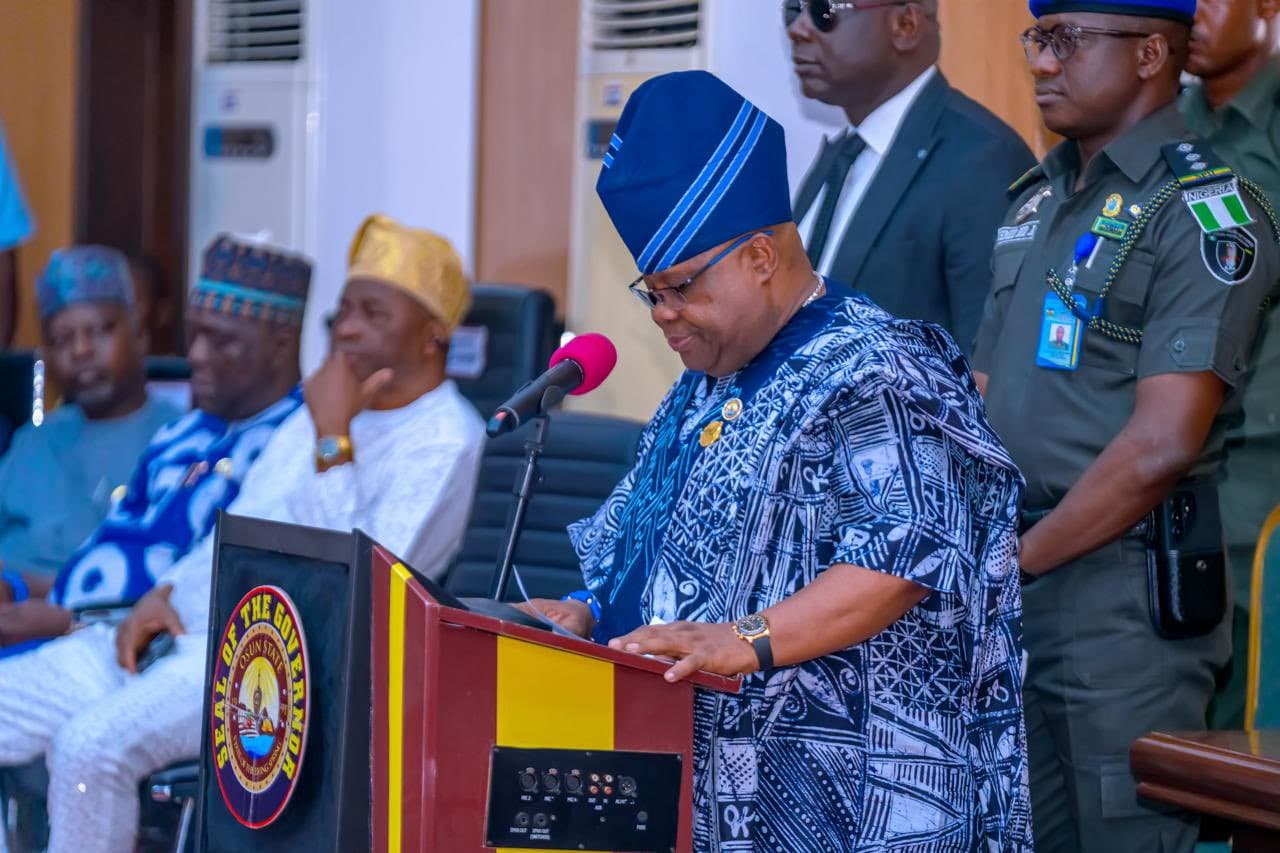
According to reporting from Premium Times, Osun State Governor Ademola Adeleke has formally presented a proposed spending plan of N927.37 billion for the 2027 fiscal year to the state legislature. The figure marks an increase of approximately N203.92 billion over the approved 2026 fiscal framework, setting up an intensive legislative review period focused on capital outlays and regional development across the Africa bureau beat.
That jump forces a hard look at local borrowing capacities, tax collection rates, and federal payout schedules. Nobody budgeted for a nearly trillion-naira ceiling just two years ago.
Tagged the "Budget of Economic Transformation," the proposal represents a 28.2 percent jump compared with the N723.45 billion authorized for the outgoing budget cycle. Speaking before lawmakers at the Osun State House of Assembly, Mr Adeleke framed the fiscal blueprint as a strategic roadmap designed to accelerate public infrastructure, expand employment, and strengthen human capital.
Taxpayers want to see where those billions actually land once the assembly signs off. Concrete results must follow the rhetoric.
"This budget is a visionary roadmap for our collective future, a blueprint for sustainable growth, and a bold declaration of our unwavering commitment to improving the lives of every citizen in our beloved state as a responsive and responsible government," Mr Adeleke said during the presentation.
How Osun State Funds a N559.31 Billion Infrastructure Push
Underneath the headline spending increase lies a deliberate shift in resource allocation toward physical and economic assets. The 2027 proposal earmarks N559.31 billion specifically for capital expenditure, which translates to roughly 60.3 percent of the entire fiscal package. That proportion outpaces the N402.68 billion allocated to capital projects in the 2026 budget, a figure that accounted for 55.7 percent of that year's total appropriation.
Building roads and clinics eats cash fast. Contractors demand mobilization fees upfront before moving heavy machinery onto state sites.
Behind these figures sits the framework of the reviewed Osun State Development Plan spanning 2023 to 2050. State officials have structured the capital spending to prioritize the completion of ongoing infrastructural projects before breaking ground on new initiatives. The recurrent component of the budget is pegged at N368.06 billion, divided between N130.01 billion for personnel costs—covering salaries, pensions, and gratuities—and N238.05 billion designated for overhead expenses.
Civil servants track every naira allocated to pensions and monthly stipends. Delays trigger immediate pushback from labor unions.
Balancing Federal Allocations Against Internal Revenue Goals
Financing a near-trillion-naira spending target requires balancing inflows from multiple revenue streams across federal allocations, internal generation, and external partnerships. The administration anticipates securing N400.93 billion through the Federation Account Allocation Committee, representing the single largest source of state funding. Independent state-level revenue is projected to generate N250.17 billion, while development partners are expected to contribute N230.65 billion.
Missing a single quarterly projection from external donors throws construction timelines completely off balance. External partners demand rigorous compliance audits.
This revenue structure builds on the previous fiscal year's trajectory, where the assembly ultimately expanded an initial N705.79 billion proposal up to N723.45 billion in December 2025. The challenge for state financial planners remains maintaining steady collection efficiency across independent revenue channels while meeting the performance benchmarks required by external development partners to unlock pledged capital.
Local businesses feel the pinch whenever internal tax enforcement tightens up. Compliance checks cost money to administer.
Inside the Assembly Debate Over Executive Spending Priorities
The presentation also highlighted the political machinery governing state finance, particularly the working relationship between the executive branch and the legislature. Mr Adeleke commended lawmakers for their cooperation over the past four years, urging them to maintain that institutional alignment to ensure timely implementation of the proposed programs.
Speaker of the House Adewale Egbedun acknowledged the administration's operational continuity despite persistent financial bottlenecks, including ongoing disputes surrounding local government allocations. Following the recent electoral mandate confirmed in the August 15 governorship election, Mr Egbedun assured the executive that the assembly would subject the appropriation bill to rigorous fiscal scrutiny.
Legislators aren't rubber-stamping this package without a fight over district allocations. Every committee chair wants a cut of the capital expenditure.
"We are committed to examining the state's development priorities with strict attention to fiscal prudence, transparency, equity, and value for public expenditure," Mr Egbedun said, signaling that lawmakers intend to review every line item before passing the final legislation.
The committee rooms open for public defense next week. Final votes are expected before the current fiscal year expires.
The Morning Brief
One email a day with the stories that matter. Free, forever.
No spam. Unsubscribe anytime.
Comments (0)
Be the first to share your thoughts.