
US Proposes New Tariffs on 14 Major Trading Partners Including the European Union
The US administration has proposed new tariffs on 14 major trading partners, including the EU and China, to curb foreign manufacturing overcapacity.
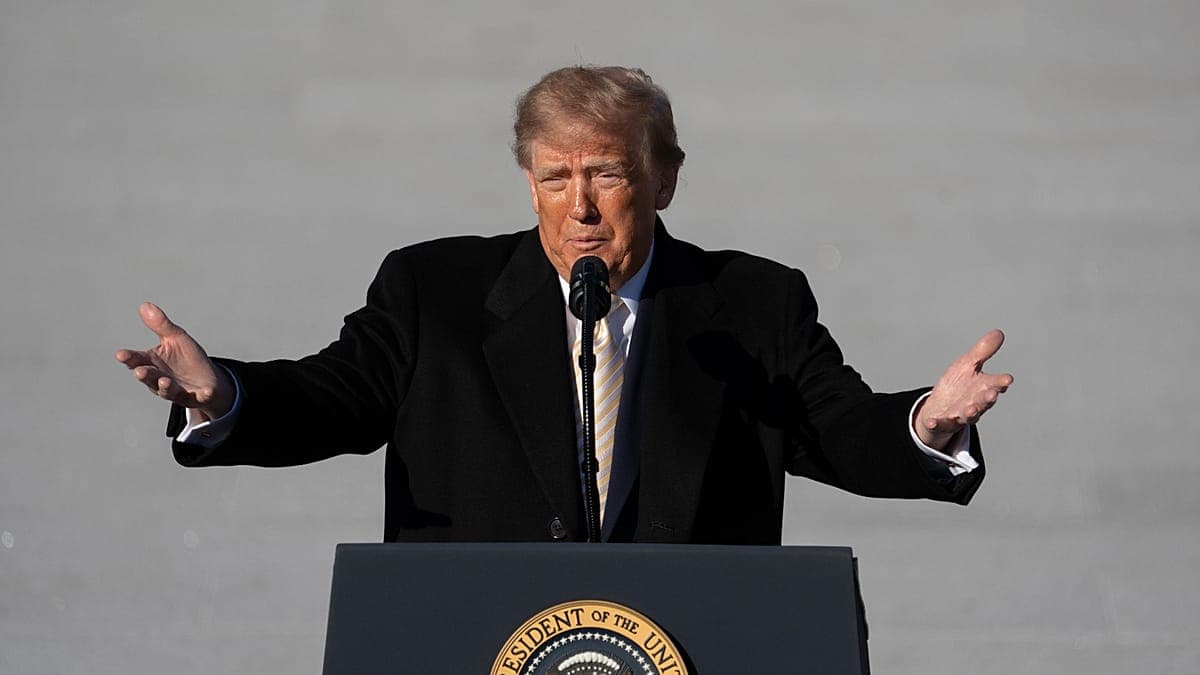
According to Euronews, the administration of US President Donald Trump has proposed new tariffs targeting specific goods from 14 major trading partners, citing excess factory output fueled by subsidies and foreign trade barriers. The announcement follows an eight-month Section 301 investigation conducted by the Office of the US Trade Representative, which examined excess production capacity across 16 economies.
Federal investigators spent nearly three quarters evaluating industrial data, subsidy flows, and export volumes before publishing their final findings. The resulting draft rules land with immediate financial weight across global supply chains that span multiple continents. Officials argue that foreign state support distorts true market pricing, leaving domestic factories unable to compete on level terms. That logic drives the entire regulatory push.
The USTR concluded that practices across 14 of those jurisdictions were unreasonable and actively restricted or harmed American commerce. The sweeping proposal covers the European Union, China, India, Japan, South Korea, Bangladesh, Cambodia, Indonesia, Malaysia, Singapore, Switzerland, Taiwan, Thailand, and Vietnam. Two other economies investigated by the agency, Mexico and Norway, remain excluded from the current proposal while determinations are still pending.
Supply chains linking Southeast Asian manufacturing centers to North American distribution hubs now face acute uncertainty. Importers don't know what their landing costs will look like by early next year. Companies that spent decades optimizing assembly lines across Vietnam, Thailand, and Malaysia must re-run their margin calculations from scratch. Nobody budgeted for sudden 20% price jumps on intermediate components.
How the Section 301 Investigations Target Global Overcapacity
The administrative rationale centers on the argument that low-priced imports from these manufacturing hubs undercut domestic companies. Federal officials tie this dynamic directly to the widening US goods trade deficit, which hit $1.24 trillion in 2025. By invoking Section 301 of the Trade Act of 1974, the executive branch claims legal authority to retaliate against foreign practices deemed unjustifiable or discriminatory to US commerce.
Decades of trade policy have relied on these statutory mechanisms to pressure reluctant trade partners. This specific statute grants the executive branch sweeping powers to impose duties without waiting for congressional approval. Critics point out that unilateral tariffs usually spark retaliatory duties against American agricultural exports and industrial machinery. The trade deficit keeps growing despite these blunt interventions.
Beyond correcting perceived trade imbalances, the proposed duties serve a secondary fiscal function. They are designed to help replace federal revenue lost after a Supreme Court ruling in February struck down emergency powers previously invoked by President Trump to enact earlier rounds of tariffs. The administration frames the new levies as consistent with bilateral trade agreements negotiated over the past year, though trading partners have already begun pushing back against the foundational assumptions of the probe.
That lost customs revenue leaves a noticeable hole in federal budget projections. Treasury officials count on import levies to offset tax cuts and fund domestic manufacturing incentives. That math breaks fast when trading partners retaliate or reroute shipments through third-party ports to evade the new taxes. Customs brokers are already warning clients about stricter auditing of country-of-origin documentation.
Brussels and Beijing Respond to Washington's Preliminary Findings
European officials swiftly rejected the core premise of the US investigation. European Commission deputy chief spokesperson Olof Gill stated that the bloc strongly rejects the assertion that Europe is a structural source of overcapacity, noting instead that European markets are among the most exposed to global imbalances. The White House draft notice proposes a 15% tariff on EU goods on top of existing most-favored-nation duties, with an escalating option of up to 20% if ongoing talks fail to yield satisfactory commitments.
Trade diplomats in Brussels spent the hours following the announcement drafting formal rebuttals to the USTR dataset. They argue that European industrial subsidies comply fully with global trade rules and target green transition goals rather than export dumping. The proposed 15% baseline levy threatens billions of dollars in transatlantic commerce. Industrial machinery, specialty chemicals, and consumer goods face immediate pricing pressure if the talks stall.
Crucially, the draft notice carves out specific exemptions for EU goods already subject to US tariffs under Section 232. This protects steel, aluminum, cars, certain car parts, semiconductors, and patented medicines from the new levy. Meanwhile, the proposal targets Chinese goods with proposed duties of up to 20%, alongside a potential ceiling of 40% if negotiations fail. Chinese foreign ministry spokesman Guo Jiakun rejected the overcapacity accusations, emphasizing that trade wars serve no one's interests.
Beijing views the proposed 40% ceiling as an aggressive escalation designed to decouple critical technology sectors. Chinese export firms have already begun stockpiling inventory in bonded warehouses across North America to hedge against the looming deadline. Manufacturing margins in Shenzhen and Guangzhou tighten every time Washington updates its tariff schedules. The catch shows up at renewal time when logistics providers raise container freight rates.
Timeline, Public Feedback, and Broader International Repercussions
The USTR has established a structured timeline for public feedback before any duties take effect, leaving an operational window for diplomatic intervention. Public comments must be submitted by January 5, 2027, with formal public hearings scheduled to begin on January 25. The agency has not yet specified an exact implementation date for the proposed import taxes.
Corporate legal teams are working through the holidays to draft testimony for the upcoming USTR hearings. Lobbyists represent manufacturing associations, retail conglomerates, and shipping lines who all want carve-outs before the final rules take effect. Every exemption granted to one sector creates an immediate lobbying queue for another. The administrative burden on the USTR office threatens to overwhelm their review capacity.
The broader international landscape reflects widening trade friction beyond the primary 14-nation list. In a separate Section 301 action stemming from stalled talks, Washington proposed higher import taxes on out-of-quota raw and refined sugar alongside a 10% tariff on finished Brazilian aircraft. That specific measure directly impacts Embraer, Brazil’s largest aircraft manufacturer. As upcoming diplomatic summits approach, including a planned Group of 20 meeting in Florida, the viability of existing trade truces and agricultural purchasing agreements hangs in the balance.
Brazilian agricultural exporters now worry that soybean and beef purchases will face sudden quotas or retaliatory checks at US ports. Aerospace executives in São José dos Campos are scrambling to calculate the impact of the 10% aircraft tax on pending regional jet deliveries to US airlines. Regional carriers buying those planes face higher capital expenditures that will eventually get passed on to passenger ticket prices. The January 5 feedback deadline arrives just as global trade ministers pack their bags for the Florida summit.
The Morning Brief
One email a day with the stories that matter. Free, forever.
No spam. Unsubscribe anytime.
Comments (0)
Be the first to share your thoughts.