
Putin Unveils Nuclear Submarine Perm as Moscow Expands Naval Fleet
Russian President Vladimir Putin attended a flag-raising ceremony for the nuclear-powered submarine Perm in Severodvinsk, marking the fifth Yasen-M class vessel to join the fleet.
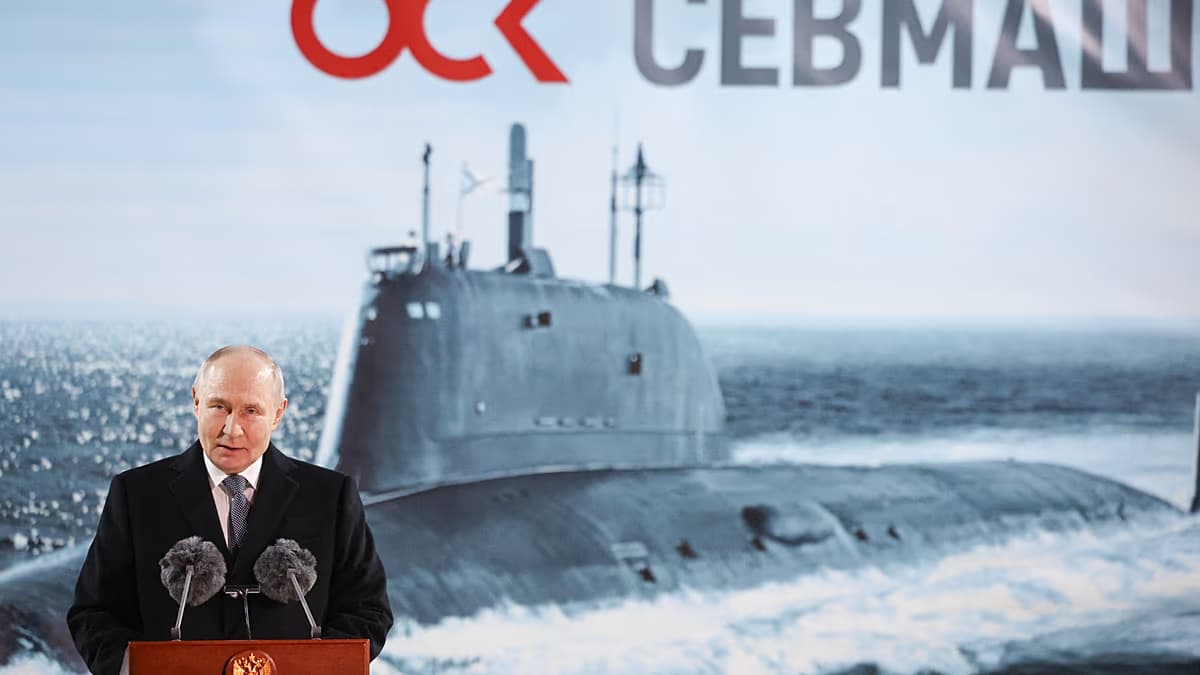
According to Euronews and Al Jazeera reporting, Russian President Vladimir Putin attended a flag-raising ceremony for the country's newest nuclear-powered submarine, the Perm, in Severodvinsk on Friday. The vessel marks the fifth Yasen-M class submarine to join the Russian naval fleet over a six-year period. Moscow is using the deployment to signal a broader acceleration in its military shipbuilding schedule.
The commissioning event highlights a major escalation in regional Security postures across northern waters. Naval planners and international observers are tracking how this fleet expansion alters strategic deterrence lines from the Arctic to the North Atlantic. Severodvinsk remains the central hub for these heavy naval rollouts.
The Perm Joins the Yasen-M Class Fleet
The newly commissioned Perm represents a significant technical evolution for Moscow's underwater warfare capabilities. It stands as the fifth Yasen-M class submarine integrated into active service since 2020. These multi-role nuclear vessels feature advanced acoustic stealth systems and vertical launch tubes capable of firing cruise missiles.
Defense analysts monitoring the Severodvinsk shipyard note that Yasen-M submarines are designed to rival Western counterparts in quiet operation. Their induction changes patrol dynamics in contested maritime zones. Moscow maintains that domestic shipyards possess the exclusive industrial capacity required for such complex hulls.
Delivery Timelines and Strategic Expansion Targets
During the ceremony, Russian leadership outlined explicit delivery milestones for the remainder of the decade. Five additional missile-carrying submarines are scheduled for fleet induction by 2030. This batch includes three more Yasen-M class vessels alongside strategic ballistic missile submarines.
Procurement officials face severe supply chain hurdles under ongoing international sanctions. Meeting the 2030 target requires sustained domestic output of specialized marine reactor components and high-grade steels. State shipbuilders must maintain strict production cadences to avoid delays across active dry docks.
Shifting Leverage and Naval Balances
The naval expansion creates distinct shifts in geopolitical leverage across European and Arctic corridors. Moscow gains operational depth as new hulls replace Soviet-era legacy platforms. NATO planners now face a denser underwater threat matrix requiring updated anti-submarine warfare deployments.
Regional defense budgets in Northern Europe are already reacting to the steady output of Severodvinsk. Smaller navies must upgrade surveillance networks to track quieter Russian patrols. The upcoming delivery milestones through 2030 will determine whether Moscow sustains this industrial momentum or hits capacity ceilings.
Strategic Implications for Arctic Energy Routes
Russia's new submarine fleet arrives as Arctic melt opens longer shipping seasons for liquefied natural gas carriers. Naval presence can shield commercial convoys from hostile interdiction, but it also raises insurance premiums for foreign operators wary of covert surveillance.
Impact on LNG Shipping Lanes
Operators of the Northern Sea Route now factor the Perm's stealth capabilities into route planning. A submarine capable of launching cruise missiles from beneath ice can deter piracy and assert Russian control, yet it also forces charterers to negotiate higher security fees with private maritime security firms.
Potential for Ice-Breakthrough Operations
Ice-class support vessels attached to Yasen-M groups can escort cargo ships through newly navigable passages. This synergy could cut transit times between European markets and Siberian extraction sites by weeks, reshaping supply-chain calculations for energy traders.
Reactions from NATO and Neighboring States
U.S. naval officials released a brief statement emphasizing the need for enhanced undersea detection assets in the Barents Sea. They warned that any increase in Russian submarine numbers compels a proportional boost in allied sonar buoys and patrol aircraft.
Statements from the U.S. Navy
Admiral John Aquilino, commander of the U.S. European Command, said the Perm underscores a “clear intent to expand undersea strike reach.” He added that the United States will accelerate deployment of P-8 Poseidon aircraft to maintain situational awareness.
European Defense Ministers' Briefings
Germany’s defense minister highlighted the need for joint NATO exercises focused on anti-submarine tactics. Sweden, newly admitted to NATO, announced plans to integrate its new Aster missile-armed corvettes into a coordinated Baltic Sea patrol network.
Industrial Challenges Behind the Submarine Build
Domestic production of naval-grade reactors remains a bottleneck, as only a handful of Russian facilities can forge the pressure-vessel alloys required for sustained deep-water operation. Any shortfall forces shipyards to pause assembly lines while waiting for certified components.
Domestic Production of Nuclear Reactors
Rosatom’s central design bureau claims it can deliver a complete reactor core within twelve months, but sanctions limit access to foreign diagnostic equipment. Engineers therefore rely on older testing rigs, which can extend verification phases by several months.
Steel Supply Constraints
High-strength, low-magnetism steel needed for hull plating is sourced from a single plant in the Urals. Recent export curbs have forced the plant to prioritize civilian infrastructure projects, leaving naval orders to compete for limited furnace capacity.
Future Outlook for the Russian Submarine Programme
Analysts project that by 2035 Russia could field up to fifteen Yasen-M derivatives, provided current production rates hold. This would give Moscow a near-continuous undersea presence from Murmansk to the Pacific, reshaping power projection across multiple theaters.
Potential Technological Upgrades
Upcoming upgrades may include lithium-ion battery packs that boost silent running endurance, and integrated unmanned underwater vehicles for reconnaissance. If these systems prove reliable, the Yasen-M platform could outpace comparable Western designs in both range and stealth.
Risk of Overextension
Should sanctions tighten further, the ambitious 2030 delivery schedule could slip, forcing the navy to rely on older submarines longer than planned. Such a delay would give NATO a window to field newer anti-submarine platforms before the Perm fleet reaches full operational tempo.
The Morning Brief
One email a day with the stories that matter. Free, forever.
No spam. Unsubscribe anytime.
Comments (0)
Be the first to share your thoughts.