
OpenAI Counter-Sues Apple in High-Stakes Tech Trade Secrets Battle
OpenAI has fired back at Apple with a federal countersuit alleging trade secret theft, intensifying a high-stakes legal battle over AI hardware and talent.
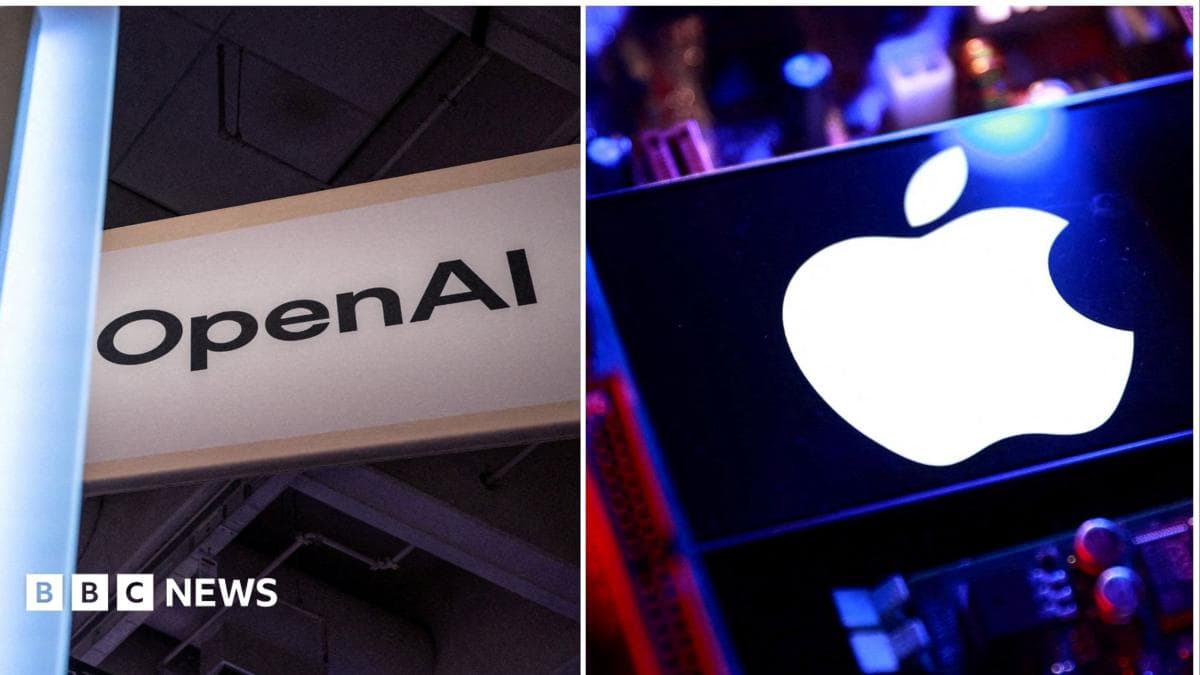
How California Federal Court Became Ground Zero for an OpenAI-Apple Showdown
According to BBC News reporting, ChatGPT-maker OpenAI has filed a federal countersuit against Apple in California on Friday, escalating an already bitter legal feud over proprietary technology and talent poaching. The filing marks a dramatic escalation after Apple initiated legal action in July alleging a coordinated pattern of data theft by former employees who moved to the artificial intelligence firm.
As both tech titans clash over unreleased hardware roadmaps and trade secrets, ordinary observers and industry analysts alike are left wondering how this corporate war will impact future consumer devices. For readers tracking developments in AI & Innovation, this courtroom battle lays bare the cutthroat reality of modern hardware and software integration.
OpenAI's latest legal salvo turns the tables on the iPhone maker, accusing Apple of illicitly acquiring confidential information through the tactical rehiring of a former OpenAI staffer. The countersuit contends that the employee in question exfiltrated dozens of internal documents before briefing senior Apple executives on future physical device plans.
It is a striking twist in a dispute that initially centered exclusively on workers migrating from Cupertino to OpenAI and Sir Jony Ive's design startup, io Products.
Image: bbc.co.ukThe Competing Claims of Proprietary Theft and Corporate Espionage
Two distinct corporate camps have emerged in this high-stakes litigation, each painting the other as an aggressive actor willing to bend ethical rules for commercial gain. Apple maintains that OpenAI engineers engaged in deliberate industrial espionage by emailing confidential files to personal accounts before making the jump. Conversely, OpenAI argues that Cupertino's legal strategy is built on entrapment mechanisms, such as encouraging workers to mix personal and professional iCloud storage so departing staff can be easily smeared.
Apple's Case Against Departing Engineers and io Products
Apple's initial July lawsuit targets OpenAI, two former long-time Apple employees, and io Products, the design firm founded by legendary industrial designer Sir Jony Ive. OpenAI acquired io Products last year in a $6.5bn deal, setting the stage for a hardware push that puts the AI giant directly in Apple's crosshairs. Cupertino claims the defendants executed a systematic strategy to extract unreleased process documents, manufacturing specifications, and product pipelines.
This case is about OpenAI employees deliberately stealing, accessing, and using Apple's secret and confidential information regarding our unreleased technologies, processes, and products - not about inadvertent retention of Apple information.
— Apple Spokesperson, Apple Inc.
The tech giant insists the seized data goes far beyond accidental retention, representing a calculated effort to bootstrap rival hardware development. Legal representatives for Apple have aggressively defended their intellectual property portfolio against what they term an existential threat to their device ecosystem.
OpenAI's Countersuit and Allegations of Hardware Sabotage
OpenAI's legal team has fired back by accusing Apple of using unfair recruitment loops and pressuring hardware suppliers to boycott upcoming OpenAI physical devices. The countersuit alleges that Apple's retaliatory tactics are designed to suffocate competition before independent AI-enabled personal gadgets ever reach the open market. According to the court filing, an engineer who spent six months at OpenAI before returning to Apple allegedly funneled sensitive roadmap data straight back to Cupertino.
Given the timing, it now appears that stealing those documents may have been his reason for joining OpenAI in the first place.
— OpenAI Legal Representatives, OpenAI
OpenAI has steadfastly maintained that it operates with strict ethical boundaries regarding proprietary data. A company spokesperson previously told the BBC that they hold zero institutional interest in acquiring competing trade secrets.
Image: bbc.co.ukMarket Pressures and the Race for AI Hardware Dominance
Beneath the dense layers of legal posturing lies a raw commercial panic over who will control the next generation of personal computing. OpenAI is actively developing custom AI-enabled physical devices meant to challenge traditional smartphones on their home turf. Apple views these hardware ambitions as a direct assault on the iPhone's foundational dominance in consumer technology.
As this multi-billion-dollar rivalry spills out of Silicon Valley boardrooms and into federal courtrooms, the broader tech landscape braces for collateral damage. Smaller suppliers caught between these two corporate behemoths now face difficult choices about which manufacturing partnerships to prioritize. Whether this courtroom drama results in an eventual settlement or a protracted trial, the race to build the definitive AI hardware interface has officially turned toxic.
The Morning Brief
One email a day with the stories that matter. Free, forever.
No spam. Unsubscribe anytime.
Comments (0)
Be the first to share your thoughts.