
International Tribunal Rejects Argentina's Bid to Halt Falkland Islands Drilling
An international tribunal rejected Argentina's bid to halt offshore oil drilling near the Falkland Islands, clearing the path for the Sea Lion project.
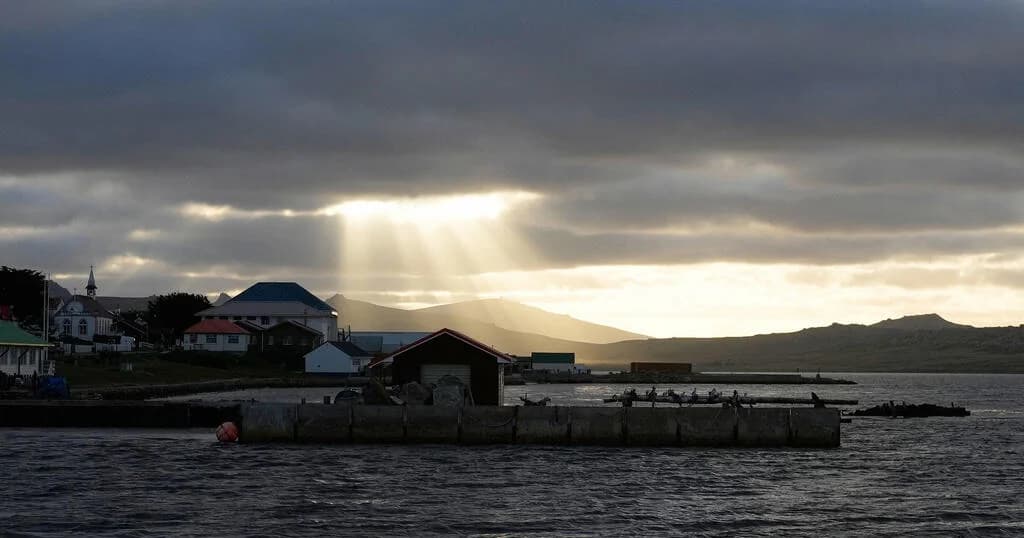
According to CBS News reporting, the International Tribunal for the Law of the Sea voted 18-3 on Saturday against Argentina's request to suspend offshore oil extraction in the disputed waters surrounding the Falkland Islands. Observers frequently frame this ruling as a straightforward win for British sovereignty claims, but that consensus misses the strict jurisdictional limits that actually drove the verdict.
The court didn't validate London's territorial title in Hamburg; it simply sidestepped the sovereignty question entirely because its mandate excludes land-title adjudication.
Jurisdictional Boundaries at the Hamburg Tribunal
To understand why Buenos Aires lost the injunction request, look closely at the mechanics of the tribunal's mandate. The judicial panel didn't evaluate historical claims dating back to 1833 or weigh the merits of the 2013 local referendum. Instead, judges ruled that Argentina failed to establish a valid jurisdictional basis for interference under the specific treaty frameworks governing maritime disputes.
The Mechanics of the 18-3 Judicial Split
An overwhelming majority of eighteen judges found that the legal threshold for halting commercial activities hadn't been met. The three dissenting votes reflected sharp disagreements over provisional measures and UN resolutions, yet the numerical weight shows how narrow international maritime law is when divorced from land sovereignty.
Treaty Frameworks Cited by the Panel
The majority opinion anchored its reasoning in the 1982 United Nations Convention on the Law of the Sea (UNCLOS) and the 1994 Agreement on the Conservation of Marine Living Resources. Those texts obligate states to prove imminent, irreversible harm before a court can order a pause in extraction. Argentina's dossier, however, presented projected emissions and speculative spill scenarios that fell short of the evidentiary bar.
Implications for Future Maritime Injunctions
By refusing to entertain a sovereignty argument, the Hamburg tribunal set a precedent that future claimants must focus on environmental risk rather than political ownership. Legal teams will now draft injunctions that foreground concrete, measurable damage thresholds. The shift nudges the international system toward a technical, data-driven discourse that may sideline historical grievances.
Commercial Realities of the Sea Lion Oil Field
With the legal hurdle cleared at the tribunal, energy firms are recalibrating their timelines for the South Atlantic basin. Rockhopper Exploration and Navitas Petroleum hold the licenses granted by the local island government, positioning themselves to extract resources roughly 140 miles north of the territory.
Project Timelines and Corporate Commitments
Current operational schedules indicate that heavy drilling equipment will arrive on-site by March 2027. Commercial production is slated to begin twelve months later, turning a decades-old geopolitical dispute into an active extraction site with real physical infrastructure.
Infrastructure Investments and Local Workforce
Both companies have pledged to inject $850 million into port upgrades, helipad construction, and on-shore processing units. The plan also earmarks training for 300 island residents, promising a modest boost to the local economy. Critics argue that the benefits will be short-lived if political tensions flare again.
Market Outlook for South Atlantic Crude
Analysts estimate the Sea Lion field could yield roughly 150 million barrels over its first decade, enough to shift a fraction of the United Kingdom's import bill. Yet price forecasts hinge on Brent crude staying above $75 per barrel, a level that remains volatile amid global supply shocks. Investors therefore weigh a potential upside against the risk of sudden sanctions.
London's Legal Vindication and Political Defense
British officials wasted no time framing the tribunal's vote as total validation of their strategic stance. In a joint statement, British Foreign Secretary Ed Miliband and Attorney General Ellie Reeves defended the rights of the 3,500 island residents.
This outcome is a vindication of the U.K.'s robust legal defence and strategy, The U.K. has no doubt of our sovereignty of the Falkland Islands, our sovereignty and sovereign rights over the surrounding maritime areas, and the right of self-determination of the Falkland Islanders.
— Ed Miliband and Ellie Reeves, Foreign Office and Attorney General
This bullish political rhetoric masks a precarious commercial reality for any outside investor entering the basin. Sovereign disputes don't vanish because a maritime court declines jurisdiction over seabed boundaries.
Buenos Aires' Retaliatory Strategy Under Milei
Argentine President Javier Milei has adopted an aggressive posture following the Hamburg setback, vowing to penalize any corporate entity participating in the extraction effort. Labeling the joint U.K.-Israeli initiative an illegal exploitation of resources, Buenos Aires is leveraging recent diplomatic overtures from Washington to keep the territorial dispute on the international radar.
Economic Pressure Versus Sovereign Claims
Milei's administration insists that the principle of self-determination doesn't apply to a population established after the 1833 expulsion of Argentine authorities. This hardline stance aims to make project financing legally and logistically toxic for partner firms.
The Upcoming Operational Deadlines
As corporations weigh the 2027 drilling window against Buenos Aires' threat of permanent blacklists, the ultimate arbiter won't be a courtroom in Germany. The viability of the Sea Lion field now hinges on whether energy executives are willing to absorb long-term geopolitical hostility for marginal barrel returns.
Legal Counter-measures Buenos Aires Is Preparing
Milei's team has drafted a draft decree that would classify any vessel servicing the Sea Lion platform as a "foreign aggressor" under Argentine maritime law. The decree, if signed, would allow the navy to board and detain ships in the South Atlantic without prior judicial review, effectively raising the cost of compliance for foreign operators.
Regional Diplomatic Maneuvers
At the same time, Buenos Aires has opened informal talks with Brazil and Uruguay, seeking a coordinated stance that frames the extraction as a breach of regional non-intervention norms. Early reports suggest a joint communiqué could be issued by the end of Q2 2025, adding another diplomatic layer that investors must monitor.
With the next drilling season set to kick off in early 2027, the South Atlantic now sits at the crossroads of law, economics, and hard-line politics. Companies that ignore the emerging legal edicts risk asset seizures, while those that bow to pressure may forfeit lucrative access to a field poised to reshape a niche market.
The Morning Brief
One email a day with the stories that matter. Free, forever.
No spam. Unsubscribe anytime.
Comments (0)
Be the first to share your thoughts.