
Doctors Without Borders Denounces Gaza Strike as Regional Fire Spreads Across Yemen
Doctors Without Borders condemns a Gaza strike that killed two staff members as simultaneous military actions unfold across Yemen and Saudi Arabia.
According to PBS NewsHour reporting, Doctors Without Borders expressed immediate outrage after an Israeli strike near a Gaza City clinic killed two staff watchmen. The Friday incident pushes the medical humanitarian organization's death toll in the enclave to 17 personnel since hostilities escalated. Yet military officials quickly defended the action by invoking familiar accusations of militant infiltration.
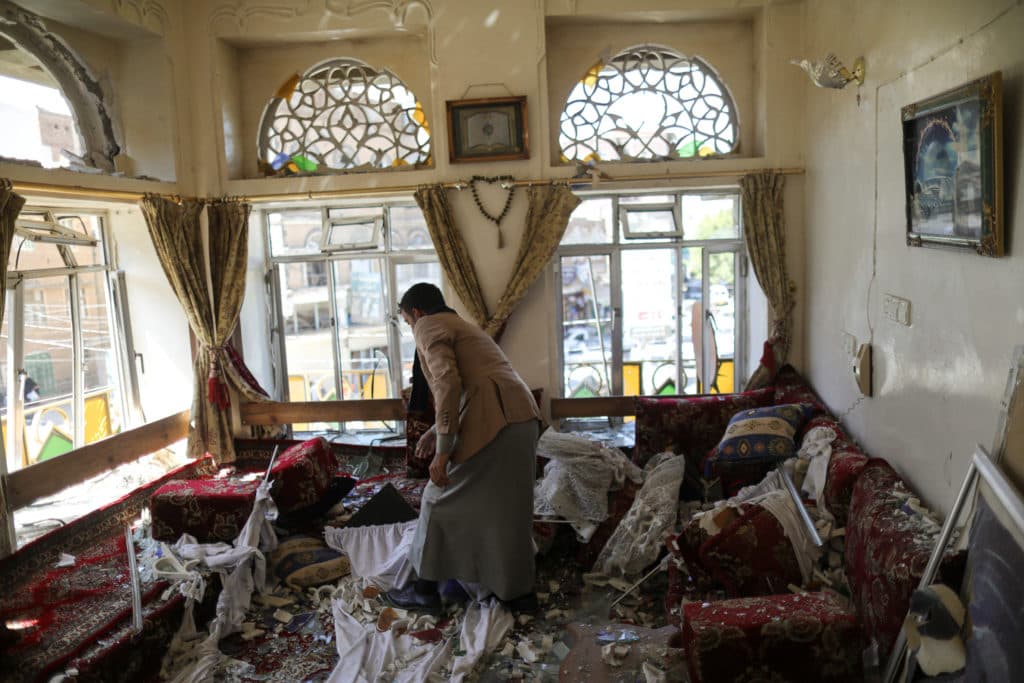
This localized tragedy unfolded alongside simultaneous military escalations across the wider region. An overnight air raid in the Yemeni capital of Sanaa wounded at least 15 people while separate strikes hit Red Sea infrastructure. Observers tracking Middle East conflict dynamics often frame these multi-front clashes as isolated regional flare-ups. A closer examination of intersecting logistical networks reveals a singular, compounding crisis stretching from the Mediterranean to the Bab el-Mandeb strait.
The Humanitarian Case and Operational Protocol Failures
Medical personnel operating inside active conflict zones depend entirely on transparent deconfliction protocols and clearly marked insignia. The latest Gaza strike struck directly at the core of these fragile humanitarian safeguards.
Doctors Without Borders, known internationally as MSF, insisted that the targeted clinic bore explicit organizational markings. Leadership confirmed that exact GPS coordinates had been transmitted directly to the Israeli military prior to the strike.
Unarmed Personnel and Fatal Rounds in Gaza City
Eyewitness testimony from local staff members paints a grim picture of routine operations interrupted by sudden missile fire. Ahmad Shehada, a local MSF employee, reported that the two victims were simply making standard facility rounds when the blast hit.
Family members corroborated that the watchmen carried no weapons and wore standard organizational uniforms. Ahmad Abu Haseira, a relative of one of the slain men, emphasized their non-combatant status during funeral prayers held on Saturday.
The Military Justification and Unverified Allegations
The Israel Defense Forces offered a contrasting narrative regarding the casualties at the MSF-operated facility in Gaza City. Military spokespersons maintained that the strike successfully eliminated two Hamas militants operating within the compound.
this is another example of the Hamas terrorist organization embedding itself within international organizations.
— Israeli Military, IDF Operations Directorate
Independent verification of these tactical claims remains difficult in active combat zones. Human rights monitors note a recurring pattern where institutional facilities face targeting under unproven claims of dual-use infrastructure.
The Houthi Retaliation Matrix and Red Sea Energy Infrastructure
Thousands of miles south of the Mediterranean theater, kinetic activity flared sharply across the Arabian Peninsula. Iran-backed Houthi forces absorbed a heavy wave of coalition air operations targeting Sanaa, Hodeida, and Saada.
These coalition strikes were not launched in a vacuum. They served as direct responses to escalating projectile volleys aimed at regional energy grids and maritime trade routes.
Sanaa Air Raids and Civilian Casualties in Residential Blocks
Houthi-run health officials confirmed that Friday's aerial bombardment caused extensive collateral damage in the capital. Spokesman Anees al-Asbahi stated that at least 15 residents, including two women, sustained injuries in the Abu Shamla neighborhood.
Local media reports cataloged destroyed housing blocks, ruined storefronts, and damaged fueling stations. Such strikes amplify the civilian toll of an intractable civil conflict that has battered local populations for over a decade.
Critical Energy Nodes and Cruise Missile Interceptions
Critical infrastructure bore the brunt of the weekend's kinetic exchanges. Strikes in the Red Sea port city of Mokha ignited a severe fire at a local power plant, threatening regional electricity supplies.
Meanwhile, Saudi military spokesman Maj. Gen. Turki al-Malki reported the successful interception of a Houthi cruise missile targeting Riyadh. This attempted strike on the Saudi capital underscores the persistent long-range capabilities retained by the rebel faction.
Weighing Institutional Accountability Against Kinetic Necessity
The convergence of humanitarian casualties in Gaza and energy strikes in Yemen exposes a dangerous systemic friction. International organizations demand strict adherence to neutral protection frameworks while military commanders prioritize immediate tactical elimination.
Diplomatic channels are struggling to establish reliable firewalls between protected medical sites and active combat zones. Each disputed strike further erodes the trust required to deliver aid safely in high-risk environments.
Maritime security agencies simultaneously monitor related threats, noting a brief hijacking attempt in the Gulf of Aden that ended without hostage taking. Commercial operators continue to alter routes to avoid lingering risks near the Bab el-Mandeb bottleneck.
The immediate operational dilemma facing humanitarian directors is whether to suspend field operations or accept rising casualties. Operational pauses risk leaving millions without basic medical care while continued deployment courts fatal operational hazards.
The Morning Brief
One email a day with the stories that matter. Free, forever.
No spam. Unsubscribe anytime.
Comments (0)
Be the first to share your thoughts.