
Ten Dead and One Hundred Ten Wounded After Blast Levels Eastern Afghan School
An explosion at an Afghan primary and middle school killed 10 people and wounded 110, with officials tracing the blast to a neighboring explosives depot.
How a Residential Mining Depot Traded Community Safety for Proximity
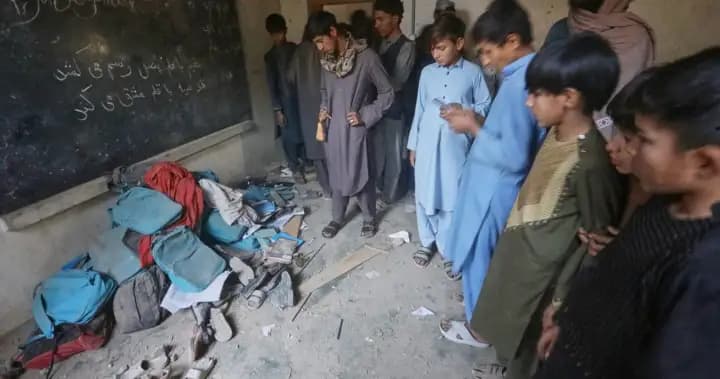
According to Global News reporting, an explosion at a primary and middle school in eastern Afghanistan's Kunar province killed 10 people and wounded 110 others on Saturday. Most of the casualties were children attending classes on the outskirts of the provincial capital, Asadabad. Officials confirmed the blast originated not from within the schoolhouse itself, but from a neighboring storage facility housing commercial explosives.
This disaster is often framed as an unavoidable tragedy of a fragile reconstruction state. We should examine it instead as a predictable consequence of regulatory failure. When private mining operations store heavy blasting materials directly adjacent to civilian classrooms, safety protocols have already collapsed.
Provincial licensing boards frequently issue extraction permits without verifying where operators stash their blasting caps and ammonium nitrate. Private firms prioritize hauling distance over safe buffer zones, cutting corners to save fuel and transport hours. That fatal convenience shifts the entire burden of industrial risk onto nearby homes and children.
The Morning Blast in Asadabad
The explosion tore through the Andar Ser area at roughly 10 a.m. on Saturday. Kunar Culture and Information Director Sami ul Haq Bayan stated that initial findings point directly to negligence within the depot. Local mining companies had stored commercial explosives dangerously close to the school walls, triggering an active provincial investigation into the operational failure.
Interior ministry spokesman Abdul Mateen Qani verified the final casualty figures, noting that 110 individuals sustained injuries alongside the 10 fatalities. Hospital wards in Asadabad quickly overwhelmed local capacity. Young victims were photographed sharing hospital beds, many bearing bandaged heads from structural collapses.
Rescue workers described debris fields that extended hundreds of meters past the perimeter wall. Classrooms filled with morning lessons turned into concrete tombs within a fraction of a second. The force of the detonation sheared steel roof beams and shattered window frames across the entire block.
Inside the Municipal Oversight Breakdown
Local inspectors rarely visit remote depots to check explosive storage conditions or inventory logs. Bribes and informal deals often secure municipal sign-offs for high-risk ventures operating right next to residential zones. Without independent audits, companies store volatile agents in rented mud-brick houses rather than purpose-built magazines.
Storage facilities require secure perimeters, lightning arrestors, and strict temperature controls to prevent accidental detonation. The Asadabad depot lacked every basic safeguard mandated by international mining codes. Private operators simply stack commercial explosives against shared boundary walls, treating civilian lives as an acceptable externality.
Regional Ripples Across Afghanistan's Extractive Frontier
Mining drives a significant share of economic activity across Afghanistan. The rugged terrain holds vast deposits of iron ore, copper, lead, zinc, gold, coal, and precious stones. Yet commercial oversight remains virtually non-existent, leaving local communities exposed to catastrophic industrial hazards.
In Kunar specifically, gemstone extraction has surged in recent months. Companies routinely bypass municipal zoning laws to store volatile materials near populated districts. When commercial ventures operate without baseline municipal separation, civilian infrastructure pays the ultimate price.
Extractive hubs attract thousands of daily laborers, driving up local land values and squeezing schools right up against industrial yards. Operators view empty plots near schools as free staging areas for heavy equipment and hazardous materials. Municipal governments lack the staff or the stomach to evict unauthorized depots from residential neighborhoods.
Voices from the Asadabad Disaster Zone
Local residents rushed to the scene immediately following the detonation, digging through fallen masonry with their bare hands. Noor Rahman recalled racing toward the blinding dust cloud as he thought of his own family members inside the building.
I ran straight into the dust, our own children were there.
— Noor Rahman, Local Resident
That immediate desperation defined the rescue effort as parents sifted through pulverized brickwork. Haji Sulaiman described the horrific scene that met him as he sprinted from his nearby shop toward the school grounds.
“Pieces of wood and human flesh were flying everywhere,” said Sulaiman, whose son was wounded in the blast. When he arrived, he found that rooftops had collapsed and exterior walls had vanished completely, leaving almost nothing of the original school standing.
Community Costs of Unchecked Blasting
Families throughout Andar Ser now refuse to send surviving children back to makeshift classrooms. Parents fear that neighboring yards still hold unmonitored stocks of blasting powder. Trust in basic public infrastructure has evaporated alongside the concrete walls of the school.
Local merchants watched their storefront windows shatter into dangerous shards during the morning blast wave. Small business owners face thousands of dollars in property damage with zero access to state disaster relief. The unregulated mining boom enriches a tiny cartel of operators while impoverishing the surrounding neighborhood.
Image: globalnews.caThe Structural Realities of Unregulated Commercial Storage
This catastrophe highlights a much broader institutional rot within regional governance structures. Afghanistan's World News footprint frequently centers on direct political conflict, but administrative negligence poses an equally lethal threat. Commercial operators treat populated civilian zones as convenient staging grounds because local regulatory enforcement carries zero teeth.
Similar incidents underscore systemic vulnerabilities across civilian zones. In August, a hand grenade attack at a Kabul school complex wounded over 40 children aged between nine and fourteen. Whether driven by militant violence or corporate corner-cutting, educational facilities remain dangerously unprotected.
State ministries issue sweeping decrees on industrial safety that dissolve before reaching rural mountain districts. Provincial administrators lack the budget to monitor private convoys or inspect rural warehouses. Consequently, profit-driven negligence operates unchecked in every corner of the extraction sector.
The Impending Regulatory Reckoning
Provincial police spokesperson Farid Dehqan confirmed that investigators are mapping out how commercial explosives came to share a property line with a functioning school. The Kunar Provincial Police Headquarters faces immense pressure to assign criminal accountability. As commercial extraction expands deeper into residential valleys, provincial authorities must decide whether to enforce strict buffer zones or accept civilian casualties as the cost of doing business.
Arrests of depot managers offer cold comfort to families burying children in local graveyards. Investigators must trace supply chains back to the commercial distributors who sold explosives without verifying storage permits. Without asset seizures and mandatory prison sentences for negligent operators, illegal depots will simply relocate to the next unguarded alleyway.
The Morning Brief
One email a day with the stories that matter. Free, forever.
No spam. Unsubscribe anytime.
Comments (0)
Be the first to share your thoughts.