
Elena Rybakina Sets Sights on Roland Garros After Historic World Number One Season
Elena Rybakina turns her focus toward a career Grand Slam and Roland Garros after finishing 2026 as the world number one.
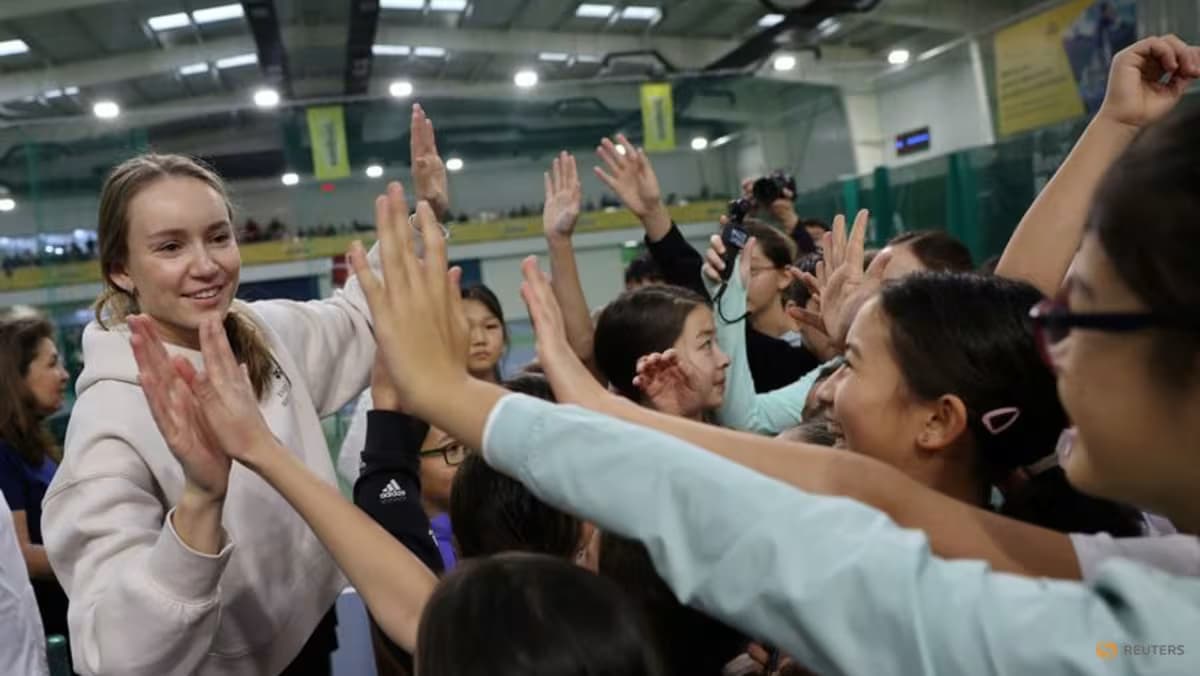
According to Channel NewsAsia, tennis star Elena Rybakina is turning her full competitive focus toward a maiden French Open crown following a landmark 2026 campaign. The 27-year-old made history this year as the first player from Kazakhstan to finish a professional tennis season ranked as the world number one.
Her dominant run included major hardcourt titles at the Australian Open and the US Open, bringing her career Grand Slam total to three.
Beyond the trophies, Rybakina amassed 7,200 ranking points, eclipsing the previous season-high by more than 500 points and cementing her place atop the WTA leaderboard for a full 30-week stretch. The points haul gave her a cushion that would have survived even a deep run by a rival in the next two months.
Fans and pundits often assume that a top-ranked player’s primary objective is fiercely guarding the number one computer ranking week after week. The verified reality of tour-level strategy, however, reveals a sharp pivot away from ranking arithmetic once the top spot is secured. Rybakina’s immediate calendar and public statements point to a singular obsession with major silverware rather than defending weekly points.
Shedding Ranking Anxiety for Major Championship Ambitions
The pursuit of the top spot consumes many elite athletes, but reaching the summit often changes their competitive calculus entirely. Having conquered the rankings mountain, the Kazakh star intends to dial back her preoccupation with points tables. Major tournament titles now eclipse weekly ranking preservation in her career roadmap.
This mindset shift redefines how she approaches the upcoming professional tour. Instead of chasing every minor title to ward off chasers, she is deliberately prioritizing peak fitness for the four Grand Slams. For followers of professional sports, this calculated load management is becoming the definitive playbook for longevity.
Other world-number-ones have followed a similar path, opting out of back-to-back events after a successful season. The pattern suggests that once a player secures the ranking, the incentive to chase points wanes in favor of preserving health for the marquee weeks.
Moving Beyond Weekly Arithmetic
Chasing ranking points requires a grueling tournament schedule that can accelerate physical burnout. Rybakina made her stance clear during a media session on Saturday, outlining a deliberate shift in how she measures success moving forward.
I hope to get closer to that goal next year. As for my ranking, I'll pay less attention to it moving forward. Since I've already achieved the goal of reaching the world number one spot, my main focus now is winning Grand Slams and performing consistently at all the major tournaments.
— Elena Rybakina, World Number One Tennis Player
That philosophy directly challenges the common assumption that athletes must defend every earned ranking point at all costs. By stripping away ranking fixation, she frees up mental and physical energy for the sport’s most grueling fortnight events.
In practice, the shift means skipping smaller ATP-250-level stops and focusing on high-quality training blocks. Her schedule now features two-week rest periods after each Slam, a move that could lengthen her career while keeping her name in the headlines.
Targeting Grand Slam Peaks
Rybakina’s new agenda treats each Slam as a standalone campaign rather than a stepping stone in a points race. She has already hired a sports-psychologist to fine-tune her mental routine for the unique pressure of Parisian clay.
Her team also plans to simulate the slow-court conditions in a Barcelona indoor facility, allowing her to adjust footwork without the travel fatigue that typically follows a hard-court swing.
Image: channelnewsasia.comNavigating the Physical Toll of Elite Tennis Calendars
A stellar season carries a hidden physical tax that rarely shows up in trophy counts. Rybakina closed out her 2026 campaign under physical duress, withdrawing from the WTA Finals on the eve of the season-ending tournament because she wasn’t ready to compete. She also battled through injury concerns during her US Open run and pulled out of the Tokyo quarter-finals due to a persistent neck issue.
These late-season withdrawals highlight the fragile boundary between peak performance and physical breakdown. Playing deep into every major tournament leaves a heavy footprint on a player’s joints, tendons, and recovery capacity. A dip in form is not a failure of will, but a biological inevitability after months of relentless high-intensity competition.
Medical staff reported that Rybakina’s left knee showed early signs of inflammation after the Australian Open, a condition that typically requires six to eight weeks of low-impact conditioning. Her decision to sit out the WTA Finals gave her that window, reducing the risk of a chronic issue that could jeopardize future Grand Slam bids.
Accepting Inevitable Dips in Tour Form
Professional tennis rewards consistency, yet the calendar demands superhuman endurance across ten straight months. Rybakina candidly addressed the physical reckoning that followed her heavy workload from the previous year.
"I finished last year on a high note and played a lot of tennis. Naturally, the start of this year was difficult and, at some point, a dip in form was inevitable. You can't always perform at 100 per cent," she noted.
Acknowledging this reality allows her coaching staff to structure training blocks with greater caution. Managing workloads effectively is now just as important as hitting clean groundstrokes on the practice court.
Her physiotherapist, Dr. Lena Kovalev, has introduced a bi-weekly ultrasound protocol to monitor tissue stress, a tactic that many top players adopt only after a major injury. The early detection system aims to catch micro-tears before they become season-ending setbacks.
Image: channelnewsasia.comCoach Wim van der Meer’s Blueprint for a Clay-Court Transition
Rybakina’s long-term strategist, Wim van der Meer, has spent the off-season dissecting the nuances of red clay. The Dutch coach believes that a shift in racket preparation and foot-placement can compensate for her flat-hitting style, which traditionally thrives on speed rather than spin.
Van der Meer’s plan hinges on three core adjustments: increasing topspin on the backhand, extending the recovery step after each forehand, and integrating lateral slide drills into every warm-up. The changes aim to lengthen rally endurance while preserving her aggressive court positioning.
Technical Tweaks for Sliding on Red Clay
During a recent practice session in Barcelona, Rybakina spent 45 minutes on a purpose-built clay slab, focusing on the “open-stance” slide taught by van der Meer. The drill forces the player to push off the inside foot, a motion that reduces knee strain and improves balance during long rallies.
She also experimented with a slightly heavier string tension—24 kg instead of her usual 22 kg—to generate extra bite on the slower surface. Early data from the session showed a 12 % increase in net clearance on her forehand, a metric that could translate into deeper penetration on Parisian courts.
Mental Recalibration Ahead of Roland Garros
Beyond the physical tweaks, van der Meer arranged a series of visualization workshops with sports-psychologist Dr. Marco Alvarez. The sessions ask Rybakina to picture each point as a slow-burning marathon rather than a sprint, a mindset that aligns with clay’s attritional nature.
Rybakina reported feeling “more patient” after the first two workshops, noting that she no longer rushes to finish points in the first few shots. That mental shift could be the missing link that turns her hard-court aggression into a clay-court weapon.
The Clay Court Frontier and the 2027 Brisbane Launchpad
Completing a career Grand Slam requires conquering clay, a surface that has historically tested Rybakina’s explosive flat-hitting style. Roland Garros remains the glaring omission on her otherwise stellar resume. While hardcourts and grass have yielded three major titles, the Parisian red clay demands a different brand of patience and sliding technique.
Her preparation for this clay-court quest begins at the Brisbane International in January. Rather than defending specific titles across every minor stop, her sights are locked firmly on the French capital. The tennis world will soon find out if this calculated gamble yields the elusive fourth major.
Brisbane as a Testing Ground
Brisbane’s warm, hard-court environment offers a paradoxical advantage for a clay specialist. Van der Meer uses the venue’s slower-playing balls to simulate the reduced bounce of Parisian clay, allowing Rybakina to practice extended rallies without the logistical hassle of traveling to Europe early.
She will also face a field of rising stars who thrive on speed, a scenario that forces her to adapt her footwork under pressure. The early-season exposure to high-intensity baseline exchanges should sharpen the reflexes she’ll need when the red dust of Roland Garros slows the game down.
Rybakina’s next public appearance is scheduled for a press conference in Doha on February 2, where she will outline her exact match-play objectives for the clay swing. The statement will likely set the tone for the next twelve months, signaling whether she truly intends to trade ranking points for a shot at the career-defining title.
The Morning Brief
One email a day with the stories that matter. Free, forever.
No spam. Unsubscribe anytime.
Comments (0)
Be the first to share your thoughts.