
Voter Frustration Flares as INEC Mock Exercise Stumbles Across Kaduna Wards
Delayed arrivals, offline transmission portals, and sparse turnout during a Kaduna mock drill expose persistent logistical vulnerabilities ahead of 2027.
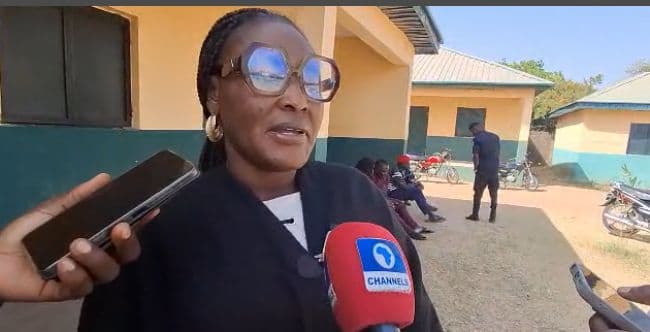
According to Channels Television reporting, a crucial pre-election simulation designed to test Nigeria's electoral readiness hit immediate logistical snags on Saturday as officials arrived hours late in parts of Kaduna State. The real story isn't just a tardy drill — it's what empty polling units and idle ballot boxes reveal about the persistent friction haunting national ballot logistics.
The Independent National Electoral Commission scheduled its mock presidential simulation to start at 8:30 a.m., with accreditation running until 2:30 p.m. Across multiple municipal wards, however, the scheduled timeline collapsed under the weight of delayed deployments and sparse turnout. Voters and election observers watched hours tick past without official guidance, turning a diagnostic stress test into an early warning about operational fragility ahead of the 2027 general elections.
Winners, Losers and the 2027 Leverage Deficit
Every operational test creates a quiet ledger of who gains tactical advantage and who surrenders ground. In Kaduna, the administrative friction handed immediate leverage to skeptics who view pre-election simulations as performative rather than diagnostic. When polling units sit empty while security personnel wait on site, public trust absorbs an invisible tax.
At polling unit 002 in Narayi Primary School, Chikun Local Government Area, voters faced a two-hour vacuum. Rebecca Oladipo arrived at 10:30 a.m. for an exercise meant to open two hours earlier. Her frustration captured a broader neighborhood grievance about chronic administrative tardiness.
Whatever may make them come late during the 2027 election, they should please avoid it.
— Rebecca Oladipo, Voter, Narayi Primary School
Oladipo noted that while security agencies had maintained their posts on time, the electoral commission's absence cast a long shadow over local confidence. Her testimony highlights how quietly public patience frays when baseline administrative competence fails to match statutory promises.
Logistical Bottlenecks and Low Turnout Dynamics
Administrative lag wasn't the only hurdle complicating Saturday's drill. At LEA Primary School 1 in Gaji Ward, Kaduna North, low participation rendered the exercise nearly spectral. Out of 929 registered voters assigned to polling unit 012, only a single citizen had cast a ballot by 11:50 a.m.
Meanwhile, at polling unit 001 in Barnawa, Kaduna South, a presiding officer confirmed that the critical INEC Result Viewing portal was deliberately kept offline for the simulation. Officials explained that IReV deployment is reserved exclusively for the 2027 general ballot, denying engineers a live stress-test of transmission protocols under field conditions.
Just blocks away, presiding officers sat resting while local youths improvised a football match near the ballot tables. The sharp contrast between idle election workers and indifferent bystanders underscores a deeper civic disconnect that no circular can easily fix.
Security Presence vs Administrative Absence
Uniformed police and army units arrived on schedule, forming a visible perimeter around each school. Their disciplined patrols, however, could not compensate for missing ballot boxes or absent accreditation officers. The mismatch amplified a perception that security is a priority while procedural groundwork remains an afterthought.
Local commanders reported that their briefing sheets listed “security readiness” as the sole metric for success. When the drill stalled, they shifted to crowd-control drills, further highlighting the commission's narrow focus on visible order over functional delivery.
Community Perception and Media Coverage
Radio stations in Kaduna City replayed the delay narrative for hours, inviting callers to describe their own frustrations. Social media feeds mirrored the broadcast, with hashtags like #LateDrill and #EmptyPollingUnits trending locally. The buzz translated into a pressure point that civil society groups plan to cite in forthcoming petitions.
Journalists noted that the simulation's shortcomings echoed the 2023 presidential election, when ballot shortages forced postponements in several northern districts. By resurfacing the same fault lines, the mock exercise risked cementing a narrative of chronic mismanagement.
Systemic Constraints Facing Electoral Architects
Diagnosing these recurrent failures requires examining the structural choke points governing Nigerian election administration. Field deployments rely heavily on ad-hoc transport arrangements and decentralized logistics chains that strain under sudden fuel costs or vehicle shortages. When local transport contractors fail to move sensitive materials at dawn, entire municipal wards slip off schedule.
These delays cascade quickly through the system. Late arrivals compress the statutory voting window, which panics queues and forces presiding officers to rush accreditation checks. Such compression directly undermines the accuracy of voter verification and increases the risk of procedural errors on election day.
Transport Contractor Reliance and Fuel Volatility
INEC contracts dozens of private drivers each election cycle, paying per-kilometer rates that spike when diesel prices surge. In the weeks leading up to the drill, the national fuel levy rose by roughly 12 percent, inflating travel costs for contractors in northern states. Some drivers cited “unreasonable expense” as the reason for delayed departures.
Because the commission does not maintain a dedicated fleet, it depends on last-minute negotiations that leave little margin for error. When a truck breaks down on a rural road, there is no standby vehicle to fill the gap, and the ballot box it carries remains locked in a storage room.
Chain of Command and Decision Latency
Field officers must obtain clearance from regional supervisors before opening a polling unit. Those supervisors, in turn, wait for confirmation from the state INEC office, which aggregates data from dozens of wards. This hierarchical bottleneck adds minutes, sometimes hours, to each step.
During the Kaduna drill, a regional supervisor delayed authorizing the release of ballot papers until 10:45 a.m., well past the intended start time. The delay forced presiding officers to truncate the accreditation window, leaving many registered voters unable to sign in.
The Technology Gap in Field Simulations
Omitting the IReV platform from a dress rehearsal robs the commission of vital telemetry. Without live upload trials, backend server loads remain an unmeasured variable until millions of concurrent packets hit the gateway on election night. Simulating physical ballot casting without verifying digital transmission leaves half the machinery untested.
For voters in Africa's largest democratic arena, this half-measure approach breeds lingering unease. Administrative transparency demands that stress tests mirror actual operational pressure. Leaving digital safeguards offline during a national drill treats the simulation as a formality rather than an uncompromising audit.
Live Data Capture and Server Stress
During a real election, each polling unit streams result tallies to a central server within minutes of closing. The IReV portal monitors packet loss, latency spikes, and authentication failures in real time. By keeping the portal offline, INEC forfeited an opportunity to calibrate bandwidth needs for Kaduna's mixed-terrain network.
Engineers estimate that a full-scale rollout would generate upward of 1.2 million concurrent connections. Without a field benchmark, the commission must rely on simulated loads that cannot account for local interference, such as power outages or mobile tower congestion.
Backup Protocols and Redundancy Gaps
INEC's contingency plan calls for parallel paper-based transmission when electronic channels falter. Yet the mock drill revealed that many wards lacked printed backup forms, assuming the digital route would be flawless. When the IReV system stays dormant, that assumption goes untested.
Observers noted that only three of the ten participating wards had stocked duplicate result sheets. The shortfall suggests that a large-scale failure on election night could produce unverified tallies, prompting legal challenges and delayed proclamation.
Image: channelstv.comUpcoming Milestones That Will Decide Electoral Outcomes
The margin for error is shrinking rapidly as the electoral calendar advances toward 2027. INEC faces mounting pressure to convert these flawed diagnostic drills into hardened logistical protocols before statutory deadlines lock in place. Every skipped transmission test and tardy deployment is a data point that opposition parties and civil society monitors will scrutinize.
Whether the commission can overhaul its transport coordination and tighten deployment timelines remains the defining administrative question for the coming months. Citizens in wards like Narayi and Gaji have drawn their line in the dust. Their willingness to accept future procedural hurdles is exhausted, leaving the burden of proof squarely on the commission's logistics planners.
Statutory Deadlines and Budget Allocations
The 2027 election timetable earmarks July 2026 for the final distribution of ballot materials nationwide. INEC must submit a detailed logistics budget to the National Assembly by March 2026, or risk funding shortfalls that could stall vehicle procurement. Late budget approval in previous cycles forced the commission to rent external trucks at premium rates.
Financial analysts warn that a 15 percent under-allocation would force the commission to cut back on training sessions for presiding officers, a move that could exacerbate accreditation errors on election day.
Civil Society Monitoring and Legal Recourse
Domestic NGOs have pledged to deploy independent observers to at least 30 percent of polling units in the next drill. Their reports will be filed with the Election Observation Panel, which can recommend corrective action before the legal deadline for filing election-related complaints expires on September 15 2026.
Should the panel find systemic lapses, courts may order a supplemental simulation or even delay the official ballot rollout. That possibility adds a tangible incentive for INEC to address the logistical gaps highlighted in Kaduna.
As the 2027 calendar ticks down, the next full-scale mock election slated for early 2026 will serve as the final checkpoint. Success will hinge on whether the commission can synchronize transport, security, and technology into a single, reliable rhythm. Failure could trigger a cascade of legal challenges, erode voter confidence, and jeopardize the credibility of Nigeria's democratic transition.
The Morning Brief
One email a day with the stories that matter. Free, forever.
No spam. Unsubscribe anytime.
Comments (0)
Be the first to share your thoughts.