
Radomir Saicic Enters Belgrade Presidential Race as Students Challenge Regime
Serbia's student movement has nominated chemistry professor Radomir Saicic for the upcoming December 27 presidential election following a historic parliamentary upset.
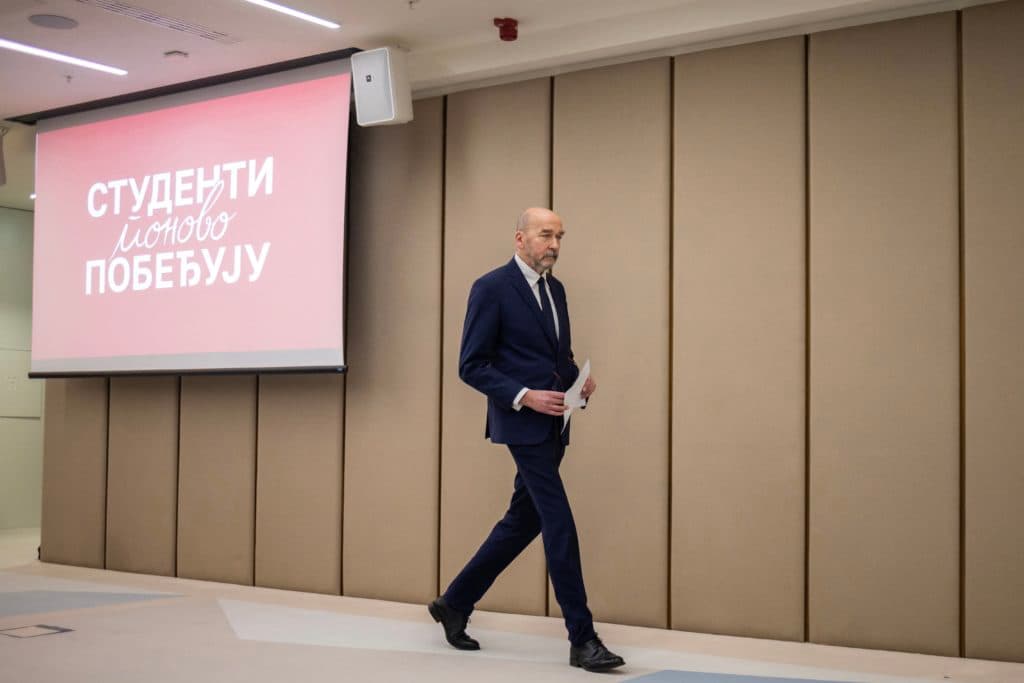
According to reports from PBS News and international wire services, Serbia's youth-led movement has formally nominated 65-year-old organic chemistry professor Radomir Saicic for the upcoming presidential ballot scheduled for December 27. The rapid political shift follows a decisive October 25 parliamentary defeat that unseated former President Aleksandar Vucic's right-wing Serbian Progressive Party after 14 years of uninterrupted rule.
Quantitative data from the recent electoral cycle demonstrates the scale of the upset engineered by student organizers. The movement's legislative slate secured enough momentum to dismantle a political apparatus that had dominated the Politics landscape since 2012. Analysts examining the upcoming December vote suggest voter turnout and potential opposition boycotts will dictate whether the transitional government can consolidate institutional control.
From Academic Halls to the National Presidential Ballot
Saicic brings an unconventional academic background to a political sphere long dominated by career partisans. As a member of the Serbian Academy of Sciences and Arts and an educator at the University of Belgrade, his entry into institutional politics marks a direct departure from traditional party machinery.
The Tragic Catalyst Behind Two Years of Street Mobilization
The political uprising did not materialize in a vacuum. It emerged from two years of sustained street demonstrations sparked by a fatal train station canopy collapse in Novi Sad that killed 16 people. Citizens and investigators pointed directly to systemic corruption and neglected infrastructure during renovation projects as the root cause of the tragedy.
Protesters flooded Belgrade boulevards carrying banners denouncing state negligence. The public outrage widened into a broader indictment of elite impunity. Student unions formed cross-city coalitions to channel public grief into sustained electoral pressure.
Constitutional Scope and the Challenge of Executive Overreach
While the Serbian presidency is constitutionally defined as a largely ceremonial post with authority over the armed forces and foreign policy, the office became the epicenter of executive overreach under Vucic. Vucic resigned in September following a failed bid for prime minister after exhausting his two-term limit, leaving behind a heavily centralized office that Saicic has pledged to reform.
Legal scholars in Belgrade point out that unwinding this hyper-concentrated authority requires legislative cooperation from a newly seated parliament. Saicic must navigate a divided legislature while holding together the disparate factions that unseated the former ruling party. Without careful institutional engineering, a successor could easily slip back into the exact same executive habits.
It is time to restore dignity to the post of the president.
— Radomir Saicic, Presidential Candidate and University Professor
Saicic has explicitly accused the former administration of exceeding constitutional bounds and eroding public trust across government ministries. Observers note that translating academic credibility into executive oversight remains an unproven hypothesis in a fractured political climate.
Regional Fallout and Public Sector Restructuring
The collapse of the incumbent regime has triggered immediate administrative turbulence across the capital. Law enforcement agencies have detained multiple officials and police officers suspected of abusing their positions during the previous administration's tenure.
At the same time, outgoing officials have characterized the sudden transfer of authority as a form of destabilization. The incoming student coalition faces the immediate challenge of rebuilding civil service independence while managing public expectations for systemic accountability.
Auditing the Financial and Administrative Deficit
Economic indicators and institutional transparency reports from the past decade paint a sobering picture of public sector oversight. Saicic pointed directly to these systemic failures during his candidacy announcement in Belgrade.
State auditors now face mountains of opaque procurement records left behind by outgoing ministries. Foreign lenders are watching closely to see if Belgrade honours past infrastructure commitments or opens corrupt contracts to transparent renegotiation. Every ministry faces staffing shortages as political appointees resign en masse.
The last decade was marred by the crumbling of the rule of law, corruption and hate speech.
— Radomir Saicic, Presidential Candidate and University Professor
Financial transparency advocates argue that restoring institutional integrity will require deep legislative reforms rather than mere personnel changes. The incoming administration must audit state contracts while avoiding the centralization traps that defined the previous decade.
Electoral Math and Voter Dynamics for December 27
With the Serbian Progressive Party weighing a potential boycott of the December 27 election, pollsters face significant modeling challenges. Historical voter turnout numbers may not apply in an election where the incumbent party's participation remains unconfirmed.
The data suggests that while the student movement holds strong momentum in urban centers, rural voting patterns could introduce volatility into the final count. Saicic and his organizers have structured their campaign around the slogan 'students win again,' testing whether civic mobilization can outlast traditional party loyalties.
Navigating the Boycott Threat and Rural Volatility
Boycott threats from deposed party loyalists complicate turnout projections for the holiday-season ballot. If opposition voters stay home under party orders, Saicic risks winning a hollow victory lacking broad societal mandate.
Grassroots organizers are deploying volunteers across rural districts to counter decades of state-media propaganda. Town hall meetings in agricultural hubs test whether economic grievances outweigh entrenched partisan identity. The final outcome rests entirely on whether suburban and rural voters break their long-standing ties to the old guard.
The Morning Brief
One email a day with the stories that matter. Free, forever.
No spam. Unsubscribe anytime.
Comments (0)
Be the first to share your thoughts.