
US Forces Repel Unauthorized Drones Over RAF Lakenheath Amid Security Concerns
American forces repelled six unauthorized drones over RAF Lakenheath in England on Nov. 13, prompting fresh security reviews across allied bases.
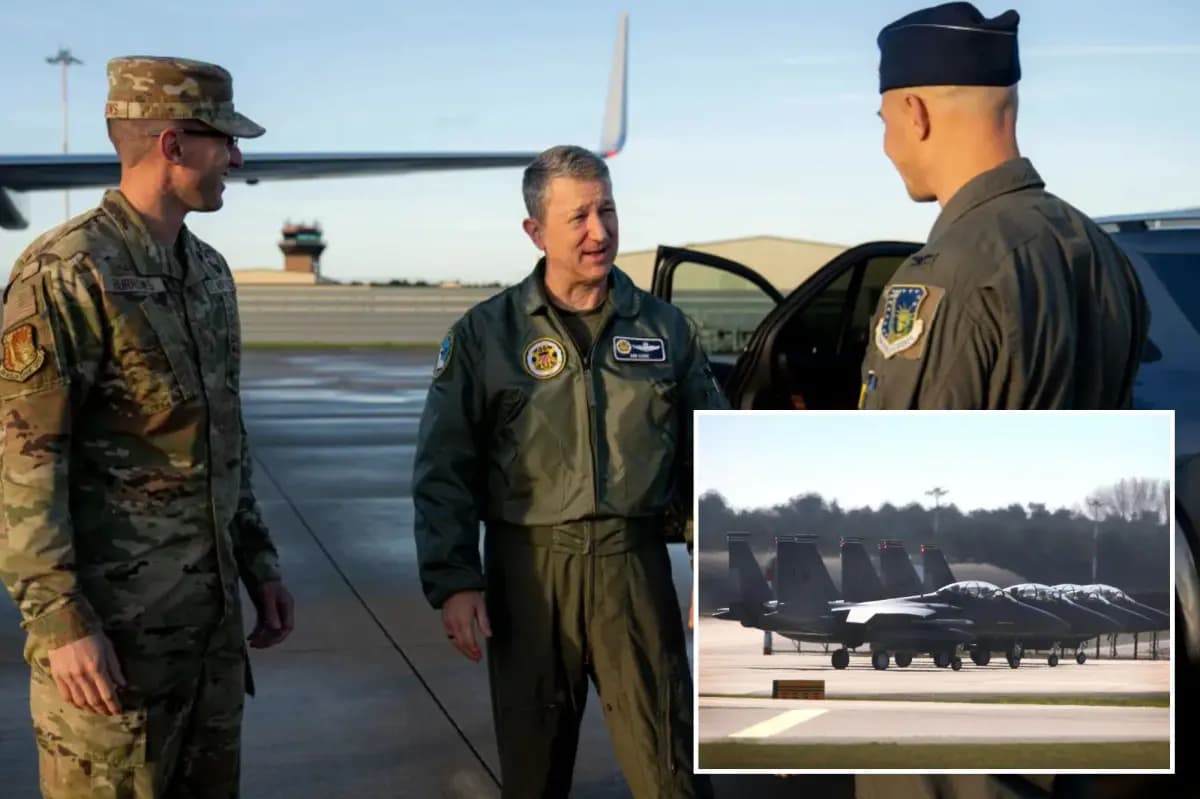
According to Fox News, American security forces used specialized counter-drone technology to repel six unauthorized unmanned aerial vehicles spotted over Royal Air Force Lakenheath in Suffolk, England. The Nov. 13 incident occurred amid brewing concerns over suspected Iranian involvement in targeting Western military installations across Europe. None of the six drones were recovered by investigators, leaving local and international defense officials unable to verify whether the machines carried surveillance payloads or explosive ordnance.
The U.S. Air Force confirmed the security breach to reporters on Saturday, noting that base personnel deployed integrated defense protocols without sustaining damage to infrastructure or aircraft. While the Pentagon refrained from officially endorsing reports pointing toward Tehran, the encounter highlights growing vulnerabilities across vital Security infrastructure in the United Kingdom.
Defending the Liberty Wing Against Aerial Intrusions
RAF Lakenheath hosts the U.S. Air Force's 48th Fighter Wing, frequently designated as the Liberty Wing. It remains the largest American fighter operation stationed anywhere in Europe. The base commands nearly 7,000 active-duty military and civilian personnel spread across Lakenheath and nearby RAF Feltwell, managing four combat-ready fighter squadrons.
Operational Security and Integrated Defense Layers
Air Force representatives declined to discuss specific counter-uas hardware deployed during the November skirmish, citing operational protection guidelines. Host-nation police worked directly with American security details to neutralize the threat under existing bilateral defense treaties.
“For operational security reasons, we will not discuss specific force protection measures or c-UAS systems in place at any given location; however, we want to make clear that our Security Forces, in cooperation with our host nation partners, take a proactive integrated and layered approach to base defense and are ready to address potential threats,” a USAF spokesperson stated.
Layered Radar and Radio-Frequency Detection
Base radar suites now cross-track low-altitude corridors where commercial drones typically operate. By fusing Doppler returns with radio-frequency signatures, the system can flag an object that deviates from known flight patterns within seconds. Once identified, a handheld jammer can disrupt the drone’s command link, forcing a loss of control.
Rapid Response Teams in Action
When the six UAVs entered the airspace, a quick-reaction unit scrambled to the launch site on foot. Team members carried portable net guns and kinetic interceptors, tools that can capture or destroy a small drone without endangering nearby aircraft. The coordinated effort bought the air-defense network enough time to assess each contact.
Unrecovered Hardware Leaves Critical Questions Unanswered
Because search teams failed to retrieve any of the six downed aircraft, forensic analysis remains impossible. Intelligence analysts cannot establish launch points, telemetry profiles, or manufacturer origins for the unauthorized swarm.
This ambiguity complicates threat assessments for regional commanders who must protect high-value assets against low-cost commercial drones modified for military reconnaissance. British authorities have faced repeated security alerts in recent months, including a thwarted terror plot targeting RAF Fairford in September that prompted the Pentagon to relocate its heavy bomber detachments.
Image: nypost.comPolitical Fallout and Capitol Hill Pressures
Lawmakers in Washington are seizing upon the Suffolk incident to demand accelerated defense spending and tighter regulatory oversight regarding unmanned aerial systems. Committee members argue that current base defense postures fail to address the rapid proliferation of asymmetric aerial threats.
Well, this is actually an ongoing threat on American interests, not only around the world, but, of course, here at home as well.
— Rep. Mike Haridopolos, House Science, Space and Technology Committee
Rep. Mike Haridopolos urged congressional leadership to prioritize upcoming defense authorization bills to ensure the military secures adequate funding for counter-drone initiatives. Tehran has consistently denied direct orchestration of specific plots against British installations, though Iranian state media has previously labeled allied bases supporting regional counter-operations as legitimate tactical targets.
Legislative Proposals Targeting UAS Threats
The Senate Armed Services Committee drafted a amendment that would earmark $120 million for research into autonomous detection algorithms. If passed, the money would flow to joint labs at the Air Force Research Laboratory and the Defense Advanced Research Projects Agency. Proponents say the boost could shrink the gap between civilian drone innovation and military countermeasures.
Stakeholder Reactions Across the Beltway
Defense contractors welcomed the prospect of new contracts, while civil-liberties groups warned that expanded jamming authority might spill over into civilian airspace. A senior official at the Department of Homeland Security cautioned that any nationwide rollout would need to respect FAA regulations and privacy statutes.
Image: nypost.comBritish Ministry of Defence Response and Financial Upgrades
In response to mounting aerial and ground vulnerabilities, the British Ministry of Defence is committing an additional 470 million pounds, roughly 615 million dollars, toward facility fortification. These funds target physical perimeter barriers, advanced optical surveillance networks, and electronic jamming gear.
Defense planners face severe logistical challenges when securing sprawling military reservations against commercial drones that can be launched from public roads miles outside perimeter fences. As intelligence agencies sift through radar logs from the November engagement, military contractors are rushing field-upgrades to installation defense grids before subsequent incursions occur.
Procurement Timelines and Industry Partnerships
The MoD awarded a multi-year contract to a British firm specializing in high-resolution electro-optical cameras. Delivery of the first sensor clusters is slated for Q2 2025, with full network coverage expected by the end of 2026. Parallel contracts with a European electronics consortium will supply portable jamming units capable of neutralizing drones within a 500-meter radius.
Impact on Local Communities Near the Base
Residents of Lakenheath and the surrounding Suffolk countryside have expressed mixed feelings about the new spending. Some welcome the promise of jobs tied to the upgrades, while others fear that increased electronic emissions could affect nearby farms. The local council scheduled a public hearing for early December to address these concerns and to outline noise-abatement measures.
As the United States and the United Kingdom tighten their defensive posture, the November incident serves as a reminder that low-tech threats can still catch high-tech forces off guard. The next wave of upgrades, congressional bills, and bilateral drills will test whether layered defenses can keep pace with a market flooded with cheap, adaptable drones.
The Morning Brief
One email a day with the stories that matter. Free, forever.
No spam. Unsubscribe anytime.
Comments (0)
Be the first to share your thoughts.