
Black Queens Secure Vital 2-1 Win Over Ecuador in World Cup Play-Off Opener
Josephine Bonsu scored a 90th-minute penalty to give the Black Queens a 2-1 victory over Ecuador in their Women's World Cup play-off opener in Rabat.
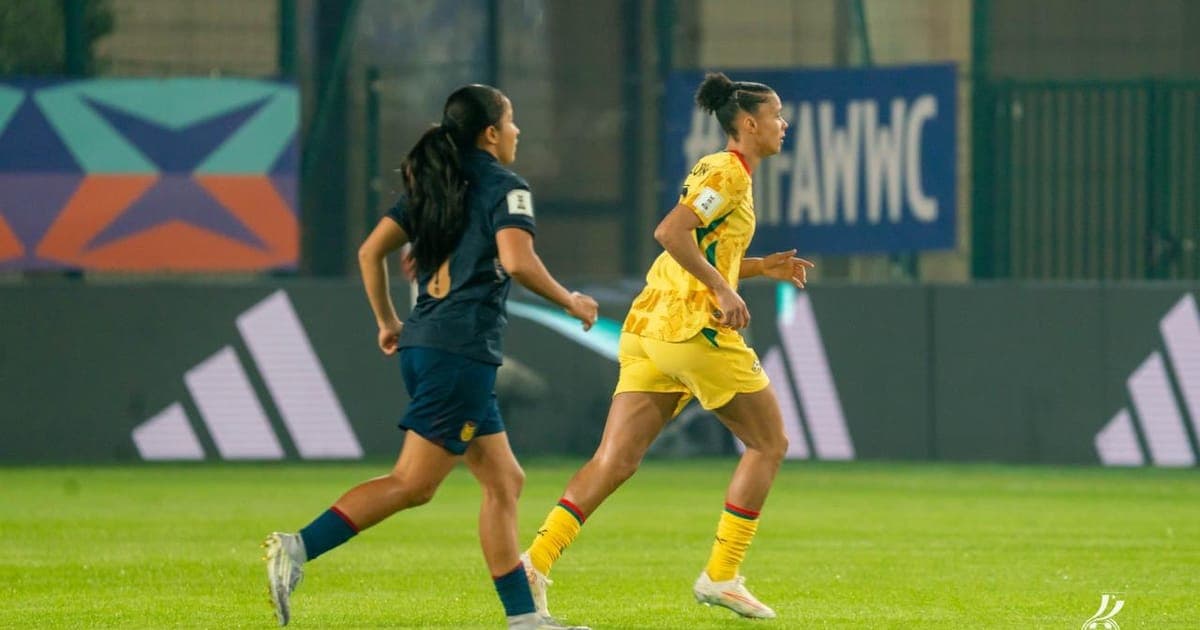
According to 3news.com, just 60 seconds elapsed on the stadium clock before Ghana found itself trailing in a high-stakes international fixture. Maylin Arreaga struck in the opening minute of Saturday's match in Rabat, instantly disrupting pre-match tactical expectations for the Black Queens. Yet the subsequent 89 minutes yielded a hard-fought 2-1 victory, fueled by tactical adjustments and a decisive late penalty.
The 90th-Minute Turning Point and Match Statistics
Quantitative analysis of the opening fixture reveals a match defined by early vulnerability and late offensive pressure. While conventional assumptions often frame come-from-behind victories as dominant displays of sustained territorial control, the raw timeline tells a story of narrow margins and disciplinary friction.
Clock-by-Clock Breakdown of the Rabat Fixture
The statistical record from pitch 3 of the Mohammed VI Football Complex begins with Arreaga's flash strike in minute one. Benedicte Simon restored parity in the 12th minute, locking the score at 1-1 by halftime according to official FIFA records. The match remained deadlocked through the second half until Josephine Bonsu converted from the spot in the 90th minute.
That 89th-minute penalty kick salvaged an opening-match victory that had seemed improbable since the opening whistle. Squad members poured forward in waves during the closing moments, pressing Ecuador's defensive line until a breakthrough foul finally occurred inside the penalty area. The resulting conversion turned a disappointing draw into three crucial tournament points.
Disciplinary Record and Managerial Cautiousness
Japanese referee Asaka Koizumi issued multiple cautions during the physical encounter, reflecting the intense competitive stakes of the sports calendar. Head coach Kim Lars Björkegren received a yellow card in the 30th minute, followed by cautions for Simon in the 37th minute and Ecuador's Justine Cuadra in first-half stoppage time.
Ghana accumulated additional cautions late in the contest, including Nancy Amoh in the 81st minute and Ajegipina Zakaria during stoppage time. These bookings illustrate how desperate defensive actions mounted as both sides fought to break the second-half deadlock. Match officials kept a tight rein on physical challenges throughout the 90 minutes.
Managing the technical area under a yellow card forced Björkegren to alter his sideline demeanor for the remainder of the fixture. Coaches operate under strict disciplinary codes in international play, where a second caution carries automatic suspension consequences. Bench staff had to relay instructions carefully without drawing further ire from the match officials.
Parsing the Group Standings and Tournament Data
Securing three points in the preliminary phase establishes an immediate baseline for Ghana's qualification trajectory. Under current FIFA draw procedures, the top two teams from the group after three matches advance directly to a final phase scheduled for February 23 to March 6, 2027.
The Path Through the Preliminary Phase
The mathematics of the current group stage leave zero room for defensive complacency. Those advancing from this preliminary group will join two Concacaf teams, Venezuela, and a UEFA representative in a subsequent set of three one-off ties. The winner of each respective tie secures one of the final three qualification berths for the World Cup in Brazil.
Navigating this multi-stage qualification gauntlet demands absolute tactical discipline from every squad member. Dropping points in opening fixtures forces teams to chase goal differentials in subsequent matches against unfamiliar opponents. Every single goal conceded or scored carries heavy weight in the final group calculations.
Upcoming Fixture Schedule and Squad Depth
Coach Björkegren's squad management will face an accelerated test as the preliminary phase progresses across tight intervals. Uzbekistan awaits Ghana on Tuesday, December 1, at 16:30 GMT on pitch 2, followed by a fixture against Papua New Guinea on Saturday, December 5, at 17:00 GMT on pitch 1. Maintaining fitness across these rapid turnarounds will dictate whether early structural vulnerabilities resurface.
Rest days shrink dramatically when playing matches every few days on neutral soil. Physiotherapists work around the clock to treat minor knocks and muscle fatigue accumulated during bruising physical contests. Squad rotation becomes an essential tool for keeping legs fresh against deeply motivated opponents.
Deep benches allow managers to inject fresh energy into tired midfields during the final half-hour of matches. Substitutions made late in Saturday's game proved vital for sustaining the attacking pressure that drew the winning foul. Similar tactical interventions will be required when facing Uzbekistan's disciplined tactical block.
Image: 3news.comEvaluating the Data: What the Scoreline Does Not Prove
While a 2-1 victory provides maximum points in the standings, raw match data requires careful contextualization. Conceding a goal in the first minute demonstrates an ongoing defensive vulnerability during opening sequences that better-resourced opponents could exploit. Goalkeeper Cynthia Konlan was forced into a crucial save in the 48th minute, underlining that Ecuador's attacking transition posed sustained threats well after Simon's equalizer.
Furthermore, relying on a 90th-minute penalty highlights the fine line between victory and a frustrating draw in tournament football. Quantitative metrics from the Rabat fixture show that while the tactical changes—including second-half substitutions like Princella Adubea for Comfort Yeboah in the 89th minute—ultimately yielded results, the team's overall conversion rate remains a variable to watch as fixtures against Uzbekistan and Papua New Guinea approach.
Tactical Adjustments After the Early Shock
Conceding within 60 seconds forced an immediate tactical recalibration from the Ghanaian technical bench. Midfielders had to push higher up the pitch to disrupt Ecuador's rhythm and regain possession in dangerous areas. That early disruption threw out pre-match defensive structures that took the better part of the first half to correct.
Benedicte Simon's equalizer in the 12th minute offered physical relief and psychological stabilization for the struggling side. Finding an early response prevented panic from setting in among younger squad members experiencing high-pressure tournament play. Teams that fail to equalize quickly often fall into desperate, disorganized long-ball tactics.
Finishing Efficiency and Defensive Gaps
Creating scoring chances proved easier than finishing them during long stretches of Saturday's match. Strikers missed several clean looks inside the penalty box before the late penalty rescued the result. Fixing these conversion issues before Tuesday's kickoff against Uzbekistan is the coaching staff's primary training ground priority.
Defensive communication lapses allowed Ecuador's attack to slip through the central defensive pairing too easily in transition. Goalkeeper Konlan's timely intervention in the 48th minute saved the team from falling behind a second time. Cleaning up those defensive gaps remains mandatory if Ghana intends to survive the upcoming knockout-round qualifiers in early 2027.
The Morning Brief
One email a day with the stories that matter. Free, forever.
No spam. Unsubscribe anytime.
Comments (0)
Be the first to share your thoughts.