
Netanyahu and Eisenkot Set Sunday Talks After Rotating Premier Offer
Israeli caretaker Prime Minister Benjamin Netanyahu and rival Gadi Eisenkot will hold coalition talks Sunday following a surprise rotation offer.
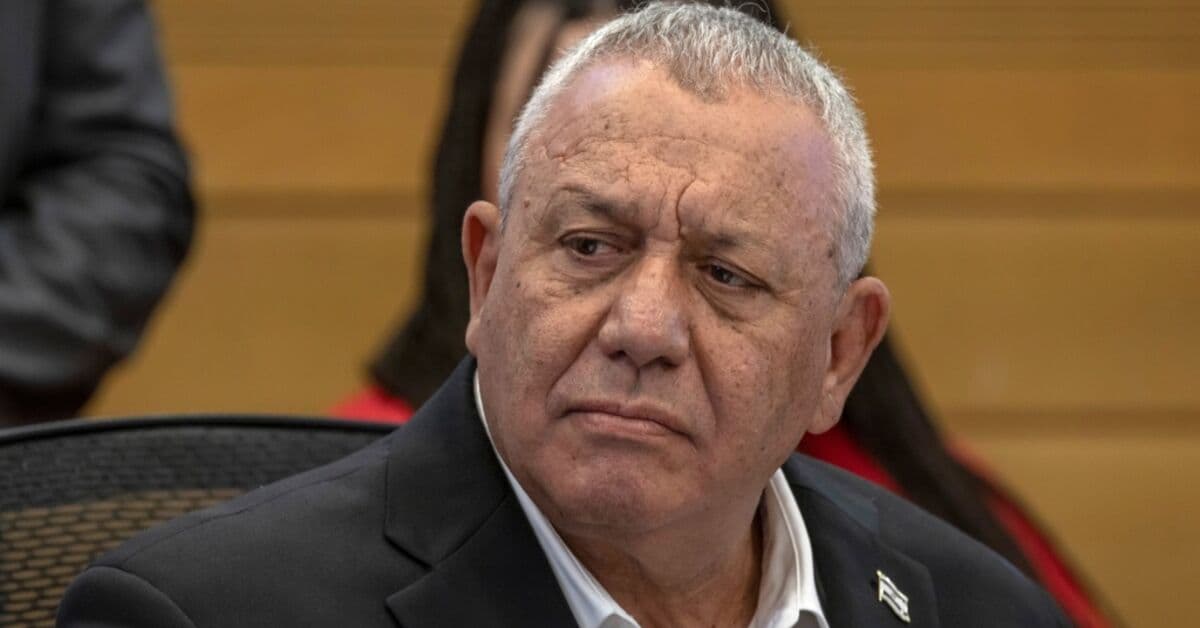
According to reports from Al-Monitor, Israeli caretaker Prime Minister Benjamin Netanyahu and political rival Gadi Eisenkot agreed to meet on Sunday morning for high-stakes coalition talks. The scheduled encounter at a Herzliya hotel follows a dramatic late-Saturday social media proposal from Netanyahu offering a unity government featuring a rotating premiership.
The October elections left Israel's parliament deadlocked without a clear majority for either major political bloc. President Isaac Herzog subsequently tasked Yashar party leader Gadi Eisenkot with forming a governing coalition before the official December 6 deadline. Eisenkot spent weeks navigating intense parliamentary divisions over potential alliances with ultra-Orthodox factions and Arab-majority parties.
Inside Netanyahu's Rotation Offer and Eisenkot's Immediate Response
Netanyahu made his surprise proposal late on Saturday, reversing weeks of political posturing as the deadline approached. As Israel's longest-serving leader, he argued that national stability superseded partisan concerns during a fragile period.
my responsibility as a leader requires me to set everything aside... and agree that Gadi Eisenkot will serve first as prime minister, while I will serve as alternate prime minister at the beginning of the term
— Benjamin Netanyahu, Prime Minister of Israel
Eisenkot responded cautiously to the overture, instructing his centrist Yashar party to test the sincerity of the right-wing Likud bloc. The former military chief had previously accused Likud of deliberately stalling negotiations to force a costly repeat election.
Weighing the Terms of a Fragile Unity Government
Eisenkot stated that he wanted to test whether Likud was genuinely prepared to compromise over a crucial 24-hour window. Prior to Netanyahu's announcement, Yashar had secured formal agreements with the left-leaning Democrats and the right-wing Israel Beiteinu party.
Those allied factions hold a combined total of 36 lawmakers in the 120-seat Knesset. That tally falls far short of the 61 seats required to establish a governing majority without further coalition partners.
Image: al-monitor.comOpposition Reactions and the Arab-Israeli Alliance Dilemma
Other opposition leaders dismissed Netanyahu's rotation offer as a political maneuver designed to fracture the anti-Netanyahu camp. Yair Lapid, co-chair of the centrist Beyachad party, condemned the proposal publicly as an untrustworthy proposition from a seasoned operator.
Meanwhile, the legislative arithmetic shifted when Raam leader Mansour Abbas signaled potential flexibility regarding coalition participation. Abbas noted that Arab-majority parties recently supported a parliamentary bill that explicitly recognized Hamas as a terror group.
Navigating Parliamentary Math Ahead of the December Deadline
Eisenkot has maintained a strict precondition that any coalition partner must explicitly condemn Hamas. Abbas acknowledged that previous refusals to make such statements stemmed from domestic sensitivities within Israel's Arab community.
With Sunday's meeting set to test the viability of a rotation deal, Eisenkot faces a hard December 6 cutoff. Whether the two rivals can bridge deep ideological divides remains the central question for Politics observers across the region.
The Morning Brief
One email a day with the stories that matter. Free, forever.
No spam. Unsubscribe anytime.
Comments (0)
Be the first to share your thoughts.