
UN Rights Rapporteur Francesca Albanese to Leave Costa Rica for Mexico After Airport Detention
UN rights rapporteur Francesca Albanese will fly to Mexico on Saturday after Costa Rican authorities denied her entry, sparking a fierce diplomatic dispute.
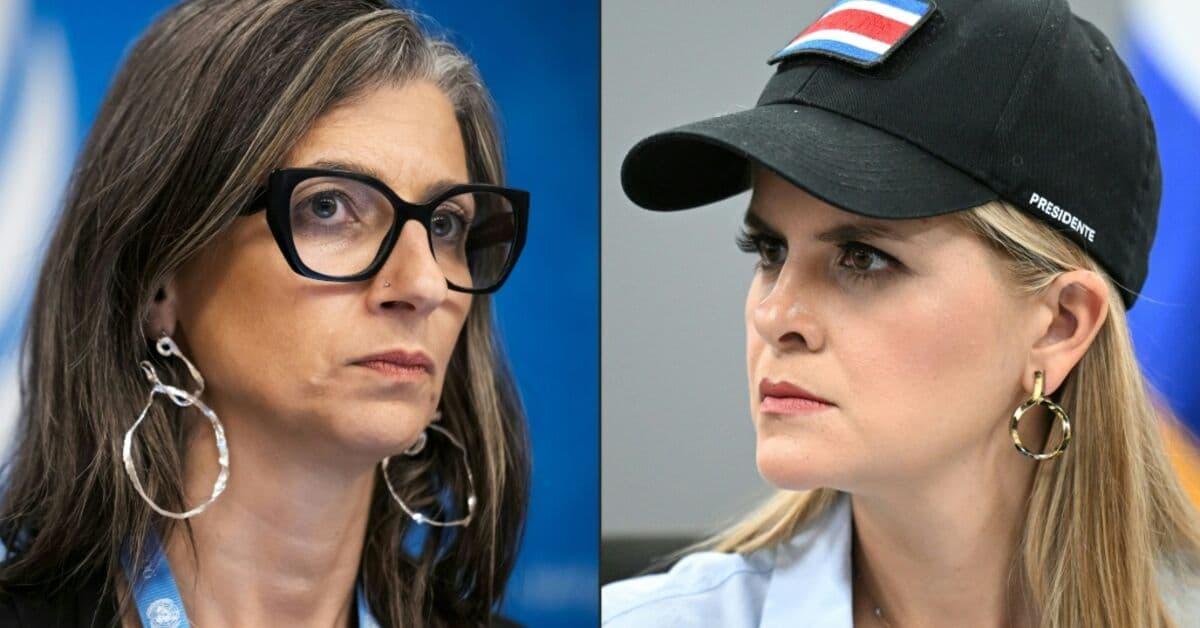
According to Al-Monitor, UN special rapporteur on Palestinian rights Francesca Albanese was scheduled to depart Costa Rica for Mexico on Saturday following an abrupt entry denial orchestrated by immigration authorities. The Italian lawyer and independent UN expert found herself stranded at the international airport serving San Jose after arriving on Thursday, where local officials barred her entry by citing unverified security claims.
UN special rapporteurs travel under a diplomatic umbrella that normally shields them from routine border checks. In practice, host nations are expected to honor a UN-issued credential that guarantees safe passage, unless a concrete, publicly disclosed security threat emerges. Albanese’s case therefore raised immediate questions about how Costa Rica interpreted its obligations under international protocol.
The diplomatic standoff escalated quickly on Friday as national courts intervened, diplomatic pressure mounted from European capitals, and the UN human rights leadership publicly demanded a reversal. Costa Rican immigration officials defended the blockade by pointing to alleged security alerts, while the targeted rapporteur condemned the allegations as baseless political retaliation for her investigations into the ongoing conflict in the Middle East.
Costa Rica’s immigration framework allows the director general to invoke an “international alert” when a traveler is deemed a security risk. The law requires the alert to be recorded in a central database that other signatory states can query. Critics argue that the mechanism, while intended for counter-terrorism, can be weaponized when political motives blur the line between safety and retaliation.
Airport Detention Mechanics and Supreme Court Intervention
The confrontation began immediately upon Albanese's arrival on Thursday, when border officials at San Jose intercepted her travel documents. Immigration authorities asserted that the UN official was flagged under an international alert linking her to terrorist acts, a claim that triggered an immediate administrative lockdown inside the terminal facilities.
Legal Basis of the Detention
Costa Rican law classifies a “security alert” as a provisional measure, not a final conviction. Under Article 12 of the Migration Act, officials may temporarily hold a traveler while they verify the alert’s source. The statute also obliges the judiciary to review any detention within 48 hours, a safeguard meant to prevent indefinite lockups.
The Administrative Standoff and Legal Pushback
Local media reports from La Nacion highlighted that a Costa Rican court ordered authorities to immediately return her seized passport on Friday. Later that evening, the constitutional chamber of Costa Rica's Supreme Court issued a second interim order directing that Albanese be transferred from the airport to a local hotel while her departure logistics were finalized.
The Supreme Court’s emergency chamber cited constitutional guarantees of freedom of movement and the UN’s diplomatic immunities. It warned that ignoring the orders could trigger a breach of international obligations, potentially exposing the state to sanctions. The court’s swift action underscored the tension between domestic security prerogatives and global human-rights norms.
Albanese described uncomfortable conditions while trapped in the terminal before the court ruling, stating via social media that she was counting down the hours until her scheduled flight. She had originally intended to travel onward to Mexico, though immigration agents initially demanded she be sent back to France.
Airport detention zones in San Jose are typically designed for short-term processing, not prolonged confinement. Reports from other travelers note cramped seating, limited access to water, and constant public announcements that amplify stress. Albanese’s ordeal therefore highlighted how a security alert can transform a transit hub into a de-facto holding cell.
Official Justifications from Immigration Authorities
Omer Badilla, director general of Costa Rica's immigration authority, defended the decision in a video posted to social media on Thursday. Badilla stated that Albanese was the subject of an international alert over links to terrorist acts, though the government provided no public evidence or formal indictments to substantiate the claim.
Badilla has previously cited similar alerts in cases involving suspected drug traffickers and organized-crime figures. In those instances, the agency released brief summaries after the alerts were cleared, a practice absent from Albanese’s situation. The lack of transparency fueled speculation that the alert served a political purpose rather than a security one.
Albanese forcefully rejected the accusations during an impromptu speech delivered from the airport to the University of Costa Rica, which had previously granted her an honorary degree. She questioned the logic of branding a human rights investigator as a public security threat.
I am deeply indignant that the government of Costa Rica has spread false information that links me to terrorism.
— Francesca Albanese, UN Special Rapporteur on Palestinian Rights
She added that defending human rights is not terrorism and that state actors must answer for such insinuations under the rule of law. UN human rights chief Volker Turk joined the appeals on Friday by urging Costa Rican authorities to reconsider the entry ban, while Italy's foreign minister confirmed that Rome had repeatedly pressed San Jose to grant her passage.
Turk’s statement invoked the UN’s 1948 Convention on Diplomatic Relations, reminding Costa Rica that the rapporteur’s mission is protected by international law. He warned that any violation could set a precedent for future UN envoys, eroding the credibility of the human-rights system worldwide.
Image: al-monitor.comGeopolitical Shifts and Regional Diplomatic Fallout
The incident reflects broader political realignments under Costa Rican President Laura Fernandez, whose administration has forged closer trade ties with Israel and aligned closely with Washington since taking office in May. Albanese had previously criticized a free trade agreement between Costa Rica and Israel, arguing that bilateral commercial pacts actively sustain foreign military operations in Gaza.
Fernandez’s government signed the Israel-Costa Rica trade pact in early 2024, opening markets for agricultural exports and technology transfers. The deal sparked protests from left-leaning NGOs who warned that revenue streams could indirectly fund Israel’s defense budget. Albanese’s vocal opposition placed her at the intersection of trade policy and human-rights advocacy.
Expanding Global Repercussions for UN Mandates
Albanese has faced intense pushback from Israel and several Western allies throughout her tenure due to her public accusations that Israel has committed genocide against Palestinians. The United States previously imposed targeted sanctions on the rapporteur after she criticized Washington policy regarding the ongoing Gaza war.
Other UN experts have reported similar obstacles, including travel bans and visa delays in countries that view their reports as politically inconvenient. These patterns suggest a growing trend where states leverage immigration controls to curb scrutiny, challenging the UN’s ability to operate independently across borders.
Special rapporteurs operate as independent experts appointed by the UN Human Rights Council to document violations rather than speaking directly for the United Nations as an institution. Albanese assumed her role in 2022, tasked with reporting on human rights conditions in the Palestinian territories occupied since 1967.
The independence clause insulates rapporteurs from direct government influence, but it does not shield them from indirect pressure such as immigration hurdles. When a host nation treats a rapporteur as a security threat, it forces the UN to negotiate behind closed doors, potentially diluting the impact of their findings.
Domestic Politics and the UN Leadership Race
The controversy unfolds against the backdrop of an active international campaign involving high-ranking Costa Rican diplomat Rebeca Grynspan. Grynspan is currently running to succeed Antonio Guterres as UN Secretary-General when his term expires on December 31, having topped eight out of nine straw polls among UN Security Council members.
Grynspan’s diplomatic résumé includes stints as UN Deputy Secretary-General and as a champion of climate finance for developing nations. Her Costa Rican roots tie her to the Fernandez administration, linking the country's foreign-policy choices to the broader narrative of the UN leadership contest.
Observers note that the high-profile detention risks complicating Costa Rica's diplomatic standing within multilateral institutions as the race for the UN's top post enters its final stages. For updates on international diplomacy and global governance, visit World News.
Analysts predict that the episode will surface in upcoming Security Council briefings, where member states may question Costa Rica’s adherence to international norms. The outcome could influence voting blocs that are already divided over the next Secretary-General, making the Albanese case a litmus test for how the UN handles dissenting voices in an increasingly polarized world.
The Morning Brief
One email a day with the stories that matter. Free, forever.
No spam. Unsubscribe anytime.
Comments (0)
Be the first to share your thoughts.