
Son of Hamas Chief Khalil al-Hayya Survives Gaza City Strike
Hamas reports that the youngest surviving son of chief Khalil al-Hayya survived an overnight Israeli strike in Gaza City as civil defense agencies record seven deaths.
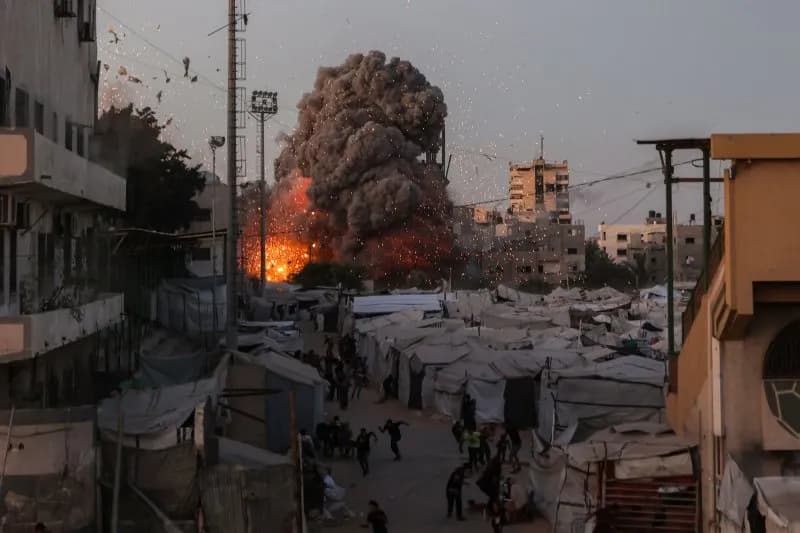
According to AFP reports published via Malay Mail, an adult son of Hamas political bureau chief Khalil al-Hayya survived an overnight Israeli strike targeting a residential apartment in Gaza City. The targeted attack struck the Rimal neighborhood early Friday morning, endangering multiple family members inside the building. Regional observers tracking the fragile truce point to this incident as part of an escalating pattern of targeted operations across the Palestinian territory.
The sequence of events highlights mounting friction across the region, where fragile diplomatic arrangements struggle against ongoing military engagements. Detailed reporting from news agencies on the ground reveals that the latest kinetic activity tests the durability of existing security protocols. Understanding how these localized strikes disrupt urban infrastructure requires looking closely at the operational mechanics governing deployment and response in densely populated sectors.
The Rimal Neighborhood Strike and the Al-Hayya Family Compound
The overnight assault focused directly on a residential apartment building situated in the western sector of Gaza City. Security sources confirmed that the target was Izz al-Din al-Hayya, the youngest surviving son of the senior Hamas leader. The blast also impacted relatives of his late brother Azzam who were sheltering within the same apartment complex.
Targeted Individual and Historical Family Losses
Izz al-Din al-Hayya narrowly escaped the explosion, though the strike compounds a heavy personal toll on the family leadership. Four of Khalil al-Hayya’s sons have now been killed during ongoing military operations, including previous incidents recorded in Doha and across the local theater. Leadership figures within the political bureau condemned the attack immediately, framing the operation as a direct violation of expected norms.
Israel’s attempt to target the youngest son of Hamas political bureau chief Khalil al-Hayya… constitutes ‘state terrorism.’
— Bassem Naim, Member of Hamas Political Bureau
When questioned by international journalists, military officials stated they were reviewing the specifics of the Rimal neighborhood incident. The lack of an immediate operational justification left regional analysts examining how intelligence is gathered and verified prior to urban strikes. This administrative review process often creates a lag between field execution and official public acknowledgement.
Family’s Role in Hamas Governance
Khalil al-Hayya has long served as a senior strategist within Hamas, shaping policy on both political outreach and armed resistance. His sons, many of whom held command posts in the Gaza Strip, acted as liaisons between the bureau and frontline units. The loss of multiple heirs has forced the movement to reshuffle its internal hierarchy, a shift that could affect future negotiation postures.
Image: malaymail.comDrone Operations and Hospital Perimeter Incident Mechanics
Beyond the Rimal strike, coordinated drone operations across multiple sectors resulted in seven deaths on Friday alone, according to civil defense figures. Independent rescue forces operating under local authority recorded strikes in both northern and southern zones. Each tactical engagement involved distinct operational hurdles for medical facilities attempting to triage incoming casualties under severe logistical constraints.
Rafah and Jabalia Tactical Engagements
A drone strike west of Rafah city in southern Gaza accounted for three fatalities, with Nasser Hospital verifying the arrival of the bodies. In response to inquiries regarding the Rafah strike, military spokespersons maintained that they had engaged ‘three terrorists in the area’. A separate drone strike near the Jabalia refugee camp in the north claimed an additional life, confirmed by Al-Shifa Hospital staff.
Al-Shifa Hospital Perimeter Security Protocol
A third drone strike occurred near Al-Shifa Hospital in Gaza City, killing two individuals and prompting immediate concern from medical staff. The military stated that the operation targeted a single operative in the vicinity while ensuring there was ‘no harm to the hospital or any medical practice’. These overlapping urban engagements continue to strain civilian infrastructure as reported by World News monitors tracking regional stability.
Medical Staff’s Response Under Fire
Doctors at Al-Shifa described a chaotic triage scene where limited power forced them to improvise with portable ventilators. Nurses reported that ambulance routes were repeatedly rerouted to avoid new drone corridors, adding minutes to each transport. Such delays raise the risk of preventable deaths, a reality that health NGOs have flagged in daily bulletins.
Image: malaymail.comIntelligence Gathering and Target Verification
Israel’s military relies on a layered intelligence chain that blends satellite imagery, signal intercepts, and human sources before authorizing a strike. In densely packed neighborhoods like Rimal, analysts must differentiate between civilian apartments and suspected militant hideouts within seconds. Errors in this filtering step can trigger the very civilian casualties the rules of engagement seek to avoid.
Signal Intercept Challenges in Urban Gaza
Electronic surveillance picks up a flood of encrypted chatter whenever a new operation is planned. Analysts then cross-reference those signals with known operative aliases, a process that can take up to thirty minutes under optimal conditions. In practice, the pressure to act quickly often compresses that window, increasing the chance of misidentification.
Human Source Reliability
Local informants sometimes provide real-time tips about movement patterns, but their motivations range from financial reward to personal vendetta. The military’s vetting unit assigns a confidence score to each tip, yet the score can be overridden if higher-level commanders deem the target urgent. This tension between speed and certainty sits at the heart of the Rimal incident’s controversy.
Post-Strike Review Mechanism
After a strike, a review board examines video footage, after-action reports, and civilian casualty claims. The board’s findings are then forwarded to the defense ministry for political clearance. Critics argue that the board’s composition—largely senior officers—limits transparency, especially when families demand answers about lost relatives.
Humanitarian Impact on Gaza’s Health Facilities
Every drone or artillery strike that lands near a hospital forces staff to divert resources from patient care to security. The cumulative effect erodes the health system’s capacity to treat both war injuries and routine illnesses like diabetes. International aid agencies warn that a sustained assault could push Gaza’s hospitals past a breaking point.
Supply Chain Disruptions
Medical shipments arriving through the Rafah crossing face unpredictable delays whenever a nearby strike triggers a temporary closure. Trucks that once delivered oxygen cylinders now wait hours for clearance, a lag that can turn a treatable condition into a fatal one. The World Health Organization estimates that supply interruptions have already added several hundred preventable deaths.
Psychological Toll on Health Workers
Paramedics recount working under the constant sound of drones, a stressor that fuels burnout and absenteeism. One senior surgeon told reporters that staff turnover has risen by roughly fifteen percent since the ceasefire began. The loss of experienced personnel hampers complex surgeries and reduces overall care quality.
Community Coping Strategies
Neighborhood volunteers have set up makeshift triage tents outside hospital perimeters to reduce the load on emergency rooms. These tents rely on donated kits and local blood donors, creating a patchwork safety net that fills gaps left by formal services. While admirable, such grassroots efforts cannot replace professional medical infrastructure.
Ceasefire Violations and Casualties Under the October 2025 Truce
The latest violence unfolds against a backdrop of persistent accusations from both sides regarding breaches of the October 2025 ceasefire. That agreement formally paused two years of intensive warfare, yet low-level kinetic exchanges have persisted on an almost daily basis. Statistical tracking reveals a stark human cost accompanying the nominal cessation of hostilities across the affected sectors.
Cumulative Casualties and Statistical Verification
More than 1,650 Palestinians have lost their lives since the truce took effect, based on tallies maintained by local health authorities. These figures are treated as reliable by United Nations agencies operating within the territory. On the opposing side, military tallies record seven soldiers and one civilian contractor killed during the same timeframe.
As diplomatic channels stall, the mechanics of enforcement and retaliation dictate daily realities for civilians navigating the territory. Readers following broader developments can review ongoing analysis via Security desks monitoring Middle Eastern flashpoints. The recurring cycle of targeted strikes and subsequent denials suggests that formal agreements remain exceptionally vulnerable to localized tactical decisions.
Enforcement Gaps in the Truce Framework
The ceasefire relies on a joint monitoring committee composed of UN observers, Egyptian mediators, and representatives from both sides. Yet the committee lacks direct authority to halt a strike once it is launched, limiting its ability to intervene in real time. This structural weakness allows isolated incidents like the Rimal attack to proceed unchecked.
Economic Consequences of Ongoing Skirmishes
Frequent disruptions to electricity and water supplies have driven household expenses up by an estimated twenty percent, according to a recent UNRWA survey. Small businesses near the strike zones report losing up to half their daily revenue when streets are closed for security sweeps. The economic strain compounds the humanitarian crisis, pushing more families toward aid dependency.
International Reactions and Diplomatic Pressure
Western capitals have issued statements condemning civilian casualties while reiterating support for the October 2025 ceasefire. Regional powers, meanwhile, have called for an immediate halt to targeted operations that endanger non-combatants. The diplomatic chorus reflects a growing impatience with a status quo that tolerates periodic violence.
United Nations Calls for Accountability
The UN Security Council convened a special session after the Rimal strike, urging both parties to submit detailed incident reports within ten days. Secretary-General spokespersons emphasized that failure to cooperate could trigger a formal investigation by the International Criminal Court. Such language signals a shift from rhetorical condemnation to potential legal action.
Egyptian Mediation Efforts
Egypt’s foreign ministry dispatched a senior envoy to Gaza City to meet with Israeli and Hamas representatives. The envoy’s brief emphasized the need for “clear red lines” that would prevent future strikes near hospitals and schools. While both sides voiced willingness to discuss adjustments, concrete concessions remain pending.
Public Opinion in Israel and the Palestinian Territories
Polls conducted by independent regional institutes show that roughly forty-two percent of Israelis support stricter targeting of Hamas leadership, even at the risk of civilian harm. Conversely, a similar share of Palestinians view any cross-border strike as a violation of sovereignty. These polarized views shape the political calculus of leaders on both sides.
The Morning Brief
One email a day with the stories that matter. Free, forever.
No spam. Unsubscribe anytime.
Comments (0)
Be the first to share your thoughts.