
US Military Disables Cargo Vessel Near Iran as Tehran Vows to Shatter Naval Embargo
The US military disabled a commercial ship attempting to run the blockade of Iran, while Tehran vowed to keep the Strait of Hormuz shut and break the embargo.
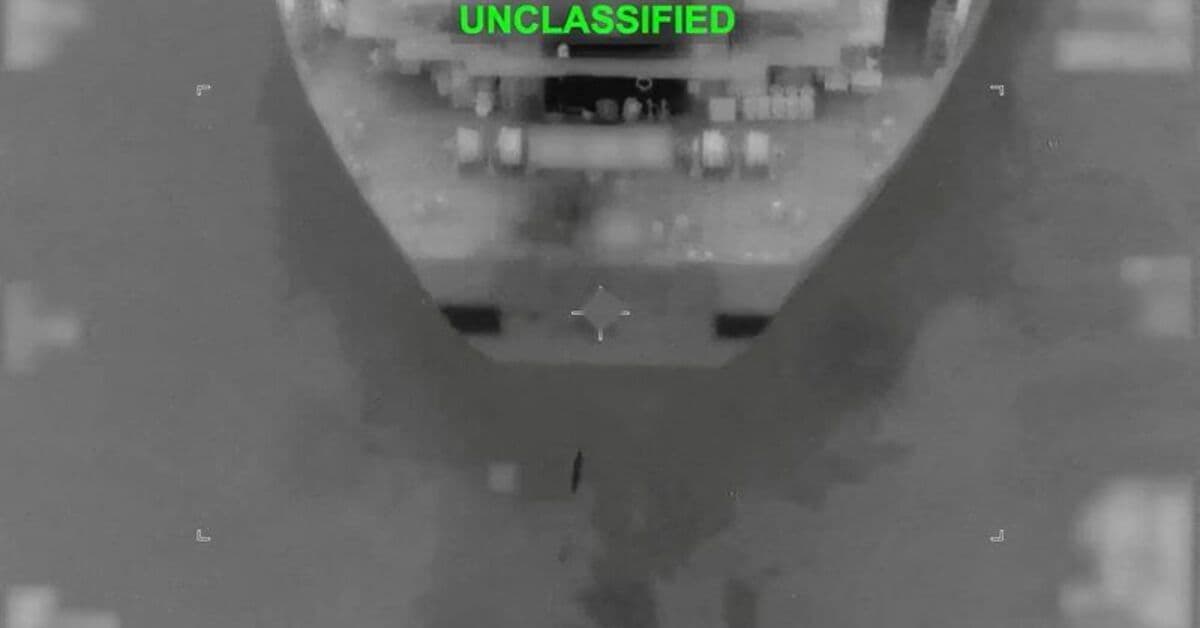
According to Reuters, the United States military disabled a commercial cargo vessel on Thursday after the ship attempted to breach the ongoing naval blockade enforced against Iran. The confrontation in the Gulf of Oman highlights escalating maritime tensions as Tehran vows to keep the critical Strait of Hormuz shut and break the international embargo.
The blockade, announced in July, targets any vessel that might ferry weapons or dual-use goods through Iranian ports. By sealing off the main maritime artery, Washington hopes to choke the flow of material that could fuel regional conflicts, while also sending a clear signal to allies that the U.S. will police the waterway with force if needed.
Operational Mechanics of the US Naval Interdiction
Washington reimposed its sweeping naval blockade on Iranian ports in July to curb maritime commerce linked to sanctioned materials. Early in November, the Pentagon expanded these enforcement measures by establishing Task Force Iron Gate. This specialized unit was commissioned to restrict the movement of weapons and restricted commodities across Iranian land borders and adjacent waterways.
Rules of Engagement and Warning Protocols
Before any kinetic action, U.S. warships issue a series of radio hails that demand a vessel halt, identify itself, and submit to inspection. If the ship ignores three successive warnings, the rules of engagement permit escalation to non-lethal measures such as laser dazzlers, followed by precision strikes as a last resort.
Precision Munitions and Propulsion Targeting
Military planners selected precision ordnance to disable the vessel's propulsion without triggering catastrophic structural loss or casualties among the civilian crew. Striking the stern disabled the rudder and propeller assembly, effectively halting the ship's transit into open waters. Central Command maintains that such targeted actions are necessary to enforce the maritime exclusion zone.
Impact on Vessel's Navigation Systems
The missile’s warhead embedded a shaped-charge that shattered the shaft couplings and damaged the ship’s electronic control unit. Engineers on board reported a loss of thrust and steering authority within seconds of impact, forcing the crew to drop anchor in international waters while awaiting assistance.
Task Force Iron Gate Deployment
The establishment of Task Force Iron Gate marks a significant tightening of regional containment protocols. Naval assets operating under this command monitor commercial traffic departing from key Iranian hubs like Bandar Abbas. Interdiction protocols rely on escalating warnings before kinetic assets are authorized to halt non-compliant vessels.
Intelligence Gathering and Target Verification
Satellite imagery, AIS data, and signals intelligence converged to confirm the M/V Pacific Archer’s departure time and cargo manifest. Analysts cross-checked the vessel’s flag, ownership, and recent port calls against a watchlist of suspected sanction-evaders. Only after the triple-layer verification did the strike team receive clearance to engage.
Iranian Leadership Responses and Counter-Enforcement Claims
Tehran pushed back sharply against the widening naval perimeter through state-controlled media channels. Mohammad Mokhber, an adviser to Iran's Supreme Leader Ayatollah Mojtaba Khamenei, rejected the legitimacy of the restriction on Friday. State media broadcasts captured his direct rejection of the ongoing maritime enforcement.
Neither will the Strait of Hormuz be reopened, nor will we allow the blockade to remain in place.
— Mohammad Mokhber, Adviser to the Supreme Leader
Mokhber did not disclose specific tactical details regarding how Tehran plans to overcome the naval barrier. However, the defiant posture signals that regional friction points along the World News beat will likely intensify in the coming weeks. Commercial insurers are already reassessing risk models for vessels transiting the Persian Gulf and the Gulf of Oman.
Legal Claims and International Reaction
Iran’s legal team has filed a protest with the United Nations, arguing that the blockade violates the 1958 Convention on the High Seas. Several maritime law scholars echo the claim, noting that a unilateral exclusion zone without UN Security Council endorsement raises questions about jurisdiction.
Economic Leverage and Domestic Messaging
State broadcasters framed the U.S. action as an assault on Iran’s sovereign right to trade. By portraying the blockade as a war on the nation’s economy, officials hope to rally public support and justify any future escalation, including the possible deployment of fast-attack craft to challenge patrol vessels.
Image: al-monitor.comNaval Escort Claims and Economic Defense Strategies
Separately, Iranian navy commander Shahram Irani addressed state television regarding ongoing efforts to bypass the American patrols. He insisted that maritime escorts are actively protecting commercial traffic in defiance of foreign pressure. Iranian authorities frame the embargo as a direct assault on national economic stability.
Active Port Operations Amid Regional Embargoes
Commander Irani maintained that domestic ports remain fully active despite the presence of coalition warships. State media quoted his assessment of the broader economic conflict.
"The enemy's attempt is to cut off the lifeblood of our economy in whatever way it can, and this has so far failed," Irani stated during his televised address. He added that maritime escorts continue to safeguard commercial shipowners and sailors navigating the contested corridor.
Insurance Market Adjustments
Global insurers have raised war-risk premiums on Gulf routes by up to 150 percent since the blockade began. Some major carriers now demand a dedicated armed escort before they will file a bill of lading for cargo destined for Iranian ports, shifting costs onto shippers who must decide whether to absorb the surcharge or reroute around the Cape of Good Hope.
Potential Escalation Scenarios
Analysts warn that a miscalculation during a future interdiction could spark a broader naval clash. If an Iranian fast-attack boat were to fire upon a U.S. destroyer, the rules of engagement would likely trigger a retaliatory strike, pulling both sides deeper into a kinetic standoff that could disrupt oil shipments for weeks.
Strait of Hormuz Closure Standoff
The continued closure of the Strait of Hormuz creates severe bottlenecks for global energy transport and Economy & Markets stability. With Tehran refusing to reopen the passage and Washington maintaining its strict quarantine, shipping lines face difficult choices. Insurers continue to reprice risk as military commands on both sides signal readiness to enforce their respective positions.
As vessels line up for alternative routes, freight forwarders scramble to adjust schedules, while oil markets watch price spreads for signs of strain. The next scheduled convoy through the Gulf, slated for early December, will test whether diplomatic channels can de-escalate or whether another strike will punctuate an already volatile season.
The Morning Brief
One email a day with the stories that matter. Free, forever.
No spam. Unsubscribe anytime.
Comments (0)
Be the first to share your thoughts.