
US Military Disables Cargo Ship in Gulf of Oman Over Iran Blockade Violation
The US military disabled a Palau-flagged cargo vessel on Thursday after the ship attempted to breach Washington's naval blockade of Iranian ports.
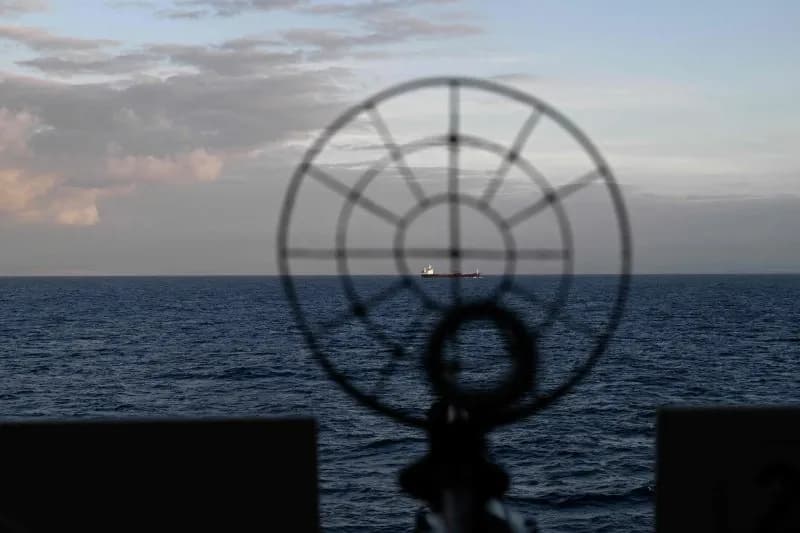
CENTCOM Strike Targets Palau-Flagged Vessel Near Strait of Hormuz
According to Malay Mail, the United States military disabled a Palau-flagged cargo vessel on Thursday after the ship attempted to breach Washington's naval blockade of Iranian ports. Central Command forces deployed an American aircraft to strike the Pacific Archer in the Gulf of Oman following its departure from the Iranian port of Bandar Abbas.
The military action marks a sharp escalation in ongoing maritime hostilities across the Security landscape of the Middle East. Officials confirmed that the targeted vessel ignored multiple warnings before military assets intervened.
Commercial operators in the Persian Gulf now face severe route disruptions as naval patrols expand their enforcement zone. Insurers have raised war-risk premiums for tankers traversing the restricted corridor by several thousand dollars per voyage.
Precision Munitions Hit Pacific Archer Stern
American aircraft targeted the stern of the cargo ship with precision munitions on Thursday afternoon. The strike disabled the vessel's propulsion systems directly, bringing its journey to a sudden halt near the Strait of Hormuz.
The ship’s propulsion was ultimately disabled and the civilian crew was unharmed.
— Central Command, US Military
Military authorities reported that no civilian casualties occurred during the operation. The undamaged crew remained aboard the immobilized freighter as naval monitors secured the immediate area.
Salvage tugs deployed from nearby coalition bases arrived on Friday morning to inspect the crippled hull. Marine engineers confirmed that the rudder and steering gear suffered catastrophic damage during the strike.
Image: malaymail.comEscalating Enforcement and Retaliatory Straits Tensions
Washington launched its unilateral naval blockade in mid-July following the collapse of a short-lived diplomatic agreement with Tehran. The latest action brings the total number of intercepted vessels to 164 since the maritime embargo began.
Official military tallies indicate that American forces have now disabled six ships while redirecting 158 others away from prohibited zones. These enforcement actions continue to disrupt normal commercial shipping lanes throughout the World News arena of the Persian Gulf.
Port authorities in the United Arab Emirates report a growing backlog of container ships idling offshore. Freight forwarders are actively rerouting cargo through land corridors to bypass the contested waters entirely.
Tehran Responds With Counter-Blockade and Vows
Iran has sought to impose its own counter-blockade on commercial ships transiting the crucial waterway. Iranian forces reported multiple recent incidents involving vessels catching fire while attempting to navigate routes declared off-limits by Tehran.
Esmaeil Baqaei, the Iranian foreign ministry spokesman, vowed on Monday that his government would use all available means to counter the American blockade. Diplomatic channels remain largely frozen following the breakdown of a June settlement framework.
Patrol boats from the Islamic Revolutionary Guard Corps now shadow foreign tankers on daily schedules. State media outlets broadcasted footage of armed speedboats challenging international cargo carriers near the territorial boundary.
Coalition Defenses Intercept Drone Swarms
Destroyers assigned to the fifth fleet intercepted three explosive drones over the weekend. Military analysts attribute the aerial attacks to regional proxy groups acting on behalf of Tehran.
Radar operators tracked the incoming projectiles before surface-to-air missiles destroyed them over open water. Debris from the downed drones scattered across shipping lanes used by crude oil tankers.
Commanders warned civilian crews to maintain active radar watches and report unidentified aircraft immediately. Supply chains linking Gulf refineries to Asian export markets remain vulnerable to these asymmetric threats.
Image: malaymail.comStalled Diplomacy and Conditions for Safe Passage
The broader maritime crisis originated in late February following joint US and Israeli military strikes against Iranian targets. Subsequent diplomatic negotiations aimed at establishing a permanent regional settlement have yielded no concrete progress.
Iranian officials maintain that the Strait of Hormuz could reopen within 48 hours under specific conditions. Tehran demands the complete removal of the US blockade before allowing unrestricted commercial transit to resume through the corridor.
European Union mediators held emergency talks in Geneva on Wednesday to revive the stalled nuclear framework. Negotiators failed to bridge the gap between American demands for unconditional compliance and Iranian counter-proposals.
Economic Fallout Grips Global Markets
Crude oil benchmarks jumped four percent following news of the Pacific Archer incident. Traders fear that a prolonged closure of the Strait of Hormuz will choke off a fifth of global petroleum supplies.
Shipping conglomerates have started canceling scheduled port calls in Kuwait and Iraq to avoid collateral damage. Freight costs for very large crude carriers climbing out of the Gulf hit record highs on Friday afternoon.
Port directors in Singapore and Rotterdam report delayed delivery schedules for petrochemical shipments originating in the region. Importers absorb the soaring logistics costs as maritime tensions stretch corporate supply chains to breaking point.
The Morning Brief
One email a day with the stories that matter. Free, forever.
No spam. Unsubscribe anytime.
Comments (0)
Be the first to share your thoughts.