
Tinubu Sets 2028 Storage Deadlines in Second-Term Agricultural Blueprint
President Bola Tinubu's 2027 manifesto establishes hard targets for grain storage expansion and post-harvest loss reduction, pivoting from raw land cultivation to supply chain preservation.
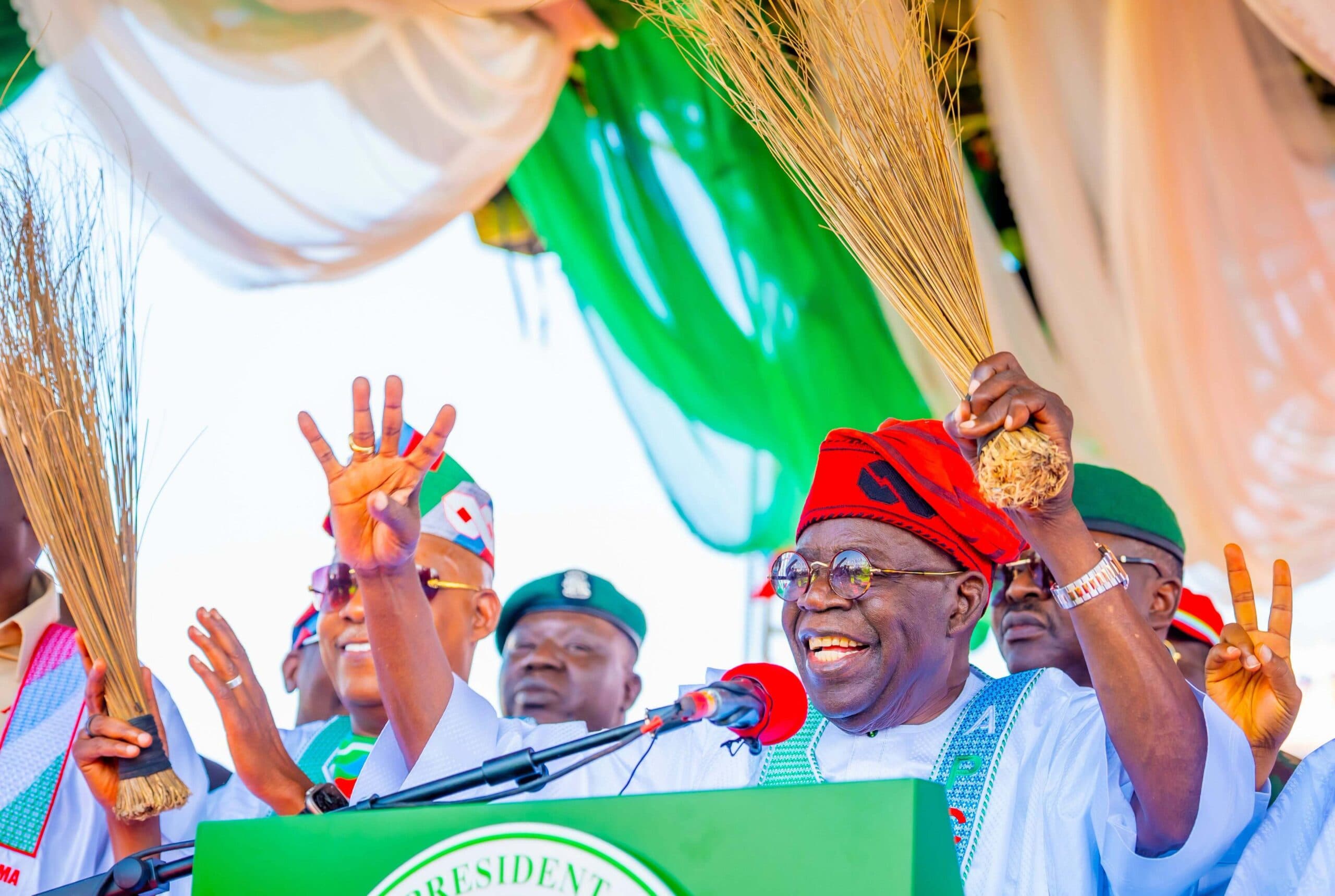
According to reporting from Premium Times, President Bola Tinubu has unveiled his 2027-2031 electoral manifesto in Abuja, pairing familiar agricultural promises with newly established deadlines for national grain reserves and supply chain waste reduction. The document, titled From Reforms to Prosperity and presented by Minister of Industry, Trade and Investment Jumoke Oduwole, shifts administrative focus away from raw cultivation expansion and toward the physical movement, preservation, and retail affordability of farm produce.
The Mechanics of Post-Harvest Loss and Supply Bottlenecks
While the administration previously emphasized bringing uncultivated acreage under the plow, the new policy framework confronts a more immediate operational crisis: the extensive decay of food between the farm gate and the market stall. Inadequate rural feeder roads, a general absence of temperature-controlled transport, and severely constrained localized silos mean that bumper yields routinely rot before reaching retail buyers.
For smallholder farmers cultivating perishable staples, this infrastructure deficit routinely translates into catastrophic seasonal write-offs.
The revised strategy attempts to bypass these structural choke points by mandating specific infrastructure targets rather than relying solely on production incentives. Under the newly published framework, the administration commits to expanding national storage capacity by 50 per cent by 2028, building upon an already reported addition of 25,000 metric tonnes. Furthermore, the blueprint establishes a hard terminal date of 2030 to halve overall post-harvest losses across the country.
Road and Transport Gaps
Rural road density in Nigeria hovers near 0.5 km per square kilometre, far below the World Bank’s recommended threshold for efficient market access. The manifesto proposes a $2.3 billion allocation to upgrade 12,000 km of feeder routes, a move that could shave days off farm-to-city trips. If completed on schedule, traders would see a 15 per cent reduction in transport-related spoilage.
Local transport firms, however, warn that fuel price volatility could erode any gains from better roads. They argue that without subsidised diesel, drivers may still delay shipments, leaving crops vulnerable to heat. The government’s response points to a parallel fuel-voucher scheme slated for rollout in 2025.
Cold Chain Deficiencies
Temperature-controlled trucks account for less than 3 per cent of Nigeria’s commercial fleet, according to a 2024 logistics survey. The manifesto’s “Cold Chain Initiative” pledges 1,800 refrigerated units for the northern grain belts. Each unit promises to keep produce at optimal 4-8 °C for up to 72 hours, a stark improvement over the current ambient-only options.
Industry insiders caution that maintenance costs could outstrip budgeted subsidies within two years. They suggest a public-private partnership model where equipment owners receive tax credits in exchange for servicing smallholder contracts. The policy draft mentions “pilot partnerships” but stops short of naming prospective partners.
Silo Capacity Shortfalls
National grain silos currently store roughly 1.2 million tonnes, a fraction of the estimated 4 million tonnes harvested annually. The 50 per cent expansion target translates to an additional 600,000 tonnes of capacity, primarily through modular steel structures. These silos are designed for quick assembly, reducing construction time from 24 months to under 12.
Critics note that many new silos will be sited near major highways, yet still distant from remote farming clusters. They argue that without “last-mile” storage hubs, farmers will continue to dump excess produce in open fields. The manifesto replies with a “Rural Hub Programme” that will fund 150 mini-silos by 2029.
Funding and Timeline Oversight
Financing for the post-harvest agenda will draw from the 2027 budget’s agricultural line, earmarked at ₦450 billion. A portion of this sum is slated for a sovereign green bond, intended to attract climate-focused investors. The bond prospectus promises a 4.5 per cent yield, payable over ten years.
Audit watchdogs have asked for quarterly progress reports, fearing that past projects suffered from cost overruns. The government has responded by establishing an “Agricultural Infrastructure Monitoring Unit” within the Ministry of Finance, tasked with publishing quarterly dashboards.
Interventions Across Strategic Reserves and Price Transparency
To stabilize retail markets, the administration intends to institutionalize direct inventory disclosures alongside routine market monitoring mechanisms. This includes publishing regular updates regarding public stockpiles to reassure buyers and deter speculative hoarding during lean periods. Observers note that transparent release schedules represent a direct attempt to calm volatile retail costs that continue to burden households.
steady staple-food prices by building on the Guaranteed Minimum Price scheme and the strategic grain reserve, with published reserve levels and releases.
— Bola Tinubu, President of Nigeria
Complementing these reserve interventions, the manifesto pledges a monthly public price index to track essential commodities side-by-side with official headline inflation data. Proponents argue that giving consumers and growers a transparent monthly baseline will expose supply bottlenecks earlier in the production cycle. Yet economists point out that publishing price changes does little by itself to resolve the underlying production costs driving food inflation.
Data Integrity and Market Signals
The new price index will pull data from 150 market observation points across the six geopolitical zones. Each point will report on rice, maize, wheat, and sorghum prices, creating a granular picture of regional disparities. Analysts say that such granularity could help policymakers redirect grain from surplus to deficit zones before prices spike.
Nevertheless, some traders fear that real-time data could be weaponized by large distributors to undercut small retailers. The manifesto counters this risk by mandating that all published figures be anonymized and aggregated at the state level.
Unpacking the Retained Commitments From the 2023 Agenda
Many core elements of the 2027 platform directly echo pledges first introduced ahead of the 2003 and 2023 election cycles, including the revitalization of commodity boards and the expansion of the Guaranteed Minimum Price scheme. The previous ambition of raising national cultivated arable land from 35 per cent to 65 per cent within four years, however, is notably absent from the current text.
Independent analysts have observed that the new document offers no updated baseline figures to verify the current percentage of land actively under cultivation.
Instead, the administration relies on self-reported operational metrics from its first term to substantiate its agricultural track record. The manifesto cites the distribution of subsidised inputs to 622,818 farmers via the NAGS-Agro Pocket initiative, alongside the deployment of 2,000 tractors and six million bags of fertilizer. It also details the release of 13,264.6 metric tonnes of rice from strategic reserves to 19 northern states and the Federal Capital Territory, alongside a ₦200 billion allocation for the Guaranteed Minimum Price framework.
Assessment of Input Distribution Effectiveness
Field surveys in 2024 indicated that 78 per cent of the subsidised seeds reached intended beneficiaries, while the remaining 22 per cent were diverted to informal markets. The government attributes the leakage to weak extension services and promises a digital tracking system by 2026.
Tractor deployment, meanwhile, has been praised for reducing manual labour on large farms but criticized for concentrating assets in the hands of a few commercial operators. Smallholders argue that rental rates remain prohibitive, limiting the machines’ impact on productivity.
Implementation Machinery and Fiscal Constraints
Delivering on the manifesto’s ambitious timeline will require coordination across ministries, state agencies, and private partners. The Ministry of Agriculture has drafted a joint task force with the Ministry of Works, tasked with synchronising road upgrades with silo construction schedules. This task force will meet bi-monthly to resolve inter-agency bottlenecks.
Fiscal analysts warn that the projected ₦450 billion allocation represents a 12 per cent rise over the previous year’s agricultural spend, a jump that could strain the national budget if oil revenues dip. To mitigate risk, the government plans to tap the Agricultural Development Fund, which currently holds ₦150 billion in sovereign guarantees.
State-Level Execution Challenges
States such as Kano and Benue have pledged matching funds for silo projects, yet past experiences show delayed disbursements due to bureaucratic approvals. The manifesto’s “State Co-Funding Clause” stipulates that any state that fails to release its share within six months will forfeit its allocation to the federal pool.
Local NGOs argue that this punitive approach could alienate regional partners and slow progress. They suggest a performance-based incentive model that rewards early completion with additional technical assistance.
Private Sector Participation Framework
To attract private capital, the government will offer tax holidays on equipment imports and guarantee off-take contracts for processed grain. The off-take guarantees promise a minimum purchase price of ₦250 per kilogram for wheat flour produced by certified processors.
Industry leaders welcome the certainty but caution that price guarantees must reflect market realities to avoid creating surplus stockpiles. They propose a sliding-scale mechanism tied to global commodity trends, a detail not yet embedded in the draft.
Export Standards and Value Addition Realities
Beyond domestic distribution, the second-term agricultural plan ties domestic farming output directly to industrial processing and foreign exchange earnings. The framework incorporates strict quality assurance protocols, mandating Hazard Analysis and Critical Control Points (HACCP) and ISO 22000 standards across processing facilities and export hubs. These regulatory measures are designed to align Nigerian agricultural exports with international phytosanitary requirements, reducing rejection rates in foreign ports.
The administration has set a specific benchmark requiring at least 30 per cent annual value addition in processed agricultural exports, building upon a reported baseline of US$209 million in 2025. By encouraging local agro-processing rather than exporting raw commodities, policymakers hope to retain manufacturing jobs within Africa while insulating local processors from global raw material price shocks.
Whether these export-oriented targets will successfully lower food prices for local consumers remains the central question for the administration's second-term economic agenda.
Compliance Costs for Processors
Adopting HACCP and ISO 22000 will require processors to invest in laboratory equipment, staff training, and certification fees. Estimates from the Nigerian Association of Processors place the average compliance cost at ₦12 million per facility. Smaller firms argue that such outlays could push them out of the market.
To offset these expenses, the manifesto proposes a ₦5 billion grant pool earmarked for small-and-medium enterprises that achieve certification by 2028. Recipients will also gain access to export-facilitation services at no extra charge.
Market Access Gains and Trade Partnerships
Meeting international standards opens doors to the European Union’s “Everything But Arms” scheme, which offers duty-free entry for compliant African products. Early pilots in 2023 saw a 12 per cent rise in mango shipments to the EU after processors obtained HACCP certification.
Regional trade blocs such as ECOWAS are also revising their intra-regional standards to mirror ISO 22000, a move that could simplify cross-border movement of processed foods. The manifesto cites a forthcoming ECOWAS protocol slated for ratification in 2026.
Value-Addition Impact on Domestic Prices
Proponents argue that processing raw grain into flour, oil, or packaged snacks adds value that can be captured locally, reducing reliance on imported finished goods. If value addition rises to the 30 per cent target, economists project a modest 4 per cent dip in retail staple prices by 2032.
Detractors warn that increased processing costs—energy, labor, and compliance—could offset any price benefit, especially if electricity tariffs remain high. The manifesto addresses this by pledging a 10 per cent reduction in industrial electricity rates for certified agro-processors.
Political Context and Prospects for Reform
President Tinubu’s agricultural pivot arrives amid mounting pressure from urban voters who cite soaring food bills as a key election issue. The manifesto’s focus on post-harvest efficiency directly targets the supply-side drivers of those price hikes.
Opposition parties have labeled the plan “over-promised and under-funded,” pointing to past projects that stalled after initial disbursement. In response, the administration has invited bipartisan observers to attend the inaugural storage-capacity audit scheduled for March 2025.
Stakeholder Reactions and Civil Society Monitoring
Farmers’ unions welcomed the emphasis on storage but remain skeptical about the promised “last-mile” silos. Their spokesperson warned that without clear land-allocation policies, new facilities could end up underutilised.
Consumer advocacy groups, meanwhile, praised the monthly price index as a step toward transparency. They have submitted a joint petition urging the government to link the index to a “price-stabilization fund” that could intervene when staple prices breach a predefined threshold.
International Partnerships and Technical Assistance
The World Bank has offered a technical assistance package worth $150 million to help design the cold-chain network. The package includes training for logistics firms and the installation of solar-powered refrigeration units in remote depots.
China’s Ministry of Agriculture has expressed interest in joint research on drought-resilient grain varieties, a collaboration that could complement the manifesto’s storage focus by ensuring that stored grain remains viable over longer periods.
As the 2028 storage target looms, the next six months will test whether the announced funding streams, regulatory reforms, and stakeholder commitments can converge into measurable outcomes.
The Morning Brief
One email a day with the stories that matter. Free, forever.
No spam. Unsubscribe anytime.
Comments (0)
Be the first to share your thoughts.