
Erdogan Finalizes Mecca Defense Pact Linking Turkey, Saudi Arabia, and Pakistan
Turkish President Erdogan approved the Mecca Joint Defence Agreement, linking Ankara, Riyadh, and Islamabad in a mutual defense pact.
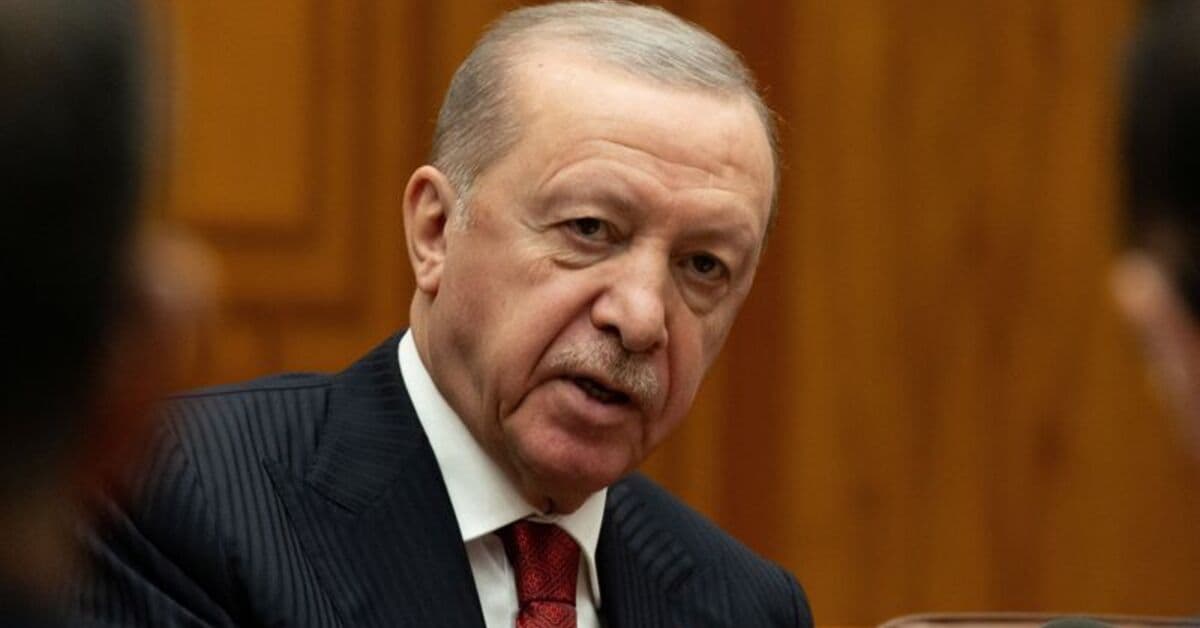
According to Reuters, Turkish President Tayyip Erdogan signed off on the Mecca Joint Defence Agreement on Friday, cementing Ankara's formal entry into a tripartite security pact alongside Saudi Arabia and Pakistan. The Official Gazette published the approval immediately following parliamentary clearance secured on November 5, locking in a mutual defense framework that treats any assault on a single member state as an act of aggression against all three.
The deal was originally inked in Mecca back in August as regional anxiety mounted over aggressive military escalation involving the United States, Israel, and Iran. Senior officials from all three nations are convening in Islamabad on Friday and Saturday to map out operational logistics. Data from regional security analysts shows that the coalition pools NATO's second-largest standing army, the world's sole nuclear-armed Muslim nation, and a premier global energy exporter into a single collective security umbrella.
Strategic Calculus and Shifting Regional Leverage
The trilateral alignment alters traditional Middle Eastern power dynamics by institutionalizing mutual defense across non-contiguous territories. Turkey brings advanced drone manufacturing and conventional force projection. Pakistan contributes nuclear deterrence capabilities alongside extensive counterinsurgency experience. Saudi Arabia provides strategic depth, critical energy infrastructure, and financial backing.
Deploying Turkish Forces Under the Mecca Agreement
A ruling party lawmaker confirmed to Reuters last month that Ankara intends to submit an additional deployment mandate to parliament. This secondary legislative step will authorize the physical dispatch of Turkish military personnel directly to Saudi soil. The immediate tactical driver behind the deployment involves securing Saudi infrastructure against persistent drone and missile attacks launched by Yemen's Houthi movement.
Assessing the Numerical and Strategic Trade-Offs
Quantitative metrics highlight the sheer scale of the new pact, yet hard numbers do not automatically guarantee seamless battlefield interoperability. Combining three distinct military doctrines, legacy supply chains, and communication protocols introduces severe friction points. Turkey operates primarily on NATO standards, while Pakistan relies on a mix of indigenous, Western, and Eastern bloc hardware, leaving logistics commanders with a heavy harmonization burden.
The Limits of Collective Deterrence
Data journalists tracking regional defense spending note that while the mutual defense clause mirrors Article 5 principles, the practical deterrent effect remains untested against asymmetric threats. Houthi strikes on Saudi oil facilities have historically tested traditional air defense networks, and adding Turkish personnel requires robust integrated command structures that are still under negotiation in Islamabad.
Skeptics point out that formal treaty ratification does not instantly resolve deep-seated historical rivalries or differing foreign policy priorities among the three capitals. Ankara maintains complex diplomatic channels with Tehran, complicating any straightforward posture of regional containment. Meanwhile, Pakistan balances its own domestic economic constraints against its external security commitments in the Gulf.
Upcoming Bilateral Milestones and Implementation Timelines
The Islamabad meetings on Friday and Saturday serve as the first major stress test for the alliance's operational resolve. Delegations must finalize the rules of engagement and establish joint intelligence-sharing protocols before any physical troop rotations begin. The speed of the upcoming parliamentary deployment vote in Ankara will signal how quickly Turkish forces can establish a permanent footprint on the Arabian Peninsula.
Economic Stakes for Saudi Energy Exports
Saudi Arabia's oil output accounts for roughly 10 percent of global supply, making the kingdom's production schedule a barometer for world markets. By weaving its energy assets into a defense pact, Riyadh hopes to shield export capacity from Houthi sabotage and potential cyber-intrusions. The agreement therefore carries a dual promise: military protection and market stability for buyers from Asia to Europe.
Oil Facility Shielding Plans
Saudi planners have drafted a layered defense blueprint that blends Turkish drone interceptors with Pakistani early-warning radar nodes. The scheme envisions a rapid-response corridor stretching from Riyadh to the Red Sea ports of Jeddah and Yanbu. If successful, the corridor could cut downtime after an attack from days to a matter of hours, preserving daily export volumes.
Pakistan's Nuclear Deterrence in the Pact
Pakistan's arsenal of roughly 160 nuclear warheads forms the most visible deterrent element of the tripartite deal. Islamabad argues that its strategic depth can offset conventional threats aimed at Saudi or Turkish interests. Yet the inclusion of nuclear posture raises eyebrows in Washington, which monitors any shift that might alter the regional balance of terror and conventional forces.
Non-Proliferation Concerns
International watchdogs note that the treaty does not contain explicit safeguards to prevent nuclear technology transfer between members. Pakistani officials assure that fissile material will remain under strict national command, but the mere perception of shared nuclear credibility could embolden regional actors. The concern fuels diplomatic chatter in Geneva and at the UN Security Council.
Turkey's Drone Industry and Export Controls
Turkey's Bayraktar series has become a staple on battlefields from Libya to Nagorno-Karabakh, earning Ankara a reputation as a drone powerhouse. The Mecca pact opens a direct sales channel to Saudi forces, potentially accelerating production rates at Baykar's facilities in Ankara and Istanbul. However, the move also tests Turkey's compliance with European Union export-control regimes.
Linking Drone Swarms to Saudi Air Defense
Joint engineers are sketching a network where Turkish loitering munitions feed real-time targeting data to Saudi Patriot and Saudi-developed Arrow systems. The integration aims to create a seamless kill-chain that can engage Houthi missiles before they breach the Gulf. Success would showcase a rare example of cross-national C4ISR synergy in a high-risk environment.
Regional Reactions from Tehran, Jerusalem, and Washington
Iran's foreign ministry issued a terse statement condemning the pact as “a hostile alignment against regional stability.” Tehran warned that any escalation could trigger reciprocal measures against Turkish or Pakistani interests. Israel's defense establishment, meanwhile, praised the inclusion of Pakistan's nuclear deterrent as a counterweight to Iranian missile development.
Potential Counterstrategies
U.S. officials in the Pentagon have begun informal talks about augmenting the existing CENTCOM presence to monitor the new alliance's activities. Analysts speculate that Washington could offer calibrated naval deployments near the Strait of Hormuz as a signal of continued engagement. Meanwhile, Russia watches the development with cautious interest, noting that the pact could reshape its own influence in the Persian Gulf.
The Morning Brief
One email a day with the stories that matter. Free, forever.
No spam. Unsubscribe anytime.
Comments (0)
Be the first to share your thoughts.