
Spanish Election Turnout Surges Past Historic Benchmarks as Polarization Drives Voters to Polls
Spanish general election turnout hit 45.74% by 2 pm, breaking historical records as voters mobilize in unprecedented numbers.
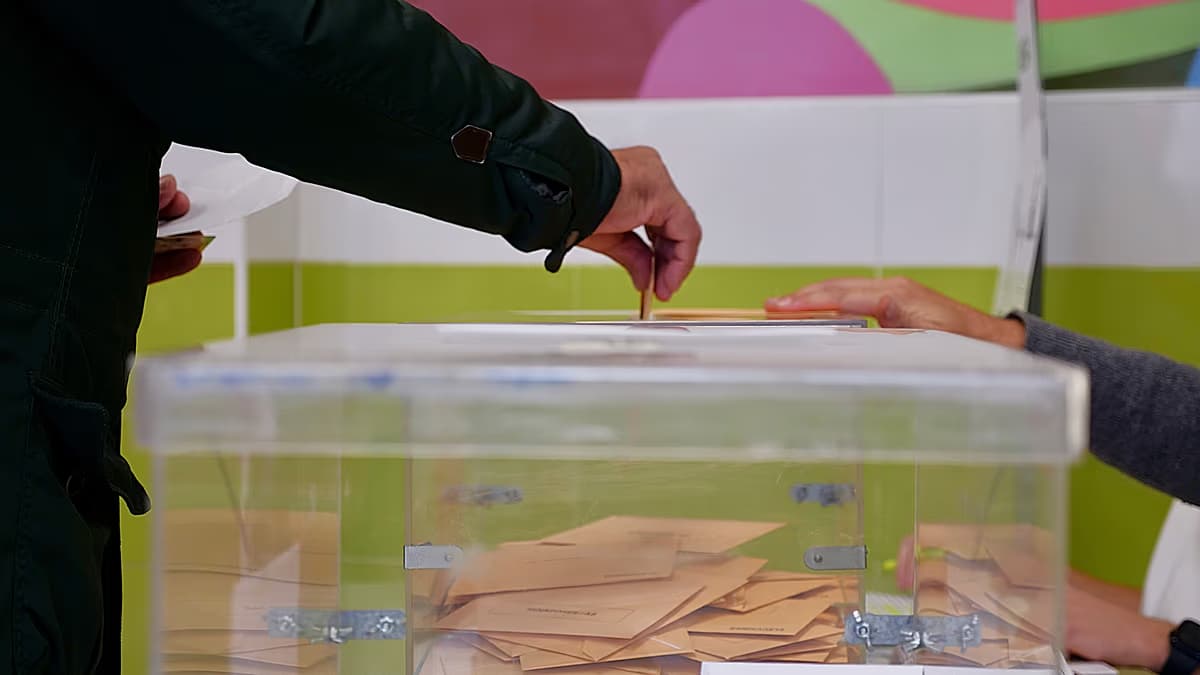
Conventional wisdom dictates that voter fatigue inevitably sets in when political polarization peaks. According to reports from Euronews, that consensus is collapsing in real time across the Iberian Peninsula as nearly 36 million registered voters rush to cast ballots. By 2 pm local time, national participation hit 45.74 percent, easily surpassing the 40.48 percent recorded at the exact same hour during the July 2023 general election.
Critics of the current political climate often argue that frantic mass mobilization spells democratic decay and unchecked tribalism. Yet that reading misinterprets what raw precinct data tells us about civic urgency. When structural political friction mounts, it doesn't suppress participation; it acts as a magnetic force that drags a dormant electorate straight to the ballot box.
The Ground-Level Reality in Madrid Precincts
Queues outside neighborhood polling stations in central Madrid began forming long before metal gates unlocked on Saturday morning. By early afternoon, election officials confirmed that the mid-day surge had outpaced every historical precedent on record for this hour. Families, shift workers, and elderly residents stood shoulder to shoulder under autumn skies, trading gossip and waiting upwards of forty minutes just to drop paper envelopes into sealed plastic boxes.
Navigating the Mid-Day Heat and Bureaucracy
Inside District 4 precinct halls, volunteer electoral board members wrestled with an unrelenting stream of ID cards and voter rolls. Every desk had a dedicated runner sprinting back and forth to keep provisional tally sheets updated for central ministry databases. Municipal police deployed extra patrols outside busy entrances to maintain order as pedestrian corridors clogged with anxious citizens.
Local Merchants and Neighborhood Rhythm
Corner bakeries and corner cafes situated near major voting centers reported staggering foot traffic surges long before the usual brunch hours peaked. Business owners adjusted staff rosters on the fly to accommodate employees who needed time off to vote amid the unprecedented rush. This localized economic pulse offered an immediate, visceral window into how civic duties reshape daily routines across urban neighborhoods.
Regional Ripples Across Spain's Diverse Provinces
The participation spike was far from a centralized phenomenon confined to capital city limits. Official government figures show that rural municipalities and provincial capitals alike experienced double-digit jumps in midday activity compared to previous electoral cycles. Regional administrators across Andalusia, Catalonia, and Valencia scrambled to deploy backup ballot supplies as midday returns defied baseline projections.
Proportional Weight in Key Electoral Strongholds
Traditional strongholds in the industrial north and agricultural south posted divergent turnout trajectories that caught local pollsters completely off guard. In regions where past participation hovered in the mid-thirties by early afternoon, counters registered numbers approaching fifty percent. Political parties on both the left and right realized their ground games had to pivot instantly from persuasion to sheer turnout preservation.
Logistical Adjustments by Regional Authorities
Electoral boards in high-density provinces activated emergency protocols to handle the unexpected crowd volumes. Extra voting booths were wheeled out of storage depots to relieve bottlenecks in overcrowded school gymnasiums and civic centers. These rapid administrative pivots prevented physical gridlock from turning into lost votes as afternoon heat settled over southern plazas.
The Structural Shift in Iberian Democracy
What we are witnessing on November 29 isn't a temporary blip in voter enthusiasm. It marks a permanent recalibration of how Spanish citizens view the stakes of legislative governance in an era of fractured parliaments. When final tallies are audited, political scientists will study this election not for who won, but for how the electorate shattered historical ceilings.
The real question facing party leadership isn't how to win over moderate swing voters in the final hours of a campaign. It is how governing coalitions intend to manage a hyper-engaged, deeply polarized population once the confetti settles and actual policymaking begins. Read more about shifting power dynamics in our Politics and World News archives.
The Morning Brief
One email a day with the stories that matter. Free, forever.
No spam. Unsubscribe anytime.
Comments (0)
Be the first to share your thoughts.