
Wordle Puzzle 1983 on November 23 Reveals Answer FILTH and New Play Strategies
Wordle puzzle 1983 on November 23 revealed the answer FILTH. Discover strategies to solve it and explore the expanding ecosystem of Wordle variants.
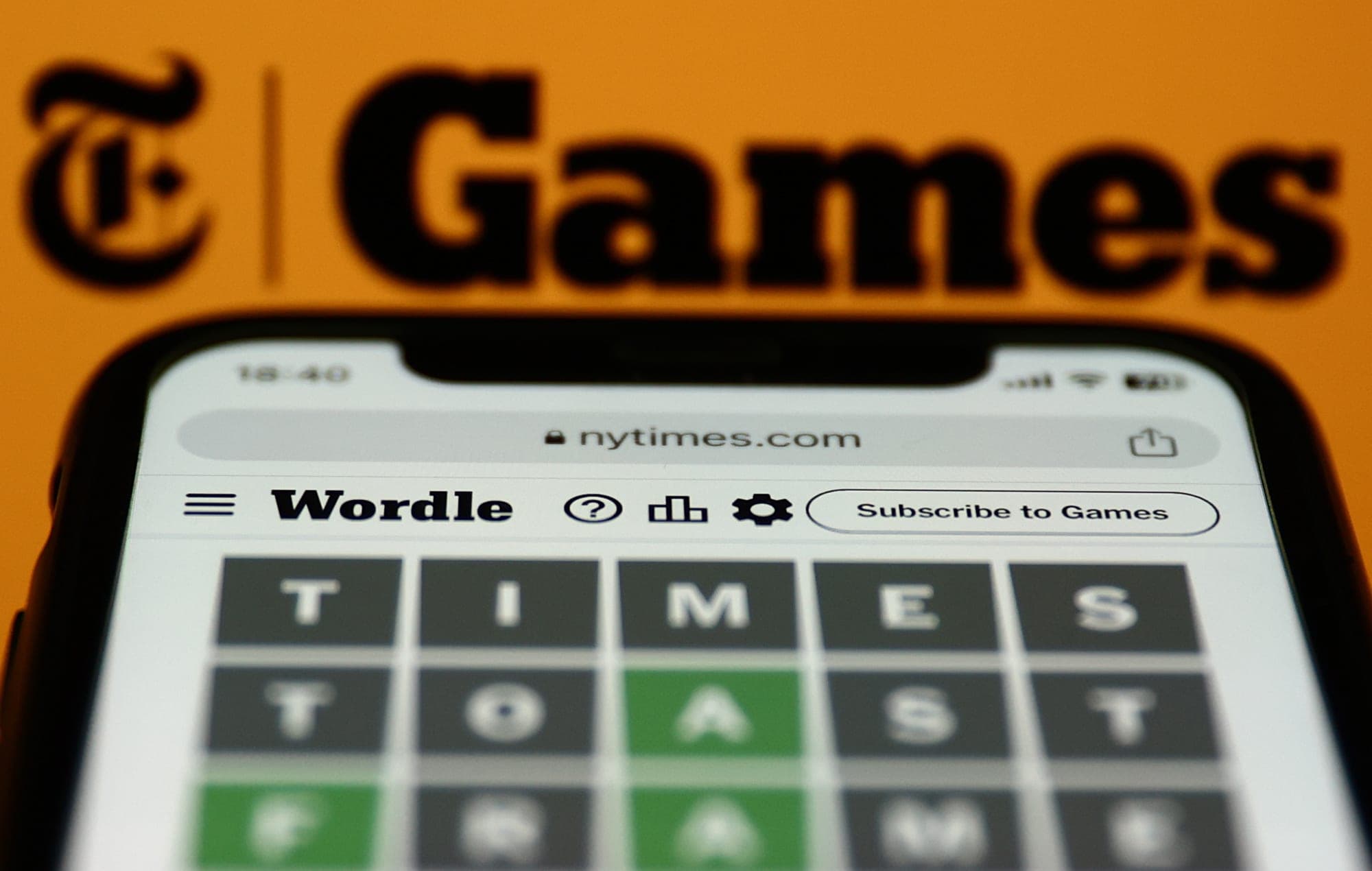
The Wordle answer for puzzle 1983 on November 23 was FILTH. According to NME, the daily puzzle kept players guessing with just one vowel and no repeating letters, delivering a sharp linguistic hurdle that disrupted standard deductive patterns. Across social media feeds and morning group chats, solvers encountered a word that was both immediately familiar in colloquial English and deceptively tricky to pin down under the game’s strict structural constraints.
Wordle has been a fixture on phone screens since its launch in 2021. Created by software engineer Josh Wardle as an intimate parlor game for his partner before ballooning into a global phenomenon, the web-based title quickly became an indispensable part of millions of morning routines. The game’s free‑to‑play model and six‑guess limit make it a quick, repeatable challenge that draws millions each day. Operating on an intentionally restrained, ad-free canvas with zero commercial friction, it presents an egalitarian challenge: every player across every continent encounters the exact same five-letter target within the same 24-hour cycle, turning personal problem-solving into a synchronized international event.
Unlike downloadable mobile games that rely on infinite progression loops, complex monetization trees, or aggressive push notifications, Wordle thrives on scarcity. Players receive only six chances to uncover a hidden five-letter word, guided strictly by color-coded feedback: green for a correct letter in the right spot, yellow for a correct letter in the wrong position, and gray for letters that do not appear in the word at all. The elegant simplicity of this mechanic has sustained the title's staying power long past the typical lifecycle of viral internet fads.
Why the daily answer matters
Each new solution becomes a cultural touchpoint. Within minutes of midnight resets around the world, players share their results on social media, creating a shared moment of triumph or frustration. The game’s ingenious share screen—a spoiler-free grid of green, yellow, and gray emojis—allows players to broadcast their analytical prowess or mourn an agonizing near-miss without ruining the puzzle for friends and followers in later time zones. This visual shorthand has established a universal language of friendly competition across workplaces, group messages, and digital communities.
The answer’s difficulty can spark discussions about obscure vocabulary, as past puzzles have introduced words like “WOOER.” When the game deploys archaic terminology, unusual consonant configurations, or rare poetic constructions, the online reaction is swift and vociferous. Solvers routinely debate whether certain five-letter terms qualify as everyday parlance or esoteric trivia, scrutinizing the editorial balance required to keep the puzzle accessible to casual readers while still providing a rigorous test for dedicated logophiles.
The sequence of daily solutions also shapes how solvers approach the board psychologically. Yesterday’s answer, UPEND, set a tone of reversal, catching many solvers off balance with its initial “U” and an uncommon letter layout that challenged forward-momentum guesses. In contrast, today’s FILTH forces solvers to think of a five‑letter word with a single vowel and no duplicate letters. Moving from a word led by an initial vowel to one anchored by an austere consonant-heavy profile demonstrates the unpredictable shifts that define Wordle from day to day, reminding players that yesterday’s deductive habits rarely guarantee today’s success.
Effective strategies for today’s puzzle
Navigating these shifting parameters requires methodical preparation. Experts recommend opening with vowel‑rich guesses to map out the foundational architecture of the unknown word. Mathematician Jonathan Olson suggests words such as “Salet,” “Rance,” “Alter,” and “Crate.” Through algorithmic modeling and information theory, Olson demonstrated that these particular starters maximize information early, narrowing the field before the final attempts by eliminating the most statistically common vowels and consonants in the English lexicon.
Because today’s solution contains only the vowel “I,” any guess lacking that letter is automatically eliminated from contention as a final answer, though it may still serve as an effective diagnostic tool. Players who begin with “Crate” or “Alter” can quickly confirm the absence of A, E, and O, leaving “I” as the only viable vowel alongside the underutilized “U.” Once the dominant front-vowels are ruled out, the mental paradigm shifts drastically: the player is no longer searching for common vowel pairings like EA, AI, or OU, but must instead construct a word around a lonely, central vowel hub.
After the first two attempts, a logical next guess might be “FILTH” itself, especially if previous clues reveal the presence of “F,” “L,” “T,” or “H.” An opener like “Alter” or “Salet” immediately tests the viability of “L” and “T,” two critical anchors in today’s solution. When those consonants illuminate in yellow, deductive reasoning points toward terminal clusters like “-LTH,” a relatively uncommon consonant blend found in words like “stealth” or “wealth.” Recognizing that the word must accommodate these letters alongside an isolated “I” significantly shrinks the remaining dictionary possibilities.
The key is to avoid repeating letters, a rule reinforced by today’s answer structure. While many difficult puzzles rely on duplicate letters—such as twin E's or recurring consonants that exhaust guesses through subtle traps—FILTH relies entirely on five distinct letters. Solvers who resisted the temptation to test double-letter hypotheses preserved their guess count, allowing them to systematically test peripheral consonants like “F” and “H” before running out of rows.
Spin‑offs and the expanding Wordle ecosystem
The success of the original game has inspired a wave of variants that adapt its core logic to diverse subcultures and disciplines. Weezer frontman Rivers Cuomo launched Weezle, a lyric‑guessing version that tests fans on the band’s catalog. Cuomo, an avid coder, developed the game to give Weezer enthusiasts a specialized arena where intimate familiarity with album tracks, B-sides, and lyrical motifs directly influences success.
Taylor Swift enthusiasts can try Taylordle, which follows the same mechanics but with song lyrics and references drawn directly from the pop star's expansive discography. In Taylordle, the standard dictionary is swapped for a lexicon of Swiftian lore, testing players on track titles, recurring imagery, and fan-favorite terminology. These music-oriented adaptations highlight how fandom communities use puzzle mechanics to engage deeply with the art they love.
Beyond music, developers have created battle‑royale Wordle, a dungeon‑crawling adaptation, and a geography‑focused edition that asks players to name countries or capitals based on distance, direction, and territorial outlines. In the high-intensity battle-royale format, players solve concurrent puzzles against dozens of live competitors, using speed and accuracy to inflict damage and outlast opponents. Meanwhile, the dungeon-crawling adaptation translates correct guesses into weapon strikes and protective shields, turning linguistic deductions into tactical role-playing progression. An adult‑oriented NSFW version also exists for mature audiences, demonstrating the breadth of parody and irreverence that followed the original title's explosion.
These offshoots keep the core mechanic fresh while reaching niche communities. They demonstrate how a simple six‑guess format can be repurposed across genres, from pop culture to educational tools. By altering the underlying data set while preserving the six-row deductive loop, independent developers have built an entire genre around Wardle's baseline concept, proving that the appetite for grid-based deductive deduction extends far beyond traditional word puzzles.
What comes next for Wordle players
Tomorrow’s puzzle will present a new five‑letter word with its own set of constraints, resetting the board for solvers worldwide. Players can prepare by reviewing recent answers, noting patterns in vowel placement and letter frequency. Tracking historical solutions helps identify trends in the puzzle's curated word list, offering valuable clues about whether the game is currently leaning toward everyday nouns, obscure adjectives, or tricky verb tenses that utilize less frequent consonants such as J, X, or Z.
As the game evolves, the community continues to develop shared vocabularies and strategies. Debates over the optimal starting word will persist, with statistical purists clashing with intuition-led players who prefer to pick a fresh opener every morning based on whim or mood. Whether you rely on Olson’s starter list or craft your own, the goal remains the same: crack the word in six tries and keep the daily streak alive.
For now, the answer stands—FILTH. Share your result, compare notes, and stay ready for the next challenge when the clock strikes midnight and a clean grid appears once more.
The Morning Brief
One email a day with the stories that matter. Free, forever.
No spam. Unsubscribe anytime.
Comments (0)
Be the first to share your thoughts.