
Untrained Bumblebees Crack Lab Puzzles, Offering New Hope for African Farmers
Lab tests show bumblebees can solve new puzzles without training, opening doors for smarter pollination strategies that benefit African farmers.
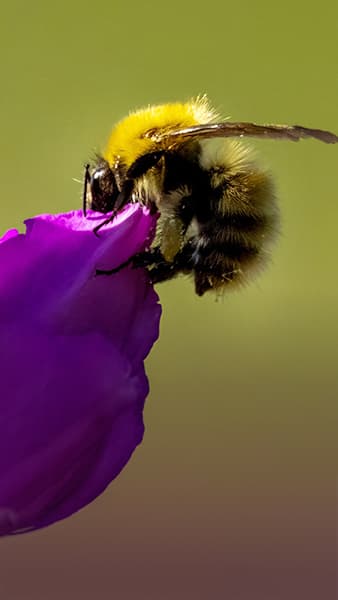
Untrained Bumblebees Crack Lab Puzzles, Offering New Hope for African Farmers
In a laboratory in the United Kingdom, untrained bumblebees navigated a maze of hurdles to reach a sugary reward, solving the puzzle in under two minutes. According to Mongabay, the insects did this without any prior training, demonstrating a capacity for spontaneous problem‑solving that surprises even seasoned entomologists.
Why it matters
Bee‑driven pollination underpins roughly one‑third of the food we eat, and in Ghana and much of sub‑Saharan Africa smallholder farms rely heavily on native pollinators to boost yields of staples such as cocoa, coffee, and mangoes. If bumblebees can think on their feet, farmers may be able to harness that intelligence to improve crop productivity, reduce pesticide dependence, and protect fragile ecosystems.
The experiments that revealed bee ingenuity
Researchers presented groups of Bombus terrestris workers with a simple obstacle: a transparent barrier that blocked direct access to a droplet of sucrose solution. The bees could either push the barrier aside, crawl underneath it, or walk around the edge. Within seconds, several individuals tried each option, eventually discovering that nudging the barrier created a gap large enough to slip through.
What makes the result striking is that the bees had never encountered this setup before. The study measured the time taken from first contact to successful reward acquisition, and the fastest insects completed the task in 78 seconds. The scientists repeated the trial with altered barrier shapes and still observed the same pattern of trial‑and‑error learning, indicating a flexible problem‑solving mindset rather than a fixed instinct.
These findings build on earlier work showing that bumblebees can coordinate as a team to transport heavy objects and remember flower locations over several days. Together, the research paints a picture of a tiny brain capable of complex cognition, challenging the long‑standing assumption that insects operate solely on hard‑wired reflexes.
What the findings mean for African farmers and beekeepers
In Ghana’s high‑land cocoa farms, beekeepers already place hives near plantations to boost pollination rates. If bumblebees can adapt to new obstacles, they may be more resilient to habitat fragmentation caused by expanding agriculture or road construction. A bee that can figure out how to cross a narrow strip of cleared land to reach a flower could maintain pollination services where honeybees struggle.
Local beekeepers could also benefit from training programs that expose colonies to simple puzzles, encouraging exploratory behavior that translates into better foraging efficiency. While the laboratory trials used artificial barriers, a field‑scale analogue might involve planting “bridge” vegetation or installing low‑tech guide rails that steer bees toward under‑pollinated crops.
Beyond pollination, the research hints at novel pest‑management strategies. If bumblebees can learn to bypass obstacles, they might be trained to avoid pesticide‑treated zones, reducing accidental exposure. This aligns with growing calls across West Africa to adopt integrated pest‑management practices that safeguard both human health and pollinator populations.
From labs to fields: turning bee problem‑solving into practical tools
Translating laboratory curiosity into on‑the‑ground impact will require collaboration between entomologists, agronomists, and community organisations. One promising avenue is the development of “bee‑friendly corridors” – strips of native flowering plants that create safe passageways across fragmented landscapes. By designing these corridors with visual cues that bumblebees can easily recognize, farmers can exploit the insects’ innate willingness to explore.
Another possibility lies in low‑cost monitoring kits that let farmers observe bee behavior around their fields. Simple cameras or observation sheets could capture moments when bees encounter obstacles, providing data that researchers can use to refine corridor designs. Such citizen‑science approaches empower farmers while feeding a feedback loop that improves the science.
Crucially, these initiatives must respect local knowledge. Ghanaian beekeepers have long used traditional methods—such as hanging smoked reeds to calm hives—that reflect a deep understanding of bee temperament. Integrating modern bee cognition research with these practices could accelerate adoption and ensure that solutions are culturally appropriate.
Looking ahead, the next step is to test whether the problem‑solving abilities observed in controlled settings persist in the wild. Field trials in Ghana’s forest‑edge farms are already being drafted, with the goal of measuring changes in fruit set, seed viability, and overall farm income. If successful, the experiments could reshape how African agriculture approaches pollination, moving from a passive reliance on insects to an active partnership that leverages their intelligence.
For ordinary people, the story is simple: a tiny winged creature that can figure out a maze may soon help keep our plates full. As scientists continue to uncover the hidden mind of the bumblebee, the hope is that everyday farmers will reap the benefits of a smarter, more adaptable pollinator.
The Morning Brief
One email a day with the stories that matter. Free, forever.
No spam. Unsubscribe anytime.
Comments (0)
Be the first to share your thoughts.