
FAO and Zambia Health Ministry Align Food Systems with Clinical Nutrition
A new joint initiative from FAO and Zambia's Health Ministry unites farm extension with clinical nutrition, shifting agricultural policy from simple yield volume to dietary diversity.
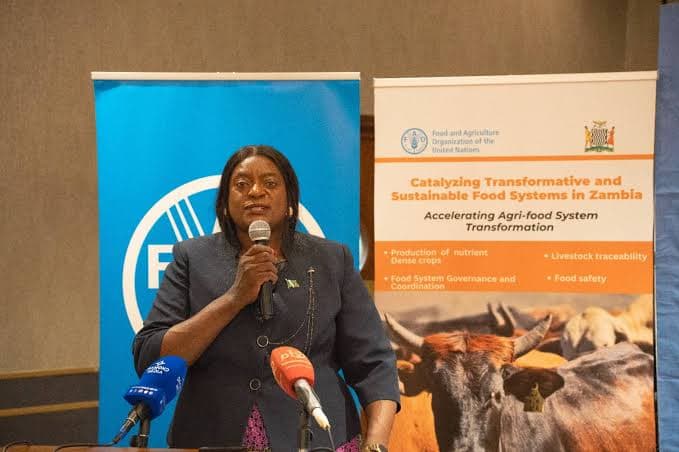
A subsistence harvest can fill a granary to its rafters with maize while leaving the children who eat from it chronically undernourished. According to the Lusaka Times, Zambia's Ministry of Health and the Food and Agriculture Organization have launched a joint food systems and nutrition project designed to tackle that precise disconnect. The initiative binds agronomic production directly to clinical dietary outcomes, bridging an institutional divide that has long separated agricultural policy from public health administration.
For decades, agrarian economies across sub-Saharan Africa measured agricultural success purely through crop tonnage. When staple production climbed, planners declared progress. Yet pediatric wards in rural districts continued to treat severe micronutrient deficiencies, wasting, and stunting. By formalizing a joint operational pipeline between health officials and agricultural field officers, the new project establishes an administrative framework where farming techniques are judged by dietary diversity and human development rather than caloric volume alone.
The Agronomic Trap Facing Rural Households
To grasp why this institutional merger matters, consider an illustrative farming household in rural Zambia during the dry season. The family might cultivate two hectares of white maize, selling surplus bags to state grain buyers or local traders to pay for school fees, paraffin, and salt. On paper, the household is economically active and food-secure. On the plate, however, daily meals consist almost entirely of thick maize porridge accompanied by salt or boiled wild leaves.
The biological penalty of this monoculture diet accumulates quietly. Young children deprived of bioavailable iron, zinc, vitamin A, and complete proteins experience compromised immune response and stunted cognitive growth. When a toddler falls ill, the family visits a local clinic administered by the Ministry of Health, where medical workers diagnose severe malnutrition and distribute fortified supplements. Once discharged, the child returns to the identical dietary environment that caused the crisis.
Meanwhile, extension officers operating under separate agricultural mandates have historically encouraged farmers to maximize maize acreage through subsidized seed and fertilizer packages. The clinic treated the symptom while agricultural incentives unintentionally reinforced the root vulnerability. Breaking that loop requires the health worker and the farm extension officer to share diagnostic criteria, community targets, and educational campaigns.
Connecting Clinic Diagnoses to Smallholder Seed Selection
Under the joint project reported by the Lusaka Times, the Food and Agriculture Organization and the Ministry of Health seek to integrate agronomic training with targeted nutritional interventions. Rather than viewing family plots solely as commercial engines, the project frames local agriculture as primary healthcare infrastructure.
This operational alignment shifts what extension officers recommend to rural producers. Instead of concentrating resources exclusively on staple carbohydrates, joint programs emphasize diversified cultivation: legumes, groundnuts, nutrient-dense leafy greens, orange-fleshed sweet potatoes, and small livestock. Smallholders learn post-harvest handling techniques to prevent mycotoxin contamination, a chronic food safety hazard that destroys stored grain and impairs gut health in young children.
At the community level, maternal health workers and agricultural agents coordinate demonstration gardens directly adjacent to rural health posts. Mothers attending routine postnatal checkups receive practical instruction on cultivating protein-rich crops in kitchen gardens alongside clinical advice on infant feeding. By anchoring dietary education to local agricultural feasibility, public health advice ceases to be an impractical lecture about unaffordable market foods and becomes an achievable extension of domestic farming.
Overcoming Institutional Silos in National Budgeting
State bureaucracies rarely collaborate spontaneously. In standard governance structures, the Ministry of Health competes against the Ministry of Agriculture for treasury allocations during every fiscal cycle. Agricultural departments focus on input subsidies, export parity, and irrigation schemes, while health ministries consume budgets on pharmaceuticals, diagnostic kits, and hospital staffing.
This structural fragmentation produces massive fiscal waste. Governments spend millions of dollars treating preventable non-communicable diseases and childhood deficiencies that originate in dysfunctional agricultural markets. When food systems flood urban and rural shelves with cheap, heavily processed staples while fresh vegetables, dairy, and pulses remain prohibitively expensive, the health sector inherits the metabolic fallout.
The joint framework established by the Food and Agriculture Organization and Zambia's health authorities provides a proof of concept for cross-ministerial program design. When multilateral agencies pool technical capacity, they compel separate civil service bodies to agree on shared performance indicators. Success is no longer measured solely by metric tons harvested or clinical beds occupied, but by the measurable reduction of chronic nutritional deficits across specific target districts.
Macroeconomic Implications for Regional Food Policy
The stakes of this coordination reach well beyond clinical health statistics. Chronic undernutrition exacts an immense economic levy on developing economies, shaving percentage points off gross domestic product through lost workforce productivity, diminished school attainment, and escalated healthcare spending. Stunted children become adults whose earning capacity is permanently suppressed through no fault of their own.
Across southern Africa, climate shocks exacerbate these vulnerabilities. Severe droughts driven by cyclical El Niño weather patterns frequently wipe out rainfed maize fields, leaving communities without alternative food reserves. A diversified food system that deliberately incorporates drought-resilient legumes, cassava, and indigenous vegetables offers far greater dietary stability during extreme weather shocks than an agriculture system anchored to a single thirsty grain.
By shifting policy focus toward diverse, nutrient-dense food and nutrition systems, public agencies build resilience directly into the rural economy. Households with varied crop rotations retain consumable food even when cash crop yields tumble, reducing the emergency expenditure required from central treasuries and foreign humanitarian missions.
Structural Shifts Toward Preventative Food Governance
The collaboration between Zambia's Ministry of Health and the Food and Agriculture Organization marks a deliberate departure from reactive emergency relief toward systemic agricultural design. Emergency nutrition packages save lives during famine, but they cannot replace a domestic agricultural policy that feeds citizens properly every single day.
As this initiative moves through implementation, its primary test will lie in institutional durability. Shared programs often struggle when external grant cycles expire and individual ministries revert to protecting their bureaucratic turf. Sustaining progress demands embedding nutrition metrics into the permanent operational duties of agricultural field staff, while training community health workers to evaluate agricultural access during household visits.
When agricultural production aligns with human biology, public investments pay double dividends. The smallholder plot stops operating as a precarious monoculture cash bet and assumes its rightful role: a household's primary defense against systemic disease, economic stagnation, and generational poverty.
The Morning Brief
One email a day with the stories that matter. Free, forever.
No spam. Unsubscribe anytime.
Comments (0)
Be the first to share your thoughts.